Is Bali Safe in 2026? Real Insights from a Certified Local Guide
Is Bali safe in 2026? A certified local guide ranks the real risks (scooters, drink spiking, rip currents, monkeys, scams), gives area-by-area safety ratings, and shares 2026-specific warnings travelers actually need.

In This Guide
- The Short Answer
- Real Risks in Bali, Ranked by Frequency (2026)
- Author Authority — Why Trust This Guide
- Safety by Area (2026)
- 2026-Specific Safety Updates
- Methanol-Laced Arak — Real, Avoidable
- Current Scam Trends
- Recent Traveler Advisories
- Crime and Personal Safety
- Violent Crime
- Petty Theft
- Drink Spiking
- Traffic — The #1 Actual Risk
- Common Scams to Watch For
- The Money Changer Trick
- The "Broken" Rental Scam
- Temple "Guides" and Entrance Fees
- Airport Taxi Mafia and Fake Grab Drivers
- Beaches and Water Safety
- Health and Medical Safety
- Water and Food
- Medical Facilities
- Mosquitoes and Dengue
- Rabies
- Bali Safety by Traveler Type
- Bali Safety for Solo Travelers
- Bali Safety for Women
- Bali Safety for Families with Kids
- Bali Safety for LGBTQ+ Travelers
- Bali Safety for Older Travelers (50+)
- Natural Disasters
- Earthquakes
- Volcanic Activity
- Tsunamis
- Travel Insurance — Not Optional
- Practical Safety Checklist
- FAQ
- Is Bali safe for solo female travelers in 2026?
- Is Bali safe for families with kids?
- How common is drink spiking in Bali?
- Should I rent a scooter in Bali if I am a beginner?
- Are ATM scams a problem in Bali?
- What are the drug laws in Bali?
- Is dengue fever a real risk for tourists?
- Can I drink the tap water in Bali?
- Where are the embassies and best hospitals in Bali?
- Is Bali safe at night?
- Is it safe to swim in Bali?
- Do I need vaccinations for Bali in 2026?
- How do I avoid getting scammed in Bali?
- Is Bali safe for nightlife?
- Sources & Verification
- Related Guides
Quick answer: Yes — Bali is safe in 2026 for tourists, solo travelers, women, and families. Violent crime against visitors is rare. The four risks that actually injure or upset travelers are: (1) scooter accidents — the #1 cause of tourist hospitalizations, (2) drink spiking and methanol-laced cheap spirits in Kuta and parts of Canggu, (3) rip currents on west-coast beaches like Kuta, Legian, and Echo Beach, and (4) monkey grabs at Ubud Monkey Forest and Uluwatu Temple. Avoid renting a scooter if you have not ridden before, only drink at reputable bars, swim between the flags, and remove sunglasses, hats, and dangling bags before entering monkey areas. Everything else is largely inflated by old internet stories.
I am part of a family of certified guides who have lived in Bali for years — Indonesian, originally from Medan, now sending guests across the island every week. My wife is a certified French and Mandarin speaking guide. Her parents are official Mandarin guides who have worked Bali tourism for decades. Between us we know which fears are valid in 2026 and which ones come from blog posts written a decade ago and never updated.
Bali welcomed over 6.9 million international visitors in 2025. The vast majority went home with sunburn, full memory cards, and zero incidents. Bali police recorded only 226 cases involving foreign tourists across all of 2024. Those are good odds. But "safe overall" is not the same as "nothing to watch for," and Google's AI Overview will not give you the on-the-ground nuance that decides whether your trip goes well or ends in a hospital bill. This guide does.
The Short Answer
Bali is one of the safest destinations in Southeast Asia for tourists in 2026. Violent crime against visitors is uncommon. The actual risks are: traffic accidents (especially scooters), drink and alcohol-related incidents (drink spiking + methanol in cheap bottles), beach rip currents on the west coast, monkey grabs at temples, and a handful of repeated scams. Every one of these is preventable with simple choices.
If you are wondering whether to book the trip — book it. Then read the rest so you know what to actually pay attention to.
Real Risks in Bali, Ranked by Frequency (2026)
These are the incidents we see and hear about most often, in order. Internet horror stories tend to obsess over rare events; this is what actually happens.
| Rank | Risk | How often | Who is most affected | What to do |
|---|---|---|---|---|
| 1 | Scooter / motorbike accidents | Weekly, seen across Canggu, Ubud, Uluwatu | Tourists with no prior riding experience, riders without helmets | Do not rent a scooter unless you ride at home. Use a private driver. Wear a real helmet. Never ride at night or after drinking. |
| 2 | Drink spiking and methanol poisoning | Reported regularly in Kuta and some Canggu venues | Solo travelers, young backpackers drinking cheap arak | Stick to bottled beer or branded spirits at reputable bars. Watch your drink being made. Avoid "free shot" promotions and unbranded "arak" cocktails. |
| 3 | Beach rip currents and drowning | Multiple per month, peaks Nov–Mar | Tourists swimming on west-coast beaches without lifeguards | Swim only between red-and-yellow flags. Stay out of Kuta, Legian, and Echo Beach if waves look big. Choose Sanur, Nusa Dua, or Jimbaran for calmer water. |
| 4 | Monkey grabs and bites | Daily at Ubud Monkey Forest, Uluwatu Temple | Tourists wearing sunglasses, hats, dangling earrings, holding food or bottles | Remove all loose items before entry. Do not make eye contact. Never hold food. If bitten, go straight to a hospital for rabies post-exposure shots. |
| 5 | Scams (taxi mafia, fake guides, money changers) | Daily but mostly mild financial loss | Tourists arriving at airport, walking near temples and tourist strips | Pre-book airport transfer. Use only ATMs at BCA/Mandiri banks. Pay temple fees only at the official ticket booth. |
Notice what is not on this list: terrorism, kidnapping, armed robbery, gang violence. These are statistically near-zero risks for tourists in Bali in 2026.
Author Authority — Why Trust This Guide
I am part of a family of certified guides — Indonesian, from Medan, now living in Bali year-round. My wife holds the official Indonesian guide license in both French and Mandarin (a rare combination). Her parents have been licensed Mandarin guides for decades and still work tour groups. Together we run Ohana Agency and send guests on private tours, multi-day itineraries, and airport transfers across the island every single week of the year.
That means we hear, in real time, what actually happens to visitors: which beaches had a drowning last month, which Kuta venue is currently being avoided after a methanol case, which temples now require sarong rentals at the gate. AI Overviews summarize 2018 blog posts. We summarize what happened last week.
Safety by Area (2026)
Different parts of Bali have different risk profiles. This is what I tell guests asking where to base themselves:
| Area | Day safety | Night safety | Main risks | Best for |
|---|---|---|---|---|
| Kuta / Legian | Moderate | Lower — busiest nightlife strip, drink spiking + methanol cases concentrate here | Drink spiking, methanol in cheap arak, pickpocketing in clubs, taxi mafia, rip currents on the beach | Budget travelers who plan to leave after 1–2 nights |
| Seminyak | High | Moderate — better than Kuta but still a nightlife area | Petty theft in beach clubs, occasional drink spiking | Couples, mid-range travelers who want walkable cafes and beach clubs |
| Canggu | High | Moderate — quiet residential by night with party pockets (Pererenan, Berawa) | Scooter accidents (heavy traffic, narrow roads), occasional drink spiking at cheap bars | Digital nomads, surfers, longer stays |
| Ubud | Very high | Very high — small-town safe | Monkey grabs at the Monkey Forest, scooter accidents on jungle roads, food adjustment | Couples, families, wellness travelers |
| Sanur | Very high | Very high — calmest tourist area on the island | Almost none. Calm beach, no nightlife scene | Families, retirees, first-time visitors |
| Nusa Dua / Jimbaran | Very high | Very high — gated resorts, security at entry | Almost none. Calm beaches, low traffic | Families, luxury travelers, anyone wanting hassle-free |
| Uluwatu | High | High | Monkey grabs at the temple, scooter accidents on cliff roads | Surfers, sunset chasers |
| Nusa Penida / Lembongan | Moderate | Moderate | Bad roads (worse than mainland Bali), boat transfers in rough seas, limited medical | Adventurous travelers willing to skip a scooter rental |
If your priority is a worry-free trip — base yourself in Sanur, Ubud, or Nusa Dua / Jimbaran. If you want nightlife, treat Kuta as a daytime stop and sleep elsewhere.
2026-Specific Safety Updates
A few things have shifted since the older guides were written. These are the warnings I would actually flag for someone landing in Bali this month.
Methanol-Laced Arak — Real, Avoidable
Bali has had repeat methanol poisoning incidents over the years from cheap, illegally distilled "arak" (local rice spirit) sold in unlicensed bars or as part of "free shot" promotions. Methanol is colorless, tasteless, and can cause blindness or death. The simple rule: drink only at reputable bars and restaurants, only ask for branded bottled spirits (or stick to beer), and never accept a "free shot" or "house cocktail" of unknown origin. The big resorts, beach clubs, and well-reviewed restaurants are not the problem — the problem is back-alley Kuta bars and unregulated party hostels.
Current Scam Trends
Two scams have grown more common in 2026:
- Airport "fake Grab" drivers — men outside the arrivals hall claim to be your Grab driver, take your bags, then quote a fixed price triple the app rate. Fix: pre-book an airport transfer so a named driver meets you with a sign, or wait inside the official Grab pickup zone and verify the plate matches the app.
- "Donation" pressure at temples — outside some popular temples, locals approach with clipboards asking for "temple donations" that go straight in their pocket. Real donations go in clearly marked boxes inside the temple, not to anyone in the parking lot.
Recent Traveler Advisories
Most Western embassy advisories for Indonesia in 2026 sit at "exercise normal precautions" or equivalent. The notes consistently mention: motorbike accidents, methanol, drug penalties (Indonesia has zero tolerance — including small recreational amounts), and natural disaster preparedness. None of these mean "do not go." They mean "do not be the person who ignores them."
Crime and Personal Safety
Violent Crime
Violent crime against tourists is uncommon. Indonesia's overall crime rate has been declining for years, and Bali — as a tourism-dependent economy — invests heavily in keeping visitors safe. Tourist police patrol Seminyak, Canggu, and Ubud actively. Use the same common sense you would anywhere: avoid poorly lit areas late at night, do not flash expensive jewelry, keep your accommodation locked.
Petty Theft
The most common crime tourists actually experience:
- Bag snatching from motorbikes — someone on a passing scooter grabs your bag or phone. Usually happens when you walk on the roadside with your bag on the traffic side. Carry bags on your inside shoulder, or use a crossbody bag with the strap across your chest.
- Pickpocketing in crowded markets — Ubud market and packed beach clubs. Keep valuables in front pockets or a money belt.
- Room theft — rare in hotels, more common in very cheap guesthouses. Use the room safe or lock your bag.
I tell my guests: do not carry more cash than you need for the day, keep a photocopy of your passport separately from the original, and leave expensive watches at home.
Drink Spiking
Drink spiking does happen, mainly in party areas around Kuta, Legian, and parts of Canggu. The practical advice: watch your drink being made, do not accept drinks from strangers, never leave a drink unattended, stay with people you trust. Pair this with the methanol warning above — combine "spiked" with "fake spirits" and you have the worst of both. If something feels off after a drink, leave immediately and tell a friend.
Traffic — The #1 Actual Risk
If one thing genuinely endangers tourists in Bali, it is traffic. Roads are narrow, often poorly maintained, and shared by cars, motorbikes, trucks, dogs, and pedestrians simultaneously. Rules exist; enforcement is inconsistent.
Motorbike accidents are the leading cause of tourist injuries in Bali. Every week I see bandaged visitors in Ubud and Canggu after a scooter crash. Many had never ridden before arriving.
My honest advice: if you have not ridden a motorbike extensively before, do not rent one here. Bali traffic is not the place to learn. A private driver for a full day costs less than a single hospital visit and gets you a local who knows the roads, the shortcuts, and the best stops.
If you do ride:
- Wear a proper helmet (not the thin ones rental shops provide — buy your own)
- Never ride without travel insurance that explicitly covers motorbike use
- Avoid riding at night, especially on unlit rural roads
- Never ride under the influence — Bali police do set up checkpoints
- Photograph the bike from every angle before you take it (see scams below)
Common Scams to Watch For
Bali is not a scam-heavy destination compared to other parts of Southeast Asia, but a few schemes target tourists repeatedly.
The Money Changer Trick
Unlicensed money changers on the street offer rates that look too good — because they are. Fast finger-counting makes notes disappear; "fees" appear after the exchange. Only use ATMs (BCA and Mandiri are the most reliable banks) or licensed exchange counters with digital displays. Your private driver can point you to legitimate ones.
The "Broken" Rental Scam
You return a scooter in the same condition; the owner claims you scratched or dented it and demands hundreds of dollars. Photograph the scooter from every angle before you take it. Rent only from reputable shops your accommodation recommends. Better — skip the rental and use a driver.
Temple "Guides" and Entrance Fees
At popular temples, people outside may approach offering to be your "guide" or claiming you need to pay an entrance fee through them. The real entrance fee is paid at the official ticket booth inside. Politely decline unsolicited guides. If you want a genuinely knowledgeable guide, book a guided tour in advance.
Airport Taxi Mafia and Fake Grab Drivers
Airport touts and unlicensed drivers quote inflated prices, sometimes claiming to be your Grab driver. Use the official taxi counter, the official Grab pickup zone with plate verification, or pre-book an airport transfer so a named driver meets you.
Beaches and Water Safety
Bali's beaches range from glassy calm to genuinely dangerous. The risk profile depends entirely on which coast.
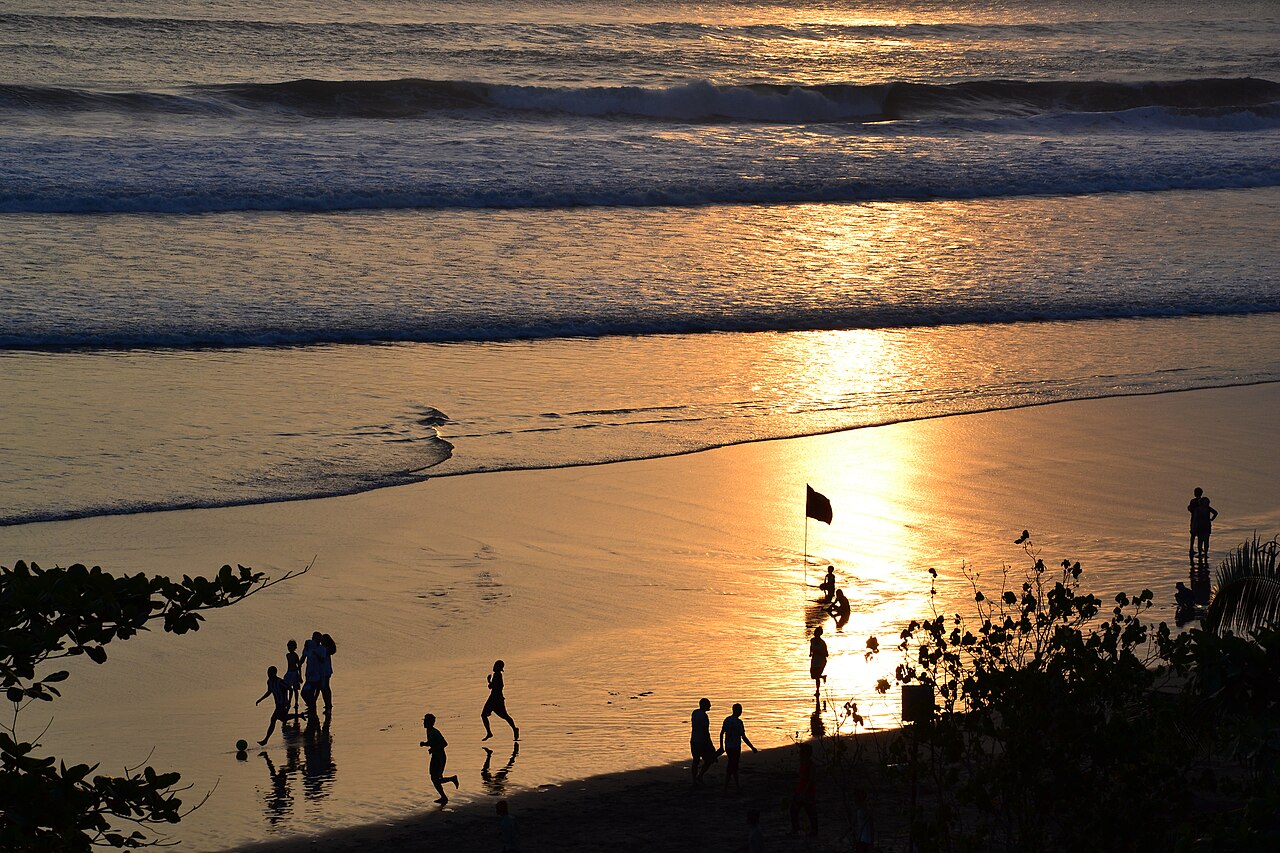
- Kuta, Legian, Seminyak, Canggu, Echo Beach (west coast) — bigger waves, strong rip currents, drownings every year. Swim only at lifeguarded sections, between red-and-yellow flags. Never swim at night. If caught in a rip current, do not swim against it — swim parallel to shore until you escape it, then back in.
- Sanur, Nusa Dua (east/south coast) — protected by reefs, calm water, family-friendly.
- Jimbaran (south) — generally calm, great for families and luxury stays.
- Nusa Penida / Lembongan — beautiful but currents can be strong; stick to organized snorkel tours with crew.
If you have small children, the rule is simple: stay on the east coast (Sanur, Nusa Dua, Jimbaran).
Health and Medical Safety
Water and Food
Do not drink tap water. Stick to bottled water (about 5,000 IDR / $0.30 per liter) or refill stations. Ice in restaurants and cafes is generally safe — it is commercially produced. At a small roadside warung, skip it.
"Bali belly" is common among first-time visitors and usually comes from bacteria adjustment, not unsafe food. Eat where locals eat — high turnover means fresh food. Our Bali food guide covers where to eat safely across different areas.
Medical Facilities
Bali has international-standard hospitals:
- BIMC Hospital (Kuta and Nusa Dua) — main hospital for tourist medical care, English-speaking staff
- Siloam Hospital (Kuta) — large, well-equipped facility
- Kasih Ibu Hospital (Denpasar) — solid general hospital
For anything serious, medical evacuation to Singapore or Australia is standard protocol — which is exactly why travel insurance is non-negotiable. Make sure your policy covers evacuation.
Mosquitoes and Dengue
Dengue fever exists in Bali. It is transmitted by daytime-biting mosquitoes, so use repellent with DEET (available at any Circle K), wear light long sleeves at dusk, and stay in accommodation with screens or AC. Risk is higher in the wet season (Nov–Mar) — see our month-by-month guide on when to visit Bali if you are choosing dates with health in mind. Malaria is not a meaningful risk in main tourist areas.
Rabies
Bali has stray dogs and rabies on the island. Do not pet or approach stray dogs or monkeys. The monkeys at Ubud Monkey Forest and Uluwatu Temple are wild animals — they will bite for food, sunglasses, or hats. If bitten by any animal, clean the wound immediately and go to a hospital for post-exposure prophylaxis. This is urgent, not optional. Do not wait until you fly home.
Bali Safety by Traveler Type
The "is Bali safe" question changes a lot depending on who is asking. Below are five honest, persona-specific answers for the long-tail variants of this query — solo travelers, women, families with kids, LGBTQ+ travelers, and travelers 50+. If you came here from a search like "is bali safe for women" or "is bali safe for solo female travelers," skip to the section that matches you.
Quick takeaways
- Solo travelers — Yes; Canggu and Ubud have the densest expat infrastructure in Asia
- Women — Yes; risks cluster in Kuta/Seminyak nightlife, not daily life
- Families with kids — Yes; base in Sanur, Nusa Dua, or Jimbaran, never Kuta
- LGBTQ+ travelers — Yes in tourism zones; Indonesia's 2026 KUHP criminal code applies in theory but enforcement against tourists is unprecedented
- Older travelers (50+) — Yes; private driver is non-negotiable, base on the south coast
Bali Safety for Solo Travelers
Yes — Bali is consistently ranked among the world's top solo destinations, especially for first-time solo trips in Asia. The infrastructure caters specifically to people traveling alone: coworking spaces, surf and yoga schools, communal villas, and a steady rotation of other solo travelers in the same hostels and cafes. You will not be alone for long unless you choose to be.
The strongest solo-travel hubs are Canggu and Ubud. Canggu — Berawa and Pererenan especially — has the densest digital nomad community on the island, with daily meetups, surf groups, and coliving spaces that solve the "I don't know anyone here" problem in 48 hours. Ubud is calmer but equally connected through yoga studios, ecstatic dance nights, and wellness retreats that are largely solo by default. In both places, walking into a coworking cafe is enough to start a conversation.
| Solo base | Vibe | Best for | Watch out for |
|---|---|---|---|
| Canggu (Berawa/Pererenan) | Active, surf + nomad | First-timers, fitness, social scenes | Scooter traffic, late-night drink spiking at cheaper bars |
| Ubud (Penestanan/Nyuh Kuning) | Calm, wellness, creative | Yoga, retreats, slower pace | Monkeys near accommodation, isolated walks at night |
| Uluwatu | Quiet, surf, clifftop | Solo surfers, photographers | Limited public transport, fewer hostel options |
| Sanur | Calm, older crowd | Recovering from a busy itinerary | Less of a young solo scene |
Practical solo precautions:
- Buy an Indonesian eSIM at the airport (Telkomsel, Smartfren) — most safety planning depends on having data the moment you land
- Share a live location with someone back home for night travel, especially scooter rides
- Join the Canggu or Ubud nomad WhatsApp groups within 24 hours of arrival — they flag bad bars and shady tour operators in real time
- Carry a photocopy of your passport day-to-day; leave the original in the room safe
- Learn the route from your accommodation to the nearest BIMC or Siloam hospital before you ride a scooter
Most solo travelers I guide tell me Bali felt easier and safer than Thailand or Vietnam — partly because the expat infrastructure makes "alone" almost optional. See our dedicated Bali solo travel guide for hostel picks, budget breakdowns, and tactics for meeting people fast.
Want us to plan this trip for you?
Our certified guide will create a personalized itinerary based on your interests, pace, and travel style.
Get Your Free ItineraryBali Safety for Women
Yes — Bali is one of the safer Southeast Asian destinations for women, including solo female travelers. Most reported incidents involving women cluster around two specific contexts: nightlife in Kuta/Seminyak (drink spiking, methanol, taxi situations) and motorbike accidents. Outside those, day-to-day life as a woman in Bali — markets, temples, beaches, cafes — is calm and respectful.
Balinese culture is genuinely welcoming to women travelers. Local women run warungs and shops, drive scooters, and move independently; foreign women fit naturally into that environment. Catcalling exists but is mild compared to other parts of the region. Beach harassment is rare and usually ends with a clear "no, terima kasih."
What to actually watch:
| Risk | Where it concentrates | Prevention |
|---|---|---|
| Drink spiking + methanol | Kuta, Legian, parts of Canggu nightlife | Branded bottles only, watch the pour, no free shots, leave with people you trust |
| Late-night taxi situations | Airport arrivals, club exits in Kuta/Seminyak | Pre-book airport transfer, use Grab with plate verification, avoid unmetered street taxis at 2 AM |
| Scooter accidents | Canggu, Ubud, Uluwatu | Same as everyone — do not learn to ride here, wear a real helmet, never at night |
| Modesty at temples | Tirta Empul, Besakih, Lempuyang | Sarong + sash on entry, shoulders covered; provided or rented at the gate |
Solo female travelers I guide consistently report feeling safer in Bali than in most cities they have lived in. The combination of low violent crime, a tourism-dependent economy that polices nightlife strips, and dense expat hubs in Canggu and Ubud — where you are rarely truly alone — makes a real difference.
For periods, contraception, or other sensitive needs: Guardian and Apotek pharmacies stock most international brands, especially in Seminyak and Ubud. BIMC and Siloam hospitals have English-speaking female doctors on staff if you need something prescribed.
Bali Safety for Families with Kids
Yes — Bali is excellent for families. Balinese culture is unusually warm to children: restaurant staff will hold babies, monkey forest guides will steer your kids away from grabby macaques, and many resorts include free kids' clubs in the room rate. The island works well from infants through teenagers, with the right base.
Where you stay matters more than anything else for family safety. Avoid Kuta as a base with small children — the nightlife exposure and busy roads add stress without upside. The four areas I recommend most:
| Area | Why families like it | Beach | Watch out for |
|---|---|---|---|
| Sanur | Calm reef-protected beach, wide bike paths, low traffic | Family-perfect | Almost nothing — the safest base |
| Nusa Dua | Gated resorts, manicured beach, kids' clubs at most properties | Calm + lifeguarded | Resort bubble — schedule outings off-property |
| Jimbaran | Sunset beach grills, calm bay, mid-priced family hotels | Calm + walkable | Limited evening entertainment |
| Ubud (outskirts) | Rice paddy walks, cooking classes, animals | No beach | Monkey forest needs vigilance |
Family-specific safety items most parents miss:
- Pool fencing. Many private villas have unfenced infinity pools. Ask before booking; if your kids cannot swim independently, choose a hotel with shallow steps or a dedicated kids' pool
- Sun. Equatorial UV is brutal — toddlers burn in 15 minutes. SPF 50+, rash guards, hats, and midday shade are non-negotiable
- Food adjustment. Travelers' diarrhea ("Bali belly") is the most common health complaint among visitors per the CDC and is harder on children than adults. Stick to bottled water (including for teeth-brushing), skip ice at small warungs, and pack ORS (oral rehydration salts) sachets from home
- Scooters. Do not put kids on scooters. Use a private driver — cars come with seatbelts and child seats can be requested in advance for 50k–100k IDR ($3–6) per day
- Monkey areas. Strollers and kids under 5 should not enter Ubud Monkey Forest or Uluwatu temple monkey zones. Monkeys go for sunglasses, ice cream, and small hands
Medical care for kids is solid at BIMC (Kuta and Nusa Dua), where pediatricians speak English. International prescription medications for asthma, allergies, or chronic conditions can be hard to source — bring enough from home for the full trip plus a buffer. See our Bali with kids guide for age-specific itineraries and resort picks.
Bali Safety for LGBTQ+ Travelers
Yes — Bali is among the most LGBTQ+-friendly destinations in Indonesia and largely safe for LGBTQ+ travelers in 2026. The island's Hindu-majority culture is more relaxed than the Muslim-majority national norm, and tourism areas — Seminyak, Canggu, Ubud — have visible LGBTQ+ scenes with bars, beach clubs, and inclusive accommodations. Same-sex couples checking into hotels and dining together is unremarkable.
Honest legal context — important to understand before you go:
- Same-sex relationships are not criminalized at the national or provincial level in Indonesia
- Indonesia's revised criminal code (KUHP, ratified 2022 and in force from January 2026) criminalizes extramarital and unmarried cohabitation regardless of orientation. Per the published statute, prosecution requires a formal complaint from a spouse, parent, or child of one of the parties; no tourist prosecutions have been reported under the new code as of mid-2026. Foreign travelers should still know the law exists
- There is no legal recognition of same-sex marriage or civil unions in Indonesia
- Public displays of affection between any couple — gay or straight — are kept low-key in conservative areas (north Bali, traditional villages, temple grounds). In Seminyak, Canggu, and Ubud tourism zones it is fine
Where LGBTQ+ travelers concentrate:
| Area | Vibe | Notable for |
|---|---|---|
| Seminyak | Most visible LGBTQ+ scene on the island | Mixwell, Bali Joe (Dhyana Pura strip), inclusive beach clubs |
| Canggu | Mixed crowd, casual | Yoga and wellness spaces, low-key inclusive |
| Ubud | Quieter, wellness-oriented | Same-sex couples common at retreats and spa resorts |
| Bukit Peninsula / Uluwatu | Couples, surfers | Small clifftop resorts, no specific scene but no friction either |
Practical advice: book accommodation that explicitly markets to LGBTQ+ guests (most major Seminyak and Ubud resorts do) — it eliminates any front-desk friction. Keep public affection low-key on day trips into rural villages, on the north coast, and at temples. Trans travelers report Bali as one of the easier destinations in Asia, with less scrutiny at airports and hotels than mainland Indonesia. If you experience harassment, the Tourist Police in Kuta (0361-224111) is the first contact; consulates in Denpasar can also help. Reported incidents are rare but the support pathway exists.
Bali Safety for Older Travelers (50+)
Yes — Bali works well for travelers 50 and over, especially in calmer south-coast bases (Sanur, Nusa Dua, Jimbaran) with private-driver transport. The island has a long-running retirement and wellness tourism segment, and many of my regular guests are couples in their 50s, 60s, and 70s on second or third visits. The risks are different from a 25-year-old's risks — and almost all are manageable with the right base and pacing.
What older travelers should plan for:
| Concern | Reality in Bali | What to do |
|---|---|---|
| Heat and humidity | 28–32°C year-round, often 80%+ humidity | Pace yourself, midday rest, hydrate hard, AC accommodation |
| Mobility on stairs | Many temples and beaches require staircases (Uluwatu, Padang Padang, Tegallalang) | Choose accommodation with elevator; ask the driver about stair-free alternatives |
| Medical access | Excellent private hospitals (BIMC, Siloam) but rural areas are 1+ hour from major care | Base on the south coast; carry travel insurance with evacuation cover |
| Air quality | Generally good but occasional rice-burning haze in October–November | If you have asthma/COPD, avoid those months or carry a rescue inhaler |
| Diet | Spicier and oilier than many older travelers prefer | Resort restaurants offer Western menus; warung food can be ordered "tidak pedas" (not spicy) |
Practical recommendations:
- Skip the scooter. A private driver for the entire trip (around $35–55/day) is non-negotiable in this age bracket — comfort, safety, no navigation stress
- Travel insurance with evacuation. Standard for everyone but critical here. Confirm it covers pre-existing conditions and medical evacuation to Singapore or Australia (uninsured evacuations run $50,000+)
- Bring a 2-week medication buffer. Indonesian pharmacies stock most common medications but specific brands can be hard to source; bring enough for the full trip plus extra
- Plan for downtime. A common mistake is filling every day. The 3-3-1 rule helps: 3 active days, then 3 slower days, then 1 rest day. Bali rewards travelers who match its pace
Accessibility note: Bali is not a wheelchair-friendly destination overall — sidewalks are uneven, temple grounds have steps, and most warungs lack ramps. Some south-coast resorts are excellent (Sofitel Nusa Dua, Mulia, Hilton Bali) and can arrange accessible transfers. If mobility is a primary concern, build the itinerary around the resort + day trips with the driver model, not a multi-base route.
Natural Disasters
Earthquakes
Indonesia sits on the Pacific Ring of Fire. Earthquakes happen — most are minor, you will not even feel them. The last significant one affecting Bali was in Lombok in 2018. Hotels are built to withstand tremors. Know where the exits are; if a strong earthquake strikes, move to open ground away from buildings.
Volcanic Activity
Mount Agung, Bali's highest volcano, last erupted in 2017–2019. It is currently at normal alert level. Eruptions can disrupt flights via ash clouds. Check the status before your trip at the Indonesian volcanology agency (PVMBG). If you plan a Mount Batur sunrise trek, Batur is closely monitored and treks are suspended at any risk.
Tsunamis
Bali's coast is potentially vulnerable to tsunamis. Warning systems are in place. If you feel a strong earthquake near the coast and the sea recedes noticeably, move to high ground immediately without waiting for an official warning.
Travel Insurance — Not Optional
Do not come to Bali without travel insurance. Make sure your policy covers:
- Medical treatment and hospital stays
- Medical evacuation (to Singapore or Australia)
- Motorbike use (if you plan to ride — many basic policies exclude this entirely)
- Adventure activities (water sports, trekking)
- Trip cancellation
A comprehensive policy costs $5–15 per day depending on age and coverage. Negligible compared to an uninsured medical evacuation, which can run $50,000+.
Practical Safety Checklist
Before your trip:
- [ ] Buy comprehensive travel insurance with motorbike + evacuation cover
- [ ] Register with your embassy (US, UK, AU, etc.)
- [ ] Save emergency numbers: Tourist Police (0361-224111), Ambulance (118), your embassy
- [ ] Photocopy passport; store separately from original
- [ ] Check vaccine recommendations (Hepatitis A and Typhoid recommended)
- [ ] Pre-book airport transfer so you skip the taxi mafia on arrival
During your trip:
- [ ] Use ATMs inside banks (BCA, Mandiri), not standalone street machines
- [ ] Keep valuables in the accommodation safe
- [ ] Drink only bottled or filtered water
- [ ] Apply mosquito repellent daily
- [ ] Skip the scooter unless you have real riding experience — use a private driver
- [ ] Drink only at reputable bars; avoid free shots and unbranded arak
- [ ] Swim between the flags; pick east-coast beaches if traveling with kids
- [ ] Remove sunglasses and hats before entering monkey areas
FAQ
Is Bali safe for solo female travelers in 2026?
Yes. Bali is one of the safer destinations in Southeast Asia for solo women in 2026. Apply standard nightlife precautions in Kuta and Seminyak (watch your drink, stay with people, use reputable transport). Sanur, Ubud, and Nusa Dua are extremely calm. Most solo women I guide say Bali feels safer than most places they have visited.
Is Bali safe for families with kids?
Yes — Bali is excellent for families. Stay in Sanur, Jimbaran, Nusa Dua, or quieter parts of Ubud. Avoid Kuta as a base with small children. Confirm pool fencing at villas, pack high-SPF sunscreen, and skip the scooter — use a private driver so the family travels together.
How common is drink spiking in Bali?
Drink spiking is reported regularly in Kuta, Legian, and parts of Canggu nightlife — though still a small fraction of overall visitors. The bigger overlapping risk in 2026 is methanol in cheap "arak" or unbranded spirits. Drink only at reputable bars, only branded bottles or beer, watch your drink being made, and avoid "free shot" promotions.
Should I rent a scooter in Bali if I am a beginner?
No. Scooter accidents are the single most common cause of tourist injuries in Bali. If you have not ridden extensively before, the cost of a private driver for the day is less than a single ER visit. If you must ride, buy your own real helmet, never ride at night, and confirm your insurance explicitly covers motorbike use.
Are ATM scams a problem in Bali?
ATMs themselves are mostly fine if you use ones inside or attached to BCA, Mandiri, or BNI bank branches. Avoid standalone ATMs in tourist alleys — card skimmers turn up there occasionally. Cover the keypad, take your card and cash promptly, and check your statements during the trip.
What are the drug laws in Bali?
Indonesia has zero tolerance for drugs, including small recreational amounts. Penalties include long prison sentences and, for trafficking, the death penalty. This is not a hyperbolic warning — foreign tourists have been jailed for amounts smaller than what is legal in many countries. Do not buy, carry, or accept drugs from anyone in Bali.
Is dengue fever a real risk for tourists?
Dengue exists in Bali year-round, with higher transmission in the wet season (Nov–Mar). Most tourists never catch it. Use DEET repellent, wear light long sleeves at dusk, stay in accommodation with screens or AC, and avoid standing-water areas. If you develop high fever within two weeks of returning home, tell your doctor you were in Bali.
Can I drink the tap water in Bali?
No. Stick to bottled water (5,000 IDR / about $0.30 per liter) or refill stations at your accommodation. Use bottled water for brushing teeth if your stomach is sensitive. Ice at established restaurants is commercially produced and generally safe.
Where are the embassies and best hospitals in Bali?
The main consulates are clustered in Denpasar (Australia, US, UK, France, Germany, India and others have consular presence in Bali; the full embassies are in Jakarta). For medical care: BIMC Hospital (Kuta and Nusa Dua), Siloam Hospital (Kuta), and Kasih Ibu (Denpasar). Save these in your phone before you arrive.
Is Bali safe at night?
Most tourist areas are safe at night. Ubud, Sanur, Nusa Dua, and Jimbaran are very calm after dark. Exercise more caution in Kuta and Seminyak nightlife strips — stay in groups, watch your drinks, and use reputable transportation home.
Is it safe to swim in Bali?
It depends on the beach. West-coast beaches (Kuta, Legian, Seminyak, Canggu, Echo Beach) have strong rip currents and waves — only swim at lifeguarded sections, between red and yellow flags. East and south coast (Sanur, Nusa Dua, Jimbaran) are much calmer. With kids, stick to the east and south.
Do I need vaccinations for Bali in 2026?
No vaccinations are legally required for entry from most countries in 2026. The CDC and WHO recommend Hepatitis A and Typhoid. Confirm routine vaccinations (Tetanus, MMR) are up to date. Consult your doctor 4–6 weeks before travel.
How do I avoid getting scammed in Bali?
Use ATMs inside bank branches instead of street money changers. Photograph rental vehicles before use. Pay temple entrance fees only at the official ticket booth. Use ride-hailing apps (Grab, Gojek) with plate verification, or pre-book a private driver or airport transfer instead of flagging random taxis. Decline unsolicited "guides" outside temples.
Is Bali safe for nightlife?
The nightlife is fun and mostly safe at well-known venues. The two real risks are drink spiking and methanol-laced cheap spirits — both concentrated in Kuta and certain Canggu venues. Stick to reputable bars, branded spirits, watch your drink, travel home with people you know. Our Bali nightlife guide covers safer venues and what to avoid.
Sources & Verification
- Statistics Indonesia (BPS): bps.go.id — official source for Bali international visitor arrivals (6.9M in 2025).
- Bali Provincial Police (Polda Bali): annual public statistical reports on tourist-involved incidents (226 cases 2024).
- CDC Travelers' Health — Indonesia: wwwnc.cdc.gov/travel/destinations/traveler/none/indonesia — vaccination and health guidance.
- WHO travel advice for Indonesia: who.int — current health recommendations.
- Indonesian Criminal Code (KUHP, Law No. 1/2023): ratified 2022, in force January 2026 — referenced for cohabitation/extramarital provisions in the LGBTQ+ section. Official text via the Indonesian Ministry of Law and Human Rights (kemenkumham.go.id).
- Internal Ohana guest experience: 2025–2026 incident reports from guests on our private tours and airport transfers — basis for traveler-type observations and family-by-family insights.
- Last verified: 2026-05-01.
Related Guides
<!-- internal-link-sweep:2026-04-29 -->
Certified Travel Guide & Co-Founder
A certified Bali guide credentialed by the Indonesian Ministry of Tourism, fluent in French, Mandarin, English, and Indonesian. Part of a family of certified guides who have been guiding travelers across Bali for many years — sharing temples, rice terraces, and hidden corners that never make the brochures.
Languages: French · Mandarin · English · Indonesian
Ready to discover Bali?
Tell us about your dream trip and our local experts will craft a personalized experience just for you.
Start Planning