Best Beaches in Bali - A Local Guide to the Coastline
From the cliff-backed surf breaks of Uluwatu to the black sand shores of Canggu and the turquoise waters around Nusa Penida, this guide covers the best beaches in Bali - with honest tips on access, costs, and crowd levels from a certified local guide.
In This Guide
- South Bali - The Famous Coastline
- 1. Padang Padang Beach
- 2. Thomas Beach
- 3. Balangan Beach
- 4. Nusa Dua Beach
- 5. Seminyak Beach
- 6. Batu Bolong Beach (Canggu)
- East Bali - Quieter, Wilder, Different
- 7. Amed Beach
- 8. Bias Tugel Beach (White Sand Beach)
- 9. Kusamba Beach
- North and West Bali - Off the Beaten Path
- 10. Lovina Beach
- 11. Pemuteran Beach
- 12. Medewi Beach
- The Nusa Islands - Bali's Best Water
- 13. Kelingking Beach (Nusa Penida)
- 14. Crystal Bay (Nusa Penida)
- 15. Dream Beach (Nusa Lembongan)
- How to Choose the Right Beach for You
- Practical Tips for Bali Beach Days
- FAQ
- Which beach in Bali is best for swimming?
- Are Bali beaches safe?
- What is the best beach for sunset in Bali?
- Is Kuta Beach worth visiting?
- Can you swim at Canggu Beach?
- When is the best time to visit Bali beaches?
- Related Guides
Quick answer: The best beaches in Bali are Padang Padang for its dramatic cliff setting and clear water, Nusa Dua for safe family swimming, and Kelingking on Nusa Penida for jaw-dropping scenery. For surfing, Uluwatu and Canggu's Batu Bolong lead. For black sand and sunsets, Amed. For snorkeling, Menjangan in the northwest. The right beach depends on what you want — swimming, surfing, photography, or quiet.
The best beaches in Bali are Padang Padang for its dramatic cliff setting and clear water, Nusa Dua for safe family swimming, and Kelingking on Nusa Penida for jaw-dropping scenery. But Bali has over 100 km of coastline with beaches that range from white sand to volcanic black, from gentle lagoons to world-class surf breaks - and the right beach depends entirely on what you want from it.
As a certified guide who takes visitors around this island daily, I have strong opinions about which beaches are worth your time and which ones are overrated. This guide covers 15 beaches I actually recommend, organized by region, with the practical details you need: how to get there, what it costs, and when to go.
South Bali - The Famous Coastline
South Bali is where most visitors spend their beach days, and for good reason. The Bukit Peninsula and the stretch from Seminyak to Canggu hold some of the most iconic beaches in Indonesia.
1. Padang Padang Beach
Padang Padang is the beach that made Bali famous in the surfing world, and it is genuinely beautiful - a small cove framed by limestone cliffs with clear turquoise water. It is compact, which means it can feel crowded, but the setting makes up for it.
Best for: Swimming, photography, couples. The surf break offshore is for experienced surfers only.
How to get there: Located on the Bukit Peninsula, about 40 minutes from Seminyak depending on traffic. There is a small car park at the entrance and a stairway down through a rock crevice to reach the sand.
Entrance fee: IDR 15,000 (roughly USD 1). Parking is IDR 5,000 for a scooter, IDR 10,000 for a car.
Insider tip: Come before 9am. By mid-morning the small beach fills up and the magic fades. Early morning light through the cliff gap is worth the alarm clock. For more on this area, see our guide to things to do in Uluwatu.
2. Thomas Beach
Just south of Padang Padang, Thomas Beach is the one the crowds skip. It is longer and wider, backed by cliffs, with good swimming conditions and far fewer people. If Padang Padang feels too packed, walk five minutes south and you have this.
Best for: Swimming, sunbathing, a quieter alternative to Padang Padang.
How to get there: Same road as Padang Padang, with a separate signed entrance. The walk down is steep but manageable.
Entrance fee: IDR 10,000.
Insider tip: There are a few simple warungs (local restaurants) on the beach selling fresh seafood and cold drinks at reasonable prices. This is the beach where locals go when they want sand and sun without the tourist markup.
3. Balangan Beach
Balangan sits on the western side of the Bukit Peninsula and is one of the most photogenic beaches in Bali. A long, wide stretch of golden sand with a dramatic cliff backdrop, it faces west for incredible sunsets. The surf break is popular but not as intense as Uluwatu's main breaks.
Best for: Sunset watching, surfing (intermediate), photography. Swimming is possible when the tide is right but check conditions - there is a reef.
How to get there: About 30 minutes from Kuta. The road down to the beach is paved but steep. Parking is available at the top.
Entrance fee: IDR 10,000. Parking IDR 5,000 for scooters.
Insider tip: The cliffs on the south end have several small warungs with bean bags and drinks - perfect for watching the sunset over the Indian Ocean. Arrive by 4pm to get a good spot during peak season.
4. Nusa Dua Beach
If you want calm, clean water that is safe for children, Nusa Dua is Bali's answer. The beach is sheltered by a reef that keeps waves gentle, the sand is white, and the water is clear. The downside is that it sits in front of Bali's resort strip, so it lacks the wild, natural character of the Bukit beaches.
Best for: Families with children, swimming, water sports (jet skis, parasailing, kayaks). Excellent for anyone who wants a predictable, comfortable beach day.
How to get there: Nusa Dua is a planned resort area in southeast Bali, about 30 minutes from the airport. Access is straightforward with plenty of parking.
Entrance fee: Free for the public beach sections. Some stretches in front of resorts may appear private but the beach itself is legally public in Bali.
Insider tip: Walk south past the resorts to find quieter stretches. The water stays calm and clear but you leave the resort crowds behind. The Nusa Dua Blow Hole (a natural sea spout in the rocks) is a short walk south and worth a look.
5. Seminyak Beach
Seminyak Beach is Bali's social beach - wide, flat, and lined with beach clubs, restaurants, and cocktail bars. The sand is grey-brown (not white), the surf can be rough, and it is not the most beautiful beach on the island. But the energy is hard to beat, especially at sunset.
Best for: Sunset drinks, socializing, beach club culture. Not ideal for swimming due to currents.
How to get there: Seminyak is central and well-connected. Street parking along Jalan Double Six or use the parking lots behind the major beach clubs.
Entrance fee: Free. Beach clubs require a minimum spend (typically IDR 300,000–500,000).
Insider tip: Walk north along the beach from Double Six toward Batu Belig. The further you go, the quieter it gets, and the sunset is the same. The stretch between Batu Belig and Berawa is noticeably less crowded.
6. Batu Bolong Beach (Canggu)
The heart of Canggu's beach scene. Batu Bolong is a black sand beach with a consistent surf break that works for beginners and intermediates. The beach is lined with surf schools, cafes, and the famous Old Man's break.
Best for: Surfing (beginner to intermediate), sunset watching, the Canggu vibe. Not great for swimming - the currents can be strong and the bottom is rocky in places.
How to get there: Follow Jalan Batu Bolong in Canggu straight to the beach. Parking is available in lots near the temple (Pura Batu Bolong). Expect to pay IDR 5,000–10,000.
Entrance fee: Free, though there is a small donation requested at the temple entrance.
Insider tip: The surf is most manageable two hours before and after low tide. If you are learning, book a lesson rather than renting a board solo - the rip currents here catch people out regularly.
Planning to hit multiple beaches in a day? Beach hopping is one of the best ways to experience Bali's coastline, but the distances between beaches (and the traffic) make it impractical by scooter if you want to cover different regions. A private driver lets you hit three or four beaches in a single day comfortably - your driver handles the traffic and parking while you enjoy the sand. It is the most efficient way to compare Bali's very different coastlines.
East Bali - Quieter, Wilder, Different
East Bali's coastline has a completely different character. The beaches are often volcanic black sand, the tourist infrastructure is minimal, and the underwater world is some of the best in Indonesia.
7. Amed Beach
Amed is not one beach but a series of small bays along Bali's northeast coast, each with dark volcanic sand and calm, clear water. The main draw is the snorkeling and diving - the coral is healthy, the marine life is abundant, and you can walk straight into the water from the beach to find it.
Best for: Snorkeling, diving, a quiet escape from southern Bali's crowds. The Japanese Shipwreck dive site is just offshore.
How to get there: Amed is about 2.5 hours from the airport or Seminyak. The road is good but long - this is a destination, not a day trip addition (unless you have a full day and a driver).
Entrance fee: Free. Snorkeling gear rental is around IDR 50,000–100,000 per day from beachside shops.
Insider tip: The best snorkeling in the Amed area is at Jemeluk Bay, where a coral garden starts just meters from shore. Go early morning when the water is calmest and you will often have the reef to yourself. Stay at least one night - rushing Amed defeats the purpose.
8. Bias Tugel Beach (White Sand Beach)
One of the few white sand beaches on Bali's east coast, Bias Tugel (also called Pasir Putih or Virgin Beach) is a hidden gem near Candidasa. It is a crescent of white sand backed by coconut palms with calm, swimmable water - the kind of beach people imagine when they think of tropical paradise.
Best for: Swimming, relaxing, escaping crowds. This is one of the most naturally beautiful beaches on mainland Bali.
How to get there: Near the village of Perasi, east of Candidasa. The turnoff from the main road is easy to miss - look for the small signed entrance. There is a short, steep path down to the beach. Parking IDR 10,000.
Entrance fee: IDR 15,000.
Insider tip: Local fishermen at the beach will offer to take you by boat to a smaller, completely empty beach around the headland. It is worth it if you want total privacy. Negotiate the price before you go - around IDR 100,000–150,000 is fair for a round trip.
9. Kusamba Beach
You will not find Kusamba in most guidebooks, and that is part of its appeal. This long stretch of black volcanic sand on Bali's southeast coast is a working fishing village, not a tourist beach. Traditional jukung (outrigger canoes) line the shore, and salt farmers still work the beach using methods unchanged for centuries.
Best for: Cultural photography, experiencing non-touristy Bali, watching traditional salt harvesting. Not a swimming beach.
How to get there: About 45 minutes from Sanur, on the main road toward Klungkung. Easy to access with plenty of roadside parking.
Entrance fee: Free.
Insider tip: Visit in the morning when the salt farmers are working. They lay seawater in troughs made from hollowed palm trunks and let the sun evaporate it - it is fascinating to watch and they are usually happy to explain the process. Buy a bag of their salt; it is exceptional quality.
North and West Bali - Off the Beaten Path
The north and west coasts see a fraction of the visitors that the south gets, which means emptier beaches, lower prices, and a very different atmosphere.
10. Lovina Beach
Lovina is Bali's main northern beach, known for its calm water and black volcanic sand. The waves here are gentle - the north coast faces away from the Indian Ocean swells that hit the south - making it good for swimming. The famous Lovina dolphin trips depart from here at dawn.
Best for: Dolphin watching, swimming, travelers who want a slow pace. The beach itself is pleasant but not spectacular.
Want us to plan this trip for you?
Our certified guide will create a personalized itinerary based on your interests, pace, and travel style.
Get Your Free ItineraryHow to get there: About 2.5–3 hours from the airport. The drive through the mountains via Bedugul is scenic. Alternatively, drive the coast road through Amed for a different route.
Entrance fee: Free. Dolphin boat trips are around IDR 150,000 per person.
Insider tip: The dolphin boats leave at 5:30am. The experience is better in the dry season (April–October) when seas are calmer. If dolphins are important to you, stay in Lovina the night before - the 3am alarm for a drive from the south is brutal.
11. Pemuteran Beach
Pemuteran is northwest Bali's quiet jewel. The beach is grey volcanic sand with calm water, but the real attraction is underwater - the Biorock coral reef restoration project here has created an artificial reef that attracts an impressive variety of marine life. Menjangan Island, one of Bali's best dive sites, is a short boat ride away.
Best for: Diving, snorkeling, marine conservation, a peaceful escape. One of the best places in Bali to see healthy coral.
How to get there: About 3.5 hours from the airport. It is remote, which is the point.
Entrance fee: Free for the beach. Biorock reef snorkeling is IDR 50,000 for a donation to the project.
Insider tip: If you are a diver, make the trip to Menjangan Island. The wall diving there is world-class, with visibility often exceeding 30 meters. A two-dive trip costs around IDR 1,500,000–2,000,000 including gear. Non-divers can snorkel the same reefs.
12. Medewi Beach
Medewi is a surfer's beach on Bali's west coast, famous for its long left-hand point break. The beach is black volcanic pebbles (not sand), the scenery is rural rice paddies meeting the ocean, and the vibe is the opposite of Canggu - laid back, unhurried, and genuine.
Best for: Surfing (intermediate to advanced), experiencing rural Bali, sunset. Not a swimming or sunbathing beach due to the rocky bottom.
How to get there: About 1.5 hours west of Canggu along the coast road. The drive passes through traditional Balinese villages.
Entrance fee: Free. Parking at the beach is IDR 5,000.
Insider tip: The wave at Medewi is a long, mellow left that you can ride for 200+ meters on a good day. Best on a mid to high incoming tide. If you surf and want a break from the Canggu crowds, Medewi is where to go.
The Nusa Islands - Bali's Best Water
Technically separate islands, the three Nusas (Penida, Lembongan, and Ceningan) are accessible by boat from Bali's southeast coast and have some of the most spectacular beaches in the region.
13. Kelingking Beach (Nusa Penida)
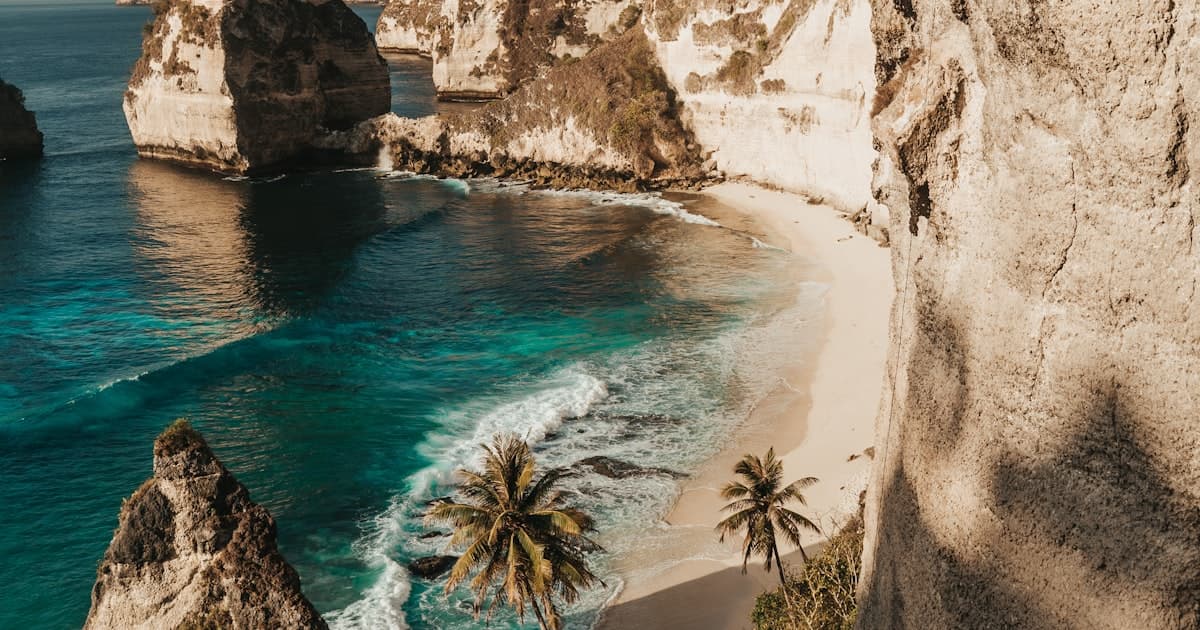
Kelingking is the beach you have seen on Instagram - the dramatic T-Rex-shaped cliff with a strip of white sand and impossibly blue water far below. The viewpoint alone is worth the trip to Nusa Penida. Getting down to the actual beach is another matter entirely.
Best for: Photography from the viewpoint, adventurous hikers (the climb down is steep and exposed). Swimming is possible at the bottom but currents are strong.
How to get there: Fast boat from Sanur to Nusa Penida (about 30–45 minutes), then a drive across the island. The roads on Nusa Penida are rough. See our full Nusa Penida day trip guide for logistics.
Entrance fee: IDR 25,000 for the viewpoint area.
Insider tip: The hike down to the beach takes 20–30 minutes and is steep, with sections where you are using fixed ropes on near-vertical terrain. Wear proper shoes, not sandals. Bring water. Go early - by 10am the viewpoint is packed with tour groups. If you are not confident with heights, the view from the top is spectacular enough.
14. Crystal Bay (Nusa Penida)
Crystal Bay has some of the clearest water around Bali. It is a sheltered cove with white sand, coconut palms, and excellent snorkeling right off the beach. Between July and October, manta rays and even mola mola (ocean sunfish) can be spotted in the deeper water nearby.
Best for: Snorkeling, swimming, a beach day on Nusa Penida. The water clarity is genuinely exceptional.
How to get there: Part of the standard Nusa Penida tour circuit. About 20 minutes from the main port.
Entrance fee: IDR 10,000.
Insider tip: The left side of the bay (facing the water) has the best coral for snorkeling. Currents can pick up in the afternoon, especially during the swell season, so snorkel in the morning. There are a couple of warungs on the beach for lunch.
15. Dream Beach (Nusa Lembongan)
Dream Beach on Nusa Lembongan is a small, perfectly formed cove with white sand, clear water, and dramatic cliff surroundings. It is more accessible than Nusa Penida's beaches and the island has a relaxed, backpacker-meets-boutique atmosphere that is very appealing.
Best for: Swimming (when conditions are calm), sunbathing, a day trip or overnight from Bali. The cliff-top bars have excellent sunset views.
How to get there: Fast boat from Sanur to Nusa Lembongan (about 30 minutes), then a short scooter or car ride. The island is small and easy to navigate.
Entrance fee: IDR 10,000.
Insider tip: Check the swell before swimming - Dream Beach can have strong waves and currents on bigger days. When it is calm, the water is heavenly. The neighboring beach, Sandy Bay, is a quieter alternative five minutes' walk north.
How to Choose the Right Beach for You
With 15 beaches across four regions, here is a quick guide based on what matters most:
Best for swimming: Nusa Dua (calm, clear, family-safe), Crystal Bay (stunning clarity), Bias Tugel (secluded white sand).
Best for surfing: Batu Bolong/Canggu (beginners), Balangan (intermediate), Padang Padang (advanced), Medewi (long rides).
Best for snorkeling: Amed (reef from shore), Crystal Bay (exceptional clarity), Pemuteran (restored reef).
Best for sunset: Balangan, Seminyak, Batu Bolong. The west-facing beaches of southern Bali all deliver.
Best for families: Nusa Dua (protected water, facilities), Sanur (calm lagoon, shallow).
Best for avoiding crowds: Bias Tugel, Thomas Beach, Pemuteran, Medewi, Kusamba.
Best for photography: Kelingking (iconic), Padang Padang (cliffs), Kusamba (fishing boats and salt farmers).
Practical Tips for Bali Beach Days
Sun protection is not optional. Bali sits close to the equator and the UV is intense. You will burn faster than you expect, even on overcast days. Reef-safe sunscreen protects both you and the coral.
Rip currents are real. Several of Bali's beaches have dangerous currents, particularly on the south coast during swell season (June–September). If you are not a confident ocean swimmer, stick to the beaches with protected water - Nusa Dua, Sanur, Crystal Bay when calm, and the north coast.
Bring cash. Many beach warungs, entrance gates, and parking attendants do not accept cards. Have small bills in IDR - 10,000 and 50,000 notes are most useful.
Go early. Almost every beach on this list is better before 10am. Less heat, fewer crowds, better light for photos, calmer water for snorkeling.
Respect the temples. Many Bali beaches have small temples at one end. Do not climb on them or take disrespectful photos. If a ceremony is happening, keep a respectful distance.
FAQ
Which beach in Bali is best for swimming?
Nusa Dua is the safest and most reliable swimming beach in Bali. The offshore reef breaks the waves, the water is calm and clear, and lifeguards are present in the resort area. For families with young children, it is the obvious choice. Sanur is another excellent option with similarly calm conditions.
Are Bali beaches safe?
Most Bali beaches are safe if you respect the ocean. The main risks are rip currents on the south coast (especially Kuta, Seminyak, Canggu) and strong waves at exposed beaches. Always swim between the red and yellow flags where lifeguards are on duty. Avoid swimming at beaches without lifeguard presence unless the water is visibly calm. Stingrays are occasionally present in shallow sandy areas - shuffle your feet when wading to avoid stepping on one.
What is the best beach for sunset in Bali?
Balangan Beach offers the most dramatic sunset setting - golden sand, cliff backdrop, and an unobstructed view over the Indian Ocean. Seminyak and Batu Bolong (Canggu) are excellent if you want sunset drinks at a beach club. For a quieter option, Medewi on the west coast has beautiful sunsets without the crowds.
Is Kuta Beach worth visiting?
Kuta Beach is Bali's most famous beach but also its most crowded and heavily commercialized. The sand is wide and the sunset is good, but the beach is often dirty, the hawkers are persistent, and the water quality is inconsistent. Most visitors who have time to explore will prefer Seminyak (slightly better), Canggu (much better surf scene), or the Bukit Peninsula beaches (dramatically better scenery and water). Kuta is convenient if you are near the airport and want a quick beach fix, but it should not be your main beach destination.
Can you swim at Canggu Beach?
Swimming at Canggu is possible but requires caution. The beaches here (Batu Bolong, Echo Beach, Berawa) have strong currents and a rocky bottom in places. Batu Bolong at low to mid tide is the safest option for a swim, but it is primarily a surf beach. If swimming is your priority, you are better off at Nusa Dua or heading to the Bukit Peninsula.
When is the best time to visit Bali beaches?
The dry season (April through October) offers the best beach weather - consistent sunshine, calm seas, and clear water. May, June, and September are the sweet spots for good conditions without peak crowds. The wet season (November through March) brings afternoon rain and rougher seas on the south coast, but mornings are often sunny and north coast beaches remain calm year-round.
Want to see the best of Bali's coastline without the hassle of navigating traffic and parking? Chat with us on WhatsApp - as certified local guides who speak French, Mandarin, and English, we can design a custom beach itinerary based on what matters most to you, whether that is surfing, snorkeling, family-friendly swimming, or simply finding the most beautiful stretch of sand away from the crowds. A private driver makes all the difference when the beaches you want to visit are scattered across the island.
Related Guides
<!-- internal-link-sweep:2026-04-29 -->
Certified Travel Guide & Co-Founder
A certified Bali guide credentialed by the Indonesian Ministry of Tourism, fluent in French, Mandarin, English, and Indonesian. Part of a family of certified guides who have been guiding travelers across Bali for many years — sharing temples, rice terraces, and hidden corners that never make the brochures.
Languages: French · Mandarin · English · Indonesian
Ready to discover Bali?
Tell us about your dream trip and our local experts will craft a personalized experience just for you.
Start Planning