Bali Digital Nomad Guide 2026 — Visa, Cost, and Where to Actually Live
A certified local guide's honest guide to living in Bali as a digital nomad: the new E33G nomad visa, monthly budgets, where to live (Canggu vs Ubud vs Uluwatu), and what the brochures don't tell you.
In This Guide
- Is Bali a Good Place to Live?
- The Bali Digital Nomad Visa — E33G Explained
- Requirements
- Cost and Application
- Other Visa Options
- How Much Does It Cost to Live in Bali as a Digital Nomad?
- Where the Money Actually Goes
- Where to Live — Canggu vs Ubud vs Uluwatu vs Sanur
- Canggu — The Default Nomad Hub
- Ubud — The Quieter, More Spiritual Choice
- Uluwatu and the Bukit — Cliffs, Surf, and Silence
- Sanur — Family Nomads and a Calmer Beach
- My Honest Recommendation
- Internet, Coworking, and Power Reliability
- Best Coworking Spaces in 2026
- Power and Outages
- Healthcare for Digital Nomads in Bali
- The Real Challenges (Not the Instagram Version)
- Traffic and Scooter Safety
- Rainy Season Productivity
- The Nomad Bubble
- Cost Creep
- Loneliness and Churn
- A Realistic First Month in Bali
- Is Bali Still Worth It in 2026?
- FAQ
- Is Bali a good place to live?
- How do I get a Bali digital nomad visa?
- How much do I need to live in Bali as a digital nomad?
- Where is the best place to stay in Bali for digital nomads?
- Is the internet in Bali good enough for remote work?
- Can I work on a tourist visa in Bali?
- What are the downsides of living in Bali?
- Is Bali safe for solo digital nomads?
- Related Guides
Quick answer: Bali is one of the best places in the world to live as a digital nomad. The new E33G Remote Worker Visa lets you legally work remotely for up to a year for a foreign employer, you can live comfortably on $1,500–2,500 USD per month, and Canggu and Ubud have dense communities of remote workers with fast coworking internet. The real challenges are traffic, the rainy season, and burning out on "nomad culture" — all manageable once you know what you are signing up for.
I live in Bali. I guide travelers around this island every week, and a growing share of them are digital nomads — people working remotely for a month, six months, or indefinitely. Some of them settle in. Others leave after three weeks exhausted. The difference is almost never about Bali itself. It is about how well they understood what they were walking into.
This guide is what I wish every remote worker had read before booking a one-way ticket. It covers the visa situation honestly, real monthly costs based on what nomads I know actually pay, where to live depending on your work style, and the specific things that trip people up — rainy season productivity, healthcare, scooter accidents, and the social dynamics of expat bubbles.
Is Bali a Good Place to Live?
Yes — for the right person, at the right stage. Bali works well if you can work independently, you can cope with imperfect infrastructure, you have savings for unexpected costs, and you are comfortable being a foreigner in a culture very different from your own. It works less well if you need a rigid 9-to-5 office environment, if you expect Western-grade healthcare within walking distance, or if your mental health depends on stable weather.
The island has been a nomad hub since roughly 2014. What changed recently is that Indonesia finally created a visa category that matches reality: the E33G Remote Worker Visa, introduced in 2024, lets foreigners live in Bali legally while employed by a company outside Indonesia. Before 2024, most nomads were working on tourist visas and hoping immigration would not look too closely. That era is over.
The Bali Digital Nomad Visa — E33G Explained
Indonesia's Directorate General of Immigration launched the E33G Remote Worker Visa (commonly called the "Bali digital nomad visa") in April 2024. It is a single-entry visa valid for up to 12 months, renewable, for foreigners who work for a company registered outside Indonesia. The E33G is Indonesia's first visa category explicitly designed for remote workers — previously, nomads worked on tourist visas in a legal grey zone.
Requirements
- Employment contract with a non-Indonesian company, valid for at least 12 months
- Minimum annual income of $60,000 USD (or equivalent)
- Passport valid for at least 6 months beyond entry
- Proof of funds — typically $2,000 USD in your account
- Health insurance covering your stay in Indonesia
- Clean criminal background
- You cannot work for any Indonesian company or earn income from Indonesian sources
Cost and Application
The E33G costs approximately $250–350 USD in official government fees, though most applicants use a visa agent and pay $700–1,500 total. You apply online through the Indonesian e-visa portal, and processing typically takes 2–4 weeks. You receive the visa electronically before you arrive — no consulate visit required.
Other Visa Options
If you do not qualify for the E33G, the realistic alternatives are:
- Visa on Arrival (VOA) — 30 days, extendable once to 60 days. Good for a trial run but not legal if you are actually working
- B211A Tourist Visit Visa — 60 days, extendable twice for up to 180 days total. Also technically not for work
- Second Home Visa (E33E) — 5 or 10 years, requires $130,000 USD parked in an Indonesian bank account. Aimed at retirees and wealthy residents, not nomads
- KITAS (Kartu Izin Tinggal Terbatas — limited-stay work permit) — obtained through an Indonesian employer or your own Indonesian company (PT PMA, the foreign-investment company structure). More complex and expensive, but the only route if you want to actually earn income in Indonesia
See our full Bali visa guide for the complete breakdown of every visa category.
How Much Does It Cost to Live in Bali as a Digital Nomad?
Real monthly budgets for nomads I know in 2026, excluding international flights:
| Lifestyle | Monthly Budget (USD) | What It Looks Like |
|---|---|---|
| Backpacker nomad | $900–1,300 | Shared guesthouse, local food, scooter, one coworking day a week |
| Comfortable nomad | $1,500–2,500 | Private 1BR villa, mix of warungs and cafes, scooter + occasional Grab, coworking pass |
| Premium nomad | $3,000–5,000 | Modern villa with pool and staff, Western food, private driver, gym membership |
| Luxury residency | $6,000+ | Large villa, full-time staff, international school (if kids), private healthcare |
Where the Money Actually Goes
- Accommodation — $400–1,500 USD for a one-bedroom villa in Canggu or Ubud, depending on location, pool, and monthly vs nightly booking
- Food — $300–600 USD eating a mix of warungs (local restaurants, $2–4 per meal) and Western cafes ($6–12 per meal)
- Transport — Scooter rental $60–90 USD/month, fuel $20, or $200–400 for occasional private driver days
- Coworking — $100–200 USD for a full-month unlimited pass (Dojo Bali, BWork, Tropical Nomad, Outpost)
- Health and fitness — Yoga studio membership $80–150, gym $40–80, massage $8–15 per session
- SIM + data — $10–20 USD/month for unlimited 5G from Telkomsel or XL
- Visa and extensions — Amortize whatever you paid; if E33G $1,000/year that is about $85/month
For a full cost breakdown with more detail, see our Bali travel cost guide.
Where to Live — Canggu vs Ubud vs Uluwatu vs Sanur
The neighborhood you pick defines your Bali experience more than almost any other choice. Here is an honest comparison from someone who drives these areas every week.
Canggu — The Default Nomad Hub
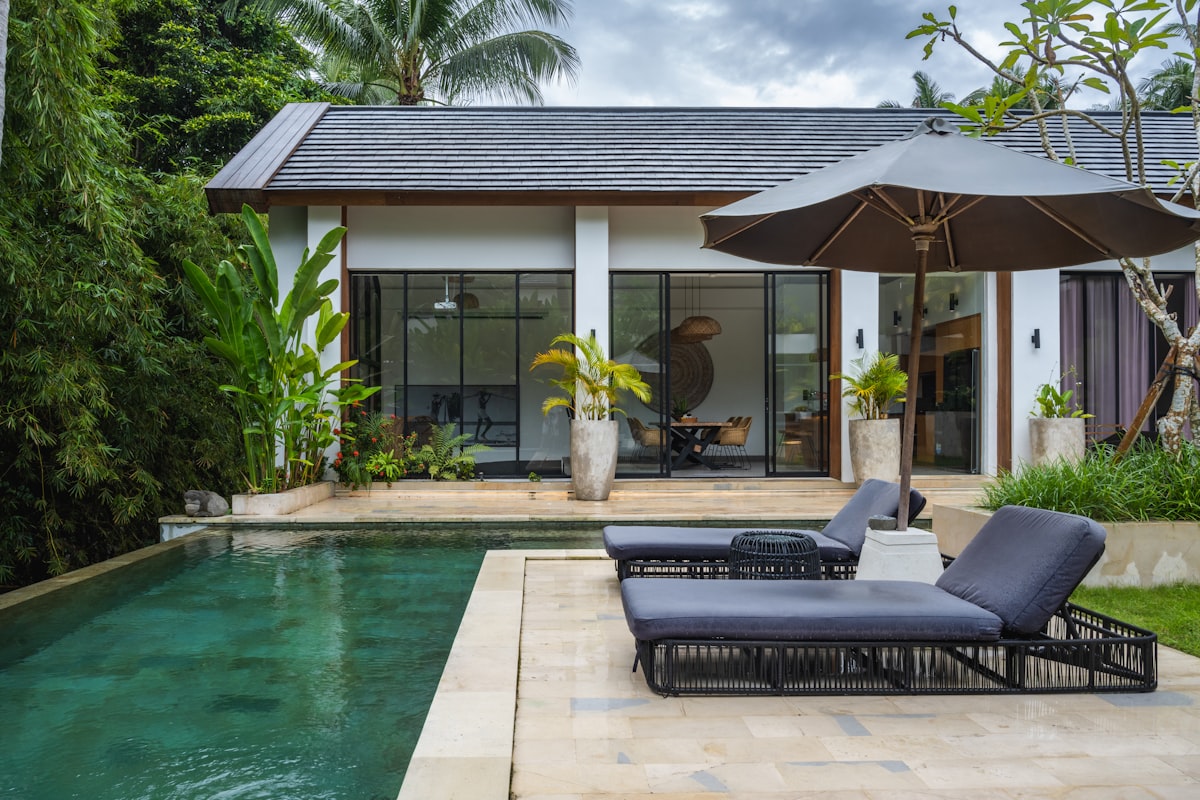
Canggu (pronounced "Chang-goo") is where most first-time Bali nomads land. It has the densest concentration of coworking spaces, Western cafes, surf schools, and yoga studios on the island. Beach clubs, co-living villas, Sunday brunch crews — if you want instant community, this is where you go.
Pros: Easy to meet people, excellent coffee culture, close to the airport (45 min–1 hr), surf breaks at your doorstep, the best gym and fitness scene on the island.
Cons: Overbuilt, traffic on the main strip is legitimately awful, rice fields being paved over monthly, rental prices have doubled since 2021, heavy party scene if you are over that phase.
See our full Canggu guide for what to do there beyond work.
Ubud — The Quieter, More Spiritual Choice
Ubud sits in Bali's interior — jungle, rice terraces, temples, a slightly cooler climate. The nomad scene here is smaller and different in character: more yoga, more wellness, more people doing deeper work. Hubud (Bali's original coworking space, now Coworking Hub) is based here.
Pros: Calmer pace, stunning natural surroundings, stronger wellness and spiritual community, lower prices than Canggu, no beach but endless rice field walks, arguably Bali's cultural heart.
Cons: No beach (you are 1+ hour from the coast), fewer nightlife options, humidity is heavier inland, mosquitoes more present, rainy season feels rainier here.
See our Ubud guide for orientation.
Uluwatu and the Bukit — Cliffs, Surf, and Silence
The Bukit peninsula in Bali's south has become the "quieter alternative to Canggu" since 2023. Dramatic cliff beaches, world-class surf at places like Padang Padang and Uluwatu, a growing coworking scene, and significantly less traffic than Canggu.
Pros: Best surf on the island, dramatic coastline, emerging but less crowded nomad community, good climate (drier than Ubud).
Cons: Farther from Ubud and central Bali for day trips, fewer restaurants than Canggu, water supply can be tight in dry season, still being built out — expect construction.
Sanur — Family Nomads and a Calmer Beach
Sanur on Bali's east coast is underrated for nomads with kids. Calm lagoon beach, walkable promenade, hospital nearby (BIMC Sanur), good international schools, none of the party scene.
Pros: Family-friendly, calm water for kids, mature infrastructure, lower prices than Canggu, 30 minutes to the airport.
Cons: Smaller nomad community, less "exciting," dining scene is solid but not trendy.
My Honest Recommendation
Most nomads should spend 2 weeks in each of Canggu, Ubud, and Uluwatu before signing a long lease. Your vibe in your first month is rarely your vibe in your sixth month.
Internet, Coworking, and Power Reliability
Fiber internet is widely available in Canggu, Ubud, Sanur, Seminyak, and the Bukit. Home villa speeds are typically 50–200 Mbps. Most coworking spaces have 300 Mbps–1 Gbps dedicated connections with backup generators.
Want us to plan this trip for you?
Our certified guide will create a personalized itinerary based on your interests, pace, and travel style.
Get Your Free ItineraryBest Coworking Spaces in 2026
- Dojo Bali (Canggu, Batu Bolong area) — the first dedicated coworking space in Bali (founded 2014), multi-zone layout, 24/7 access
- BWork Bali (Canggu, Berawa) — opened 2018, quieter atmosphere, strong community events
- Tropical Nomad (Canggu) — stylish, workout-focused with gym onsite
- Outpost (Ubud and Canggu) — boutique, good for deep work, coliving attached
- Coworking Hub Bali (formerly Hubud, Ubud) — open-air jungle setting, one of Asia's earliest coworking spaces (founded 2013)
- Karang Community (Sanur) — family-friendly, includes childcare
Power and Outages
Bali's grid has improved dramatically but outages still happen — typically 1–3 short cuts per month in most neighborhoods, usually restored within an hour. If you do critical live calls, work from a coworking with a generator or buy a small UPS for your home office.
Healthcare for Digital Nomads in Bali
Bali has decent private healthcare for routine and urgent issues. The top hospitals are:
- BIMC Hospital Nusa Dua and BIMC Hospital Kuta (Bali International Medical Centre) — international-standard, English-speaking, accept most foreign insurance
- Siloam Hospital Denpasar — full-service, large, newer wing, part of Indonesia's largest private hospital group
- Kasih Ibu Hospital (Denpasar) — reliable for general care, bilingual English/Indonesian staff
For anything serious — major surgery, complex specialist care, cancer treatment — the common nomad move is to fly to Singapore, Bangkok, or back home. Your health insurance must include medical evacuation coverage. Expect to pay $50,000–150,000 USD for an uninsured evacuation.
Pharmacies (apotik) are on every corner and carry most common medications. Dental care is excellent and a fraction of Western prices — nomads routinely fly in just for dental work.
Build a relationship with one clinic before you need them. I send my guests to BIMC for tourist-grade care because their intake process in English is painless.
The Real Challenges (Not the Instagram Version)
Traffic and Scooter Safety
Bali traffic is the single biggest threat to your quality of life and physical safety. Scooter accidents are by far the most common cause of nomad injuries — you will see bandaged visitors limping around Canggu every week. If you have never ridden a scooter before, Bali is not the place to learn.
If you do ride: wear a proper helmet (not the cheap rental one), never ride at night on unlit roads, and factor accident risk into your insurance coverage. For longer trips or days when you want to actually work between stops, hire a private driver — it is $35–55 USD for a full day and infinitely safer.
Rainy Season Productivity
Rainy season runs roughly November through March. Heavy afternoon downpours are the norm. Your roof leaks, the internet flickers, mold appears in corners of your villa, and motivation takes a hit. Plan around this: either work through it with a good dehumidifier, or travel for part of it. Our Bali rainy season guide explains what to actually expect month by month.
The Nomad Bubble
Canggu in particular has developed a bubble effect — you can spend months only interacting with other nomads, eating Western food, speaking English, and never meaningfully engaging with Balinese culture. This is not inherently bad, but it is often why people burn out and leave confused about why Bali "did not click." Make friends outside the nomad scene. Learn some Indonesian. Attend a local temple ceremony. Hire a certified local guide for a day that is not a tour but a conversation.
Cost Creep
Bali in 2026 is not the $500/month paradise of 2015. Canggu and Seminyak rental prices now rival Lisbon and Mexico City. Eating only at Western cafes, going out 4 nights a week, and paying for a premium villa can push you over $4,000/month easily. Going local — warungs, shared housing, scooter, local beaches — keeps you under $1,500.
Loneliness and Churn
Nomad communities turn over constantly. The friend you made last week is flying to Lisbon tomorrow. Building a stable social life in Bali takes deliberate effort — commit to a yoga studio, a regular coworking space, a specific café, and keep showing up.
A Realistic First Month in Bali
If I were advising a nomad landing in Bali next month, here is what I would do:
- Week 1 — book a hotel or guesthouse in Canggu or Ubud. Do not sign a long lease yet. Ride in a Grab, not a scooter. Walk the neighborhood twice a day. Work from 2 different coworking spaces. Eat at local warungs for at least half your meals.
- Week 2 — try a different neighborhood. If you started in Canggu, spend 4 nights in Ubud. See what you miss and what you do not.
- Week 3 — hire a private driver for a full day and tour Bali beyond the nomad strips. See Sidemen, the east coast, maybe a temple ceremony. This will reset your sense of what the island actually is.
- Week 4 — if you want to stay longer, now book a monthly villa through a reputable local agent (not Airbnb, which runs 40–60% more expensive for monthly stays). Start your E33G visa application if you have not already.
Is Bali Still Worth It in 2026?
Honestly, yes — but with fewer illusions than five years ago. The island is more crowded, more expensive, and more developed than when the digital nomad movement first discovered it. It is also more legal, has better infrastructure, more diverse neighborhoods to choose from, and a mature enough community that you can plug in quickly.
If you come expecting a cheap tropical paradise free of responsibilities, you will be disappointed. If you come expecting a beautiful, warm, deeply cultured island where you can build a productive and interesting life — with tradeoffs — Bali still delivers. Very few places in the world do.
FAQ
Is Bali a good place to live?
Yes, for people who can work independently and cope with imperfect infrastructure. Bali offers warm weather, strong expat communities in Canggu and Ubud, a low-to-moderate cost of living, and world-class nature. The limitations are traffic, rainy-season humidity, reliance on private healthcare, and distance from family back home. It suits remote workers, retirees, and creatives; it suits less well people who need rigid Western-style infrastructure or proximity to extended family.
How do I get a Bali digital nomad visa?
Apply for the E33G Remote Worker Visa through Indonesia's e-visa portal. You need a foreign employment contract valid for 12+ months, minimum $60,000 USD annual income, health insurance, and proof of funds. Processing takes 2–4 weeks and costs $250–350 in government fees, or $700–1,500 if you use a visa agent. The visa is valid for 12 months and renewable.
How much do I need to live in Bali as a digital nomad?
Plan for $1,500–2,500 USD per month for a comfortable lifestyle: private 1-bedroom villa, mix of local and Western food, scooter, coworking membership, and basic entertainment. Budget-conscious nomads can live on $900–1,300 by sharing housing and eating local. Premium lifestyles with a pool villa, driver, and Western food run $3,000–5,000+.
Where is the best place to stay in Bali for digital nomads?
Canggu for easy community and beach access. Ubud for quieter, wellness-oriented living. Uluwatu for surf and cliff-top calm. Sanur for families. Most first-time nomads should spend 2 weeks in each before committing to a longer stay — your vibe in month one is rarely your vibe in month six.
Is the internet in Bali good enough for remote work?
Yes. Most coworking spaces offer 300 Mbps–1 Gbps with backup generators. Home fiber in Canggu, Ubud, Sanur, and Uluwatu typically runs 50–200 Mbps. Power outages happen 1–3 times per month and are usually restored within an hour. For important video calls, work from a coworking space or keep a small UPS at home.
Can I work on a tourist visa in Bali?
Legally, no. The Visa on Arrival and B211A are tourist visas and do not permit work — even remote work for a foreign employer. Enforcement was historically loose but has tightened since the E33G launched in 2024. If you plan to work remotely from Bali for more than a few weeks, apply for the E33G Remote Worker Visa.
What are the downsides of living in Bali?
Traffic and scooter safety are the biggest real risks. Rainy season (November–March) tests your productivity. Healthcare handles routine care well but anything complex means flying out. Cost of living has risen sharply in Canggu and Seminyak. The nomad bubble in some areas can feel isolating from actual Balinese culture. None of these are dealbreakers, but underestimating them causes the "three-week nomad burnout" pattern.
Is Bali safe for solo digital nomads?
Yes. Bali is one of the safest destinations in Southeast Asia for solo travelers and residents, including women. Violent crime against foreigners is very rare. The real risks are scooter accidents, petty theft, and occasional scams — all manageable with basic awareness. See our is Bali safe guide for the complete safety breakdown.
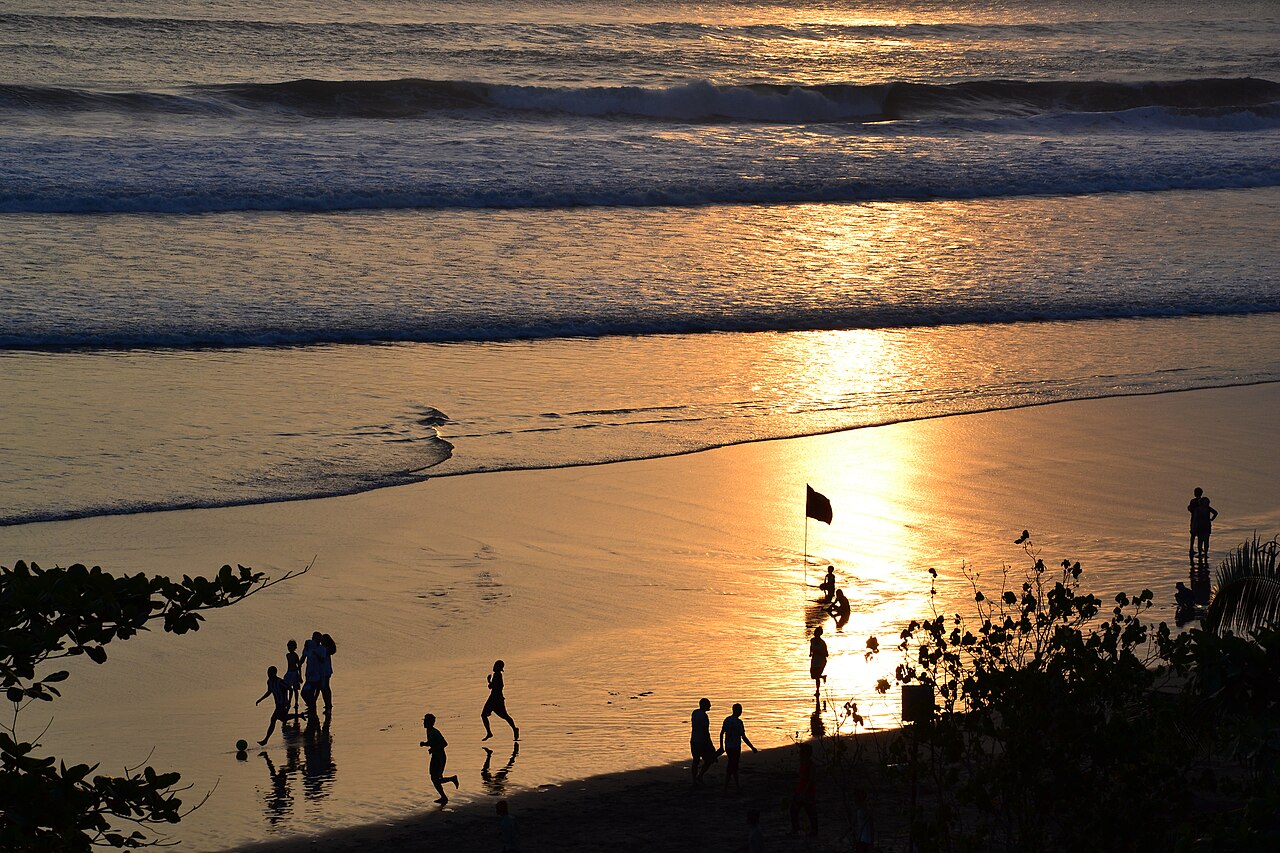
Cover photo: "Canggu beach 1.jpg" by Mx. Granger via Wikimedia Commons, licensed under CC0.
Related Guides
<!-- internal-link-sweep:2026-04-29 -->
Certified Travel Guide & Co-Founder
A certified Bali guide credentialed by the Indonesian Ministry of Tourism, fluent in French, Mandarin, English, and Indonesian. Part of a family of certified guides who have been guiding travelers across Bali for many years — sharing temples, rice terraces, and hidden corners that never make the brochures.
Languages: French · Mandarin · English · Indonesian
Ready to discover Bali?
Tell us about your dream trip and our local experts will craft a personalized experience just for you.
Start Planning