Seminyak Beach: A Local Guide to Bali's Most Famous Sunset Stretch
Everything you need to know about Seminyak Beach — the long sandy stretch famous for sunset, beach clubs, and beginner surf, with practical advice from a certified guide family living in Bali.
In This Guide
- Where Seminyak Beach sits on the coast
- What Seminyak Beach is really like
- Best sections of Seminyak Beach
- Double Six (south end)
- Central Seminyak (the Ku De Ta stretch)
- Petitenget (north end)
- Best time to visit Seminyak Beach
- Swimming and surfing at Seminyak Beach
- Seminyak Beach clubs and sunset spots
- Where to stay near Seminyak Beach
- Seminyak vs Kuta vs Canggu beaches
- Getting to Seminyak Beach
- Safety and practical tips
- Seminyak Beach FAQ
- Related Guides
Seminyak Beach is a 5-kilometer stretch of soft grey sand on Bali's southwest coast, just north of Kuta and Legian. It's best known for long golden sunsets, a dense line of beach clubs (KU DE TA, Potato Head, La Plancha), beginner-friendly surf in the morning, and an upscale town behind it full of boutiques and restaurants. It suits travelers who want walkable nightlife and ocean without the Kuta crowd.
We're a family of certified Bali guides who've lived on the island for many years, and Seminyak Beach is usually the first patch of sand our clients see after a long-haul flight. It's the easy answer to "where do we start the trip" — close enough to the airport to not need a long drive, developed enough that you can find a good coffee at 6 AM, but still a proper Indian Ocean beach with surf, sunset, and the scent of sandalwood incense in the air.
This guide covers what Seminyak Beach is actually like, the best section for your vibe, when to show up, and how it compares to Kuta and Canggu.
Where Seminyak Beach sits on the coast
Seminyak Beach is part of Bali's southwest coastline, the long sandy arc that runs from Tuban (near the airport) up through Kuta, Legian, Seminyak, Petitenget and on to Canggu. It's one continuous beach — the sand never really stops — but each town has its own personality.
Seminyak is positioned as the upscale beach town in that chain. Kuta and Legian to the south are cheaper, louder, and more backpacker-y. Canggu to the north is younger, scruffier, and dominated by the digital-nomad scene. Seminyak sits in the middle in age (30s–50s), higher in price, and heavier on boutique hotels, spas, and restaurants you'd want to dress up a little for. The beach is the same Indian Ocean sand, but the town behind it changes the whole feel.
What Seminyak Beach is really like
The beach itself is wide — about 50 meters of sand at low tide, narrower when the afternoon tide comes in. The sand is a warm medium-grey, not white. It's fine-grained and firm underfoot, which makes it comfortable to walk barefoot. The sea is the open Indian Ocean, so there's almost always surf. Don't expect the glassy turquoise of Nusa Penida or the calm shallows of Amed — Seminyak is surf and sunset, not snorkeling.
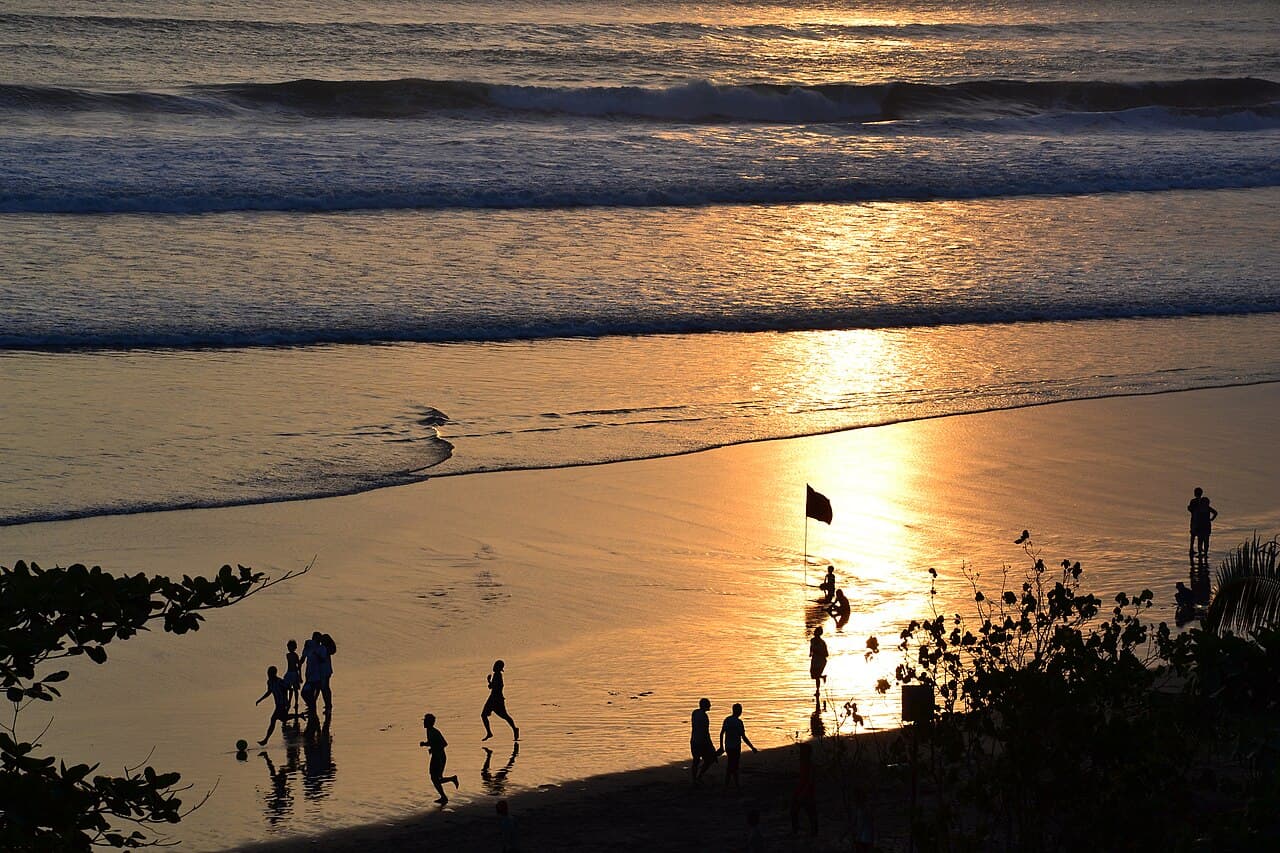
Mornings (6–9 AM) are the quietest time. You'll see joggers, surf lessons, local offerings of flower petals on the sand, and a handful of photographers. By midday the sun is brutal and there's very little natural shade outside the paid beach-bed rows. From 4 PM onward the beach fills up for sunset — beanbag bars put out mats and fairy lights, hawkers offer cold Bintangs from coolers, and the whole stretch slowly turns into a long outdoor cocktail hour. After sunset (~6:20 PM most of the year) the crowd thins within 30 minutes as everyone moves into town for dinner.
Hawkers are a reality. Sarongs, bracelets, braids, massages, watches, coconuts, beer — they'll approach you politely. A smile and "no thank you" works; there's no aggression. On the quieter Petitenget end you'll be bothered less.
Best sections of Seminyak Beach
Seminyak Beach is 5 km long but most of the action sits in three clusters. Knowing which one you're walking into saves a lot of wandering.
Double Six (south end)
The southern edge, where Seminyak meets Legian, is organized around Double Six Beach. It's the cheapest, most lively section — rows of plastic beanbags from IDR 50,000–100,000 (drink included), live reggae on Fridays, surfboard rentals along the sand, and a younger, more international crowd. This is where most budget travelers and first-time Bali visitors end up for sunset. Expect music overlapping from four different bars at once.
Central Seminyak (the Ku De Ta stretch)
The middle section, roughly in front of Jl Kayu Aya (Eat Street) and KU DE TA, is the polished heart of the beach. Sand is raked daily by the big hotels (The Oberoi, W, Alila Seminyak), and beanbag rental here is more like IDR 150,000–250,000 with a minimum spend. The crowd is thirty-plus, dressed up, and the sunset view is unobstructed. This is our default recommendation for couples.
Petitenget (north end)
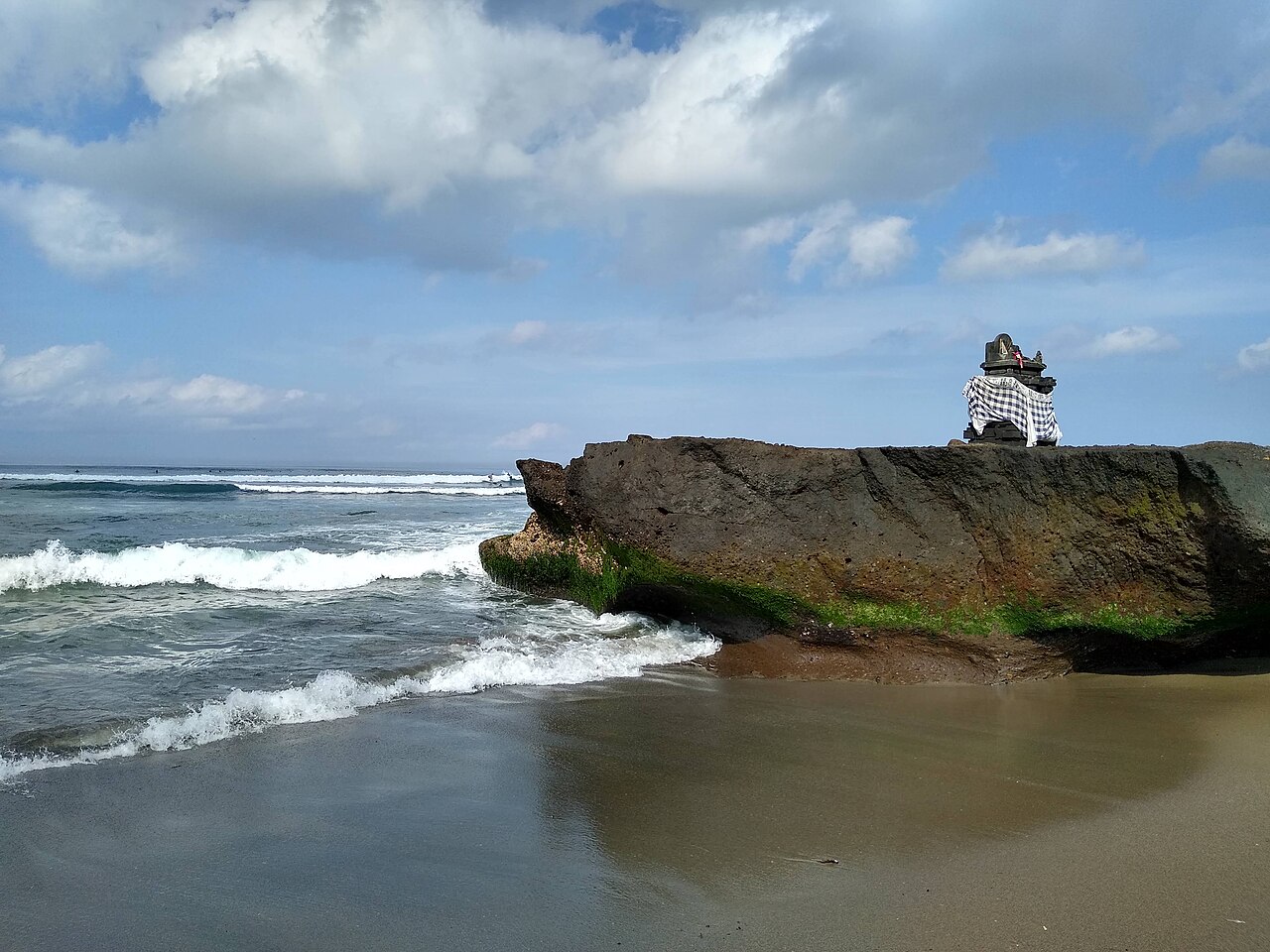
Keep walking north past KU DE TA and you reach Petitenget Beach, which shares the sand but feels like a different world. It's quieter, less developed, backed by Potato Head Beach Club and a few Balinese temples right on the waterline. The crowd thins out, hawker pressure drops, and you can actually hear the waves. On a full-moon evening you'll see local families making offerings at Petitenget Temple — a useful reminder that this is still a working Balinese coast, not just a resort strip.
Best time to visit Seminyak Beach
Dry season (May to October) is the easy answer. Sunsets are reliably clear, the sea is calm in the mornings, and the beach is walkable end-to-end. July and August are peak — hotel prices double, beach clubs require reservations a week out, and sunset spots fill by 5 PM. June and September give you the same weather with noticeably thinner crowds; those are our favorite months to send travelers.
Wet season (November to March) is more nuanced than travel blogs make it sound. Mornings are often sunny; rain tends to come in 1–2 hour afternoon bursts. Sunsets can be dramatic (cloud layers lit orange) or completely washed out. The sea is rougher, there's more plastic debris washed up on the sand after storms, and rip currents get stronger. It's still a fine time to visit Bali — just don't book a trip only for the beach. We cover this in more depth in our best time to visit Bali guide.
Time of day matters:
- 6:00–9:00 AM — best light, emptiest beach, calmest sea, best time for beginner surf lessons.
- 10:00 AM–3:00 PM — strong sun, minimal shade, most people retreat to pools or lunch.
- 4:30–6:30 PM — the main event. Show up at 4:30 for a good beanbag, 5:30 if you just want to stand and watch.
- After 7 PM — quiet walk on damp sand, a few late-dinner venues still lit on the beachfront.
Swimming and surfing at Seminyak Beach
Seminyak Beach is open ocean, and the Indian Ocean here has teeth. Rip currents are a genuine hazard, especially in the afternoon and during the wet season. Every year there are rescues, and occasionally drownings — usually tourists who underestimate the pull.
Practical rules:
- Swim only between the red-and-yellow flags. Balawista lifeguards patrol the main sections from around 7 AM to 6 PM. If there are no flags, don't swim past waist depth.
- Stay out of the brown-churned water. That's a rip pulling sand off the beach back out. A cleaner, flatter water surface is often the rip, not the calm patch it looks like.
- Mornings are safer than afternoons. The sea wakes up as the day heats.
- If you feel pulled out, swim parallel to the beach (not against the current) until you escape the rip, then come in.
For surfing, Seminyak is a genuinely good beginner break. The waves are soft beach-break rollers over sand (not reef), which means forgiving wipeouts. Surf schools line the sand from Double Six up to Petitenget. A 2-hour group lesson with board and rashguard runs IDR 400,000–650,000 (~$25–40 USD). Our honest opinion: Seminyak is fine for your first stand-up ever, but if you've already had a few lessons, the waves at Canggu's Batu Bolong are more fun. Intermediate surfers should head further — we break down the options in our Bali surfing guide.
Seminyak Beach clubs and sunset spots
The beach clubs are half the reason people come to Seminyak. They're arranged along the sand in a rough price gradient, south to north.
La Plancha (central Seminyak) is the famous colorful beanbag and umbrella stretch. Entry is free; you pay by the drink. Beers around IDR 60,000–80,000, cocktails IDR 120,000–180,000 (~$7–11 USD). Casual, no reservation, barefoot. Good for a first sunset.
La Favela area — a strip of small beach bars with live music and cheaper drinks, popular with the 20s crowd. Expect IDR 50,000 beers and whoever's DJing that night.
KU DE TA is the original Seminyak beach club, right on the sand. Still the most polished sunset scene on the whole stretch. Expect a IDR 500,000 minimum spend on a sunbed, cocktails IDR 180,000–250,000 (~$11–16 USD), and a dress code. Reserve a day or two ahead in high season.
Want us to plan this trip for you?
Our certified guide will create a personalized itinerary based on your interests, pace, and travel style.
Get Your Free ItineraryPotato Head Beach Club (Petitenget end) is bigger and more architectural — infinity pool, amphitheater lawn, an art-gallery feel. Day passes run IDR 500,000–750,000 (~$30–45 USD) credited to food and drink. Cocktails IDR 160,000–240,000. It's our pick if you want one beach club day rather than bar-hopping.
A quiet tip: you can watch the exact same sunset from the free sand in front of the clubs. Buy a Bintang from a hawker for IDR 30,000, sit on your own sarong, and you've saved IDR 450,000. We tell first-timers to do one paid club sunset for the experience, and the other nights from the sand.
Where to stay near Seminyak Beach
Seminyak's walkability is one of its best features — if you pick the right street. Stay within 10 minutes' walk of the beach and you skip scooter rental entirely.
Budget (under $50/night): Look around Jl Drupadi or the inner lanes behind Double Six. Guesthouses and small hotels with a pool, basic breakfast, and a 10–15 minute walk to the sand. Good for solo travelers and couples on a first Bali trip.
Mid-range ($70–150/night): The Jl Kayu Aya / Eat Street area is the sweet spot. Boutique hotels with one or two pools, walkable to 50+ restaurants and the central beach. Our most-booked category for clients.
Luxury ($200+/night): Beachfront — The Oberoi, Alila Seminyak, The Legian, W Bali. Direct beach access, private pools, and the kind of service that makes the price make sense. For a proper comparison with Ubud and Canggu at similar price points, see our Ubud vs Canggu vs Seminyak breakdown.
A practical note: anything advertised as "Seminyak" more than 15 minutes by scooter from the beach is really Kerobokan or Umalas. The address line still says Seminyak; the experience is different. Check the map pin before booking.
Seminyak vs Kuta vs Canggu beaches
All three beaches are on the same sand — the difference is everything behind the sand.
Kuta Beach is the oldest tourist hub. It's wide, flat, and has the best beginner surf in Bali, but the town is visibly tired: cheap bars, aggressive hawkers, traffic jams, and a reputation for pickpocketing that isn't entirely unearned. It's cheap and convenient to the airport, and that's the case for it.
Seminyak Beach is what Kuta grew up into. Same ocean, better hotels, more expensive drinks, softer hawker pressure, and a dinner scene you'd actually choose on its own merits. It trades some grit for polish.
Canggu's beaches (Batu Bolong, Echo Beach, Berawa) are younger, scrappier, and aimed at surfers and the long-stay crowd. The waves are better than Seminyak's, the cafés are hipper, but the traffic on the narrow roads is brutal and the sand is often more crowded in a different way — more surfboards, fewer sunbeds.
Our default advice: Seminyak for a first Bali trip, Canggu for a second, Kuta only if you need cheap and near-airport. Compare these honestly in our best beaches in Bali roundup.
Getting to Seminyak Beach
From Ngurah Rai Airport (DPS): Seminyak is about 12 km north, a 30-minute drive with no traffic — or an hour in Friday rush. Use the official airport taxi counter (IDR 250,000–300,000 / $15–18 USD) or a Grab/Gojek (IDR 150,000–200,000 / $9–12 USD). Most hotels will also send a driver for around IDR 300,000.
From Ubud: 1.5–2 hours by private driver. Expect IDR 450,000–600,000 one-way (~$27–37 USD). Public shuttles exist (Perama) for cheaper, but run on a fixed schedule.
From Canggu: 20–40 minutes depending on traffic. Scooter in 15 minutes along Jl Pantai Berawa, taxi IDR 100,000–150,000.
If you plan to move around the island, a full-day private driver runs IDR 600,000–800,000 (~$37–50 USD) for 10 hours. We arrange this for our clients through vetted drivers who speak good English — it's part of every guided tour package we run.
Parking: Beach parking is street-side and chaotic. Jl Kayu Aya has metered lots (IDR 5,000 for a car, IDR 2,000 for a scooter). Don't leave valuables visible.
Safety and practical tips
- Cash and valuables: Don't take anything to the beach you'd hate to lose. Phones get splashed, bags get walked off with at crowded sunset. Beach clubs have lockers; bring a small padlock.
- Jellyfish: Occasional during wet-season transitions, usually small and not dangerous. If stung, rinse with seawater (not fresh) and ask a lifeguard for vinegar.
- Sunset crowds: Jl Kayu Aya from 4:30 PM onward is a scooter gauntlet. Walk on the beach side, not the road side. Cars queue for valet at KU DE TA and can block the footpath.
- Hawker etiquette: Make eye contact, smile, "no thanks" once. They move on. Never start a negotiation if you don't intend to buy — that's how sarong saga begins.
- Scooter traffic in Seminyak town: The one-way system on Jl Kayu Aya catches out tourists. If you're driving, trust Google Maps over intuition, and pay the valet IDR 5,000.
- ATMs: Use ones inside banks or hotels, not freestanding ones on the street — card skimming happens.
- Sunscreen: Bring reef-safe. The sun at 8 degrees south of the equator will find the patch you missed.
Seminyak Beach FAQ
Is Seminyak Beach safe for swimming? Only between the red-and-yellow lifeguard flags, which cover the central and Double Six sections from about 7 AM to 6 PM. Rip currents are real and pull strong in the afternoon, especially in wet season. Strong swimmers still drown here every year; never underestimate the Indian Ocean.
Can you surf at Seminyak Beach as a beginner? Yes — it's one of the best beginner breaks in Bali. Soft sand-bottom waves, plenty of surf schools on the sand, and warm water year-round. A 2-hour group lesson costs IDR 400,000–650,000 with board and rashguard. Morning sessions are calmer and less crowded.
What's the best sunset spot on Seminyak Beach? For a polished paid experience, KU DE TA or Potato Head (reserve ahead). For atmosphere without the bill, La Plancha's colorful beanbags or a sarong on the free sand between La Plancha and KU DE TA. Petitenget is quieter if you want the sunset without a crowd.
How far is Seminyak Beach from the airport? About 12 km / 30 minutes from Ngurah Rai (DPS) with no traffic, up to an hour in rush. Official taxis are IDR 250,000–300,000, Grab rides IDR 150,000–200,000. Most hotels offer airport transfers for around IDR 300,000.
Is Seminyak Beach family-friendly? Yes, with caveats. The sand is wide and soft, and mornings are calm enough for kids to wade at the edge. The Indian Ocean is not a kids' swimming pool — stick to the flagged zones, ankle-depth only for under-10s, and consider a hotel pool for real swim time. The town behind is walkable with strollers on the main streets.
Are Seminyak Beach clubs worth it? For one sunset, yes — particularly Potato Head for the architecture or KU DE TA for the classic view. They stop being worth it when you do them three nights in a row. Our standard advice is one paid club sunset and the rest from the free sand with a cheap Bintang.
When does Seminyak Beach get crowded? July, August, Christmas / New Year, and Chinese New Year are the heaviest. Daily, the crowd builds from 4 PM to 6:30 PM for sunset, then clears. June, September, and early October give you the same weather with noticeably fewer people — our favorite window.
If you're weighing Seminyak against Ubud or Canggu for your base, our where to stay comparison walks through the trade-offs. And if you'd rather skip the planning, our family runs bespoke Bali itineraries with certified French, English and Mandarin guides — hit us on WhatsApp below and we'll put something together that actually fits your trip.
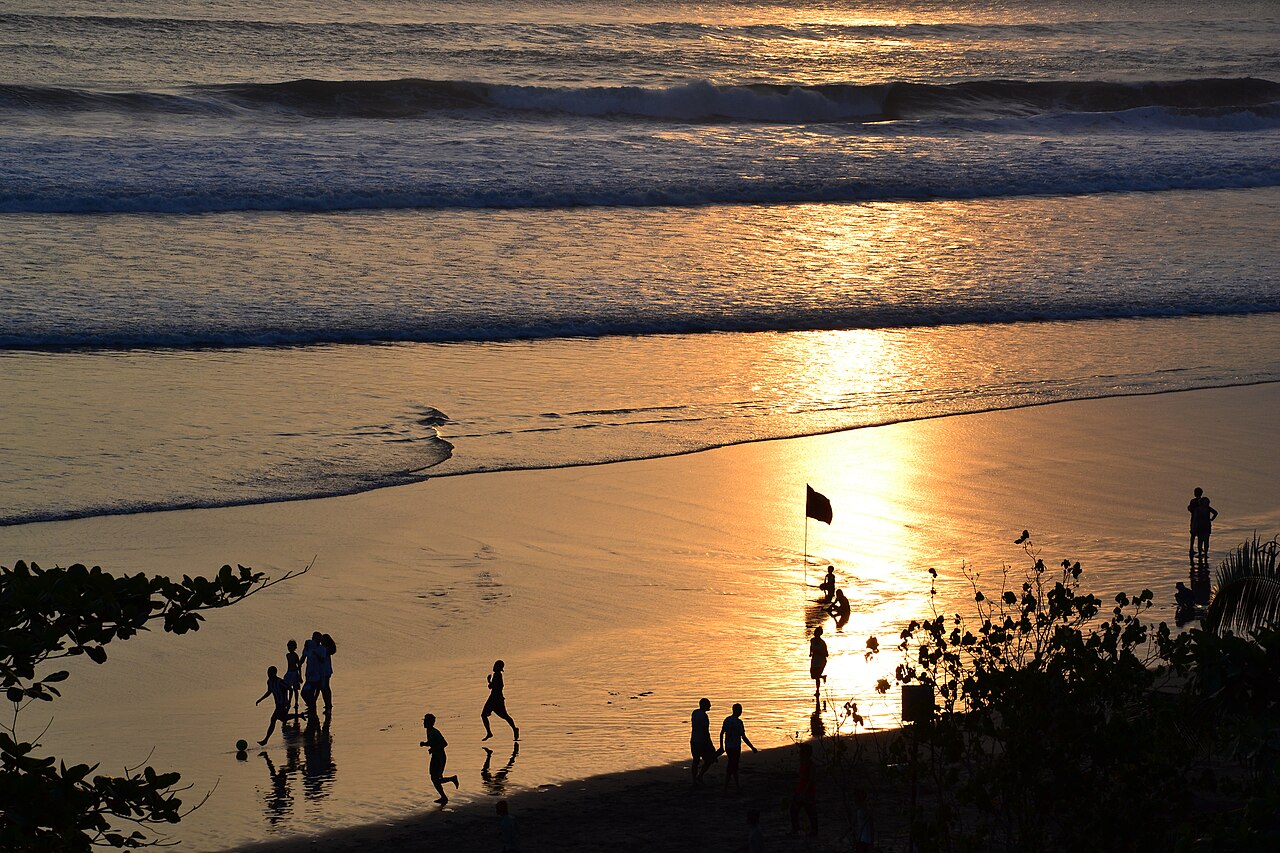
Cover photo: "Bali sunset (6924455664).jpg" by Simon_sees from Australia via Wikimedia Commons, licensed under CC BY 2.0.
Related Guides
<!-- internal-link-sweep:2026-04-29 -->
Certified Travel Guide & Co-Founder
A certified Bali guide credentialed by the Indonesian Ministry of Tourism, fluent in French, Mandarin, English, and Indonesian. Part of a family of certified guides who have been guiding travelers across Bali for many years — sharing temples, rice terraces, and hidden corners that never make the brochures.
Languages: French · Mandarin · English · Indonesian
Ready to discover Bali?
Tell us about your dream trip and our local experts will craft a personalized experience just for you.
Start Planning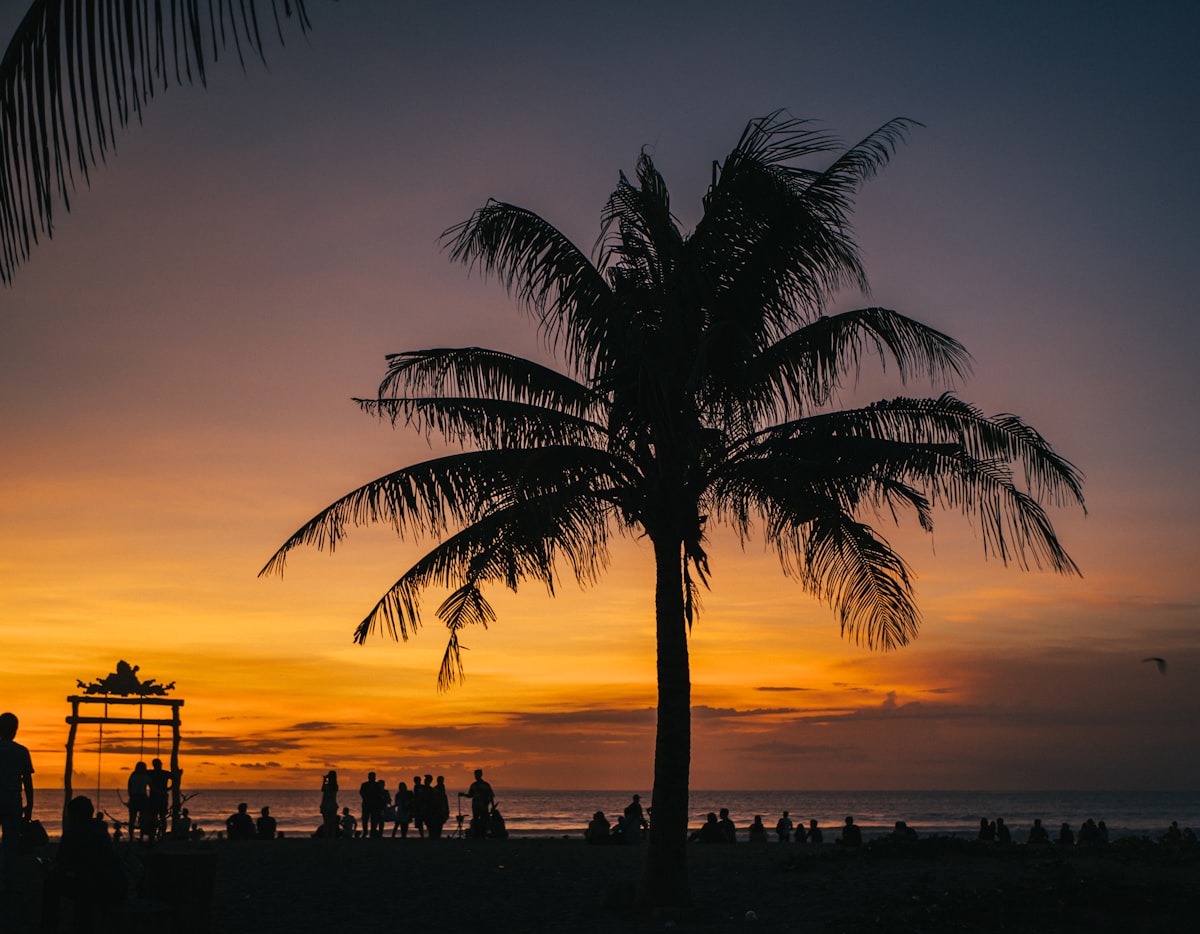
.jpg)