Quick answer: Jimbaran is a coastal village on Bali's southern peninsula, famous for its 4 km crescent of golden sand, beachside seafood grill restaurants serving fresh fish on the sand at sunset, and a cluster of flagship luxury resorts (Four Seasons, Mulia, Ayana). It is the closest beach destination to Ngurah Rai International Airport — about 10 to 15 minutes by car — making it a popular first or last night before a flight. Stay 2–3 nights to enjoy the beach, eat at Muaya or Kedonganan, visit the morning fish market, and take a short trip to Uluwatu's clifftop temples. Best visited April to October.
Jimbaran is the part of Bali that travelers tend to discover slowly. The village sits on a wide bay just south of the airport, sheltered from the open Indian Ocean swell by the Bukit Peninsula, and life here still revolves around what the fishermen brought in that morning. The result is one of the most distinctive dining experiences on the island: long rows of plastic chairs and red-checked tablecloths set directly on the sand, lit by candles after dark, while waiters bring grilled snapper, prawns, and squid to your table as the sun drops into the sea. Behind that beach, a different Jimbaran exists — discreet luxury resorts on private cliffs, manicured gardens, and butler-service villas tucked into the hillside. The two coexist easily, and that contrast is exactly what makes the area work for honeymoon couples, families, and travelers who simply want a calm base near the airport without the crowds of Kuta or Seminyak.
Jimbaran Beach
Jimbaran Beach is a roughly 4-kilometre crescent of fine, light-gold sand running from the southern edge of the airport runway down to the foot of the Bukit cliffs. The bay is sheltered, the seabed slopes gently, and the waves are usually small — knee to waist height through most of the dry season — which makes it one of the safer swimming beaches in southern Bali. Children can paddle, families can wade, and adults can swim parallel to shore without being dragged by reef currents the way they might at Uluwatu or Canggu.
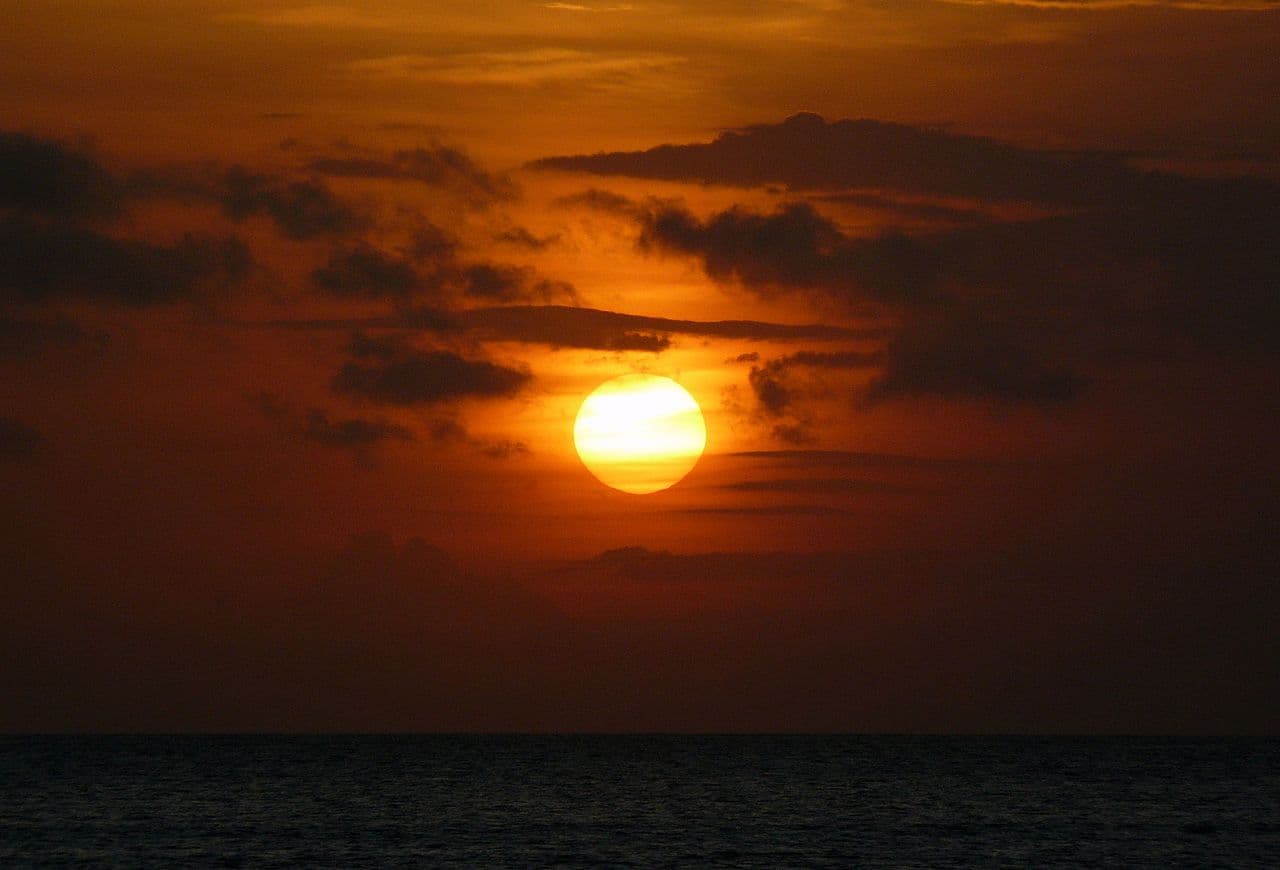
Sunset orientation — The bay faces almost due west. From any spot along the sand you watch the sun drop directly into the water, framed by fishing boats heading out for the night catch. Sunset times shift across the year (around 6:00 pm in May, closer to 6:30 pm in November); plan to be on the sand 30 to 45 minutes before to claim a table.
Swimming and sunbathing — The water is warm year-round (around 27 to 29 °C / 80 to 84 °F). The northern end near the airport runway is the calmest — sometimes glassy at dawn — and the southern end near the Four Seasons is slightly more exposed. There are no formal sun-lounger zones the way Seminyak has; most travelers either swim from their resort, lay a towel on the public sand, or rent a chair from one of the warungs.
Walking the beach — The full length is walkable in roughly an hour each way at a relaxed pace. A morning walk before 8:00 am is one of the best things to do in Jimbaran: the fish market is in full swing, fishermen are unloading colourful jukung outriggers, and the light is soft. Bring water and watch for jellyfish floats and discarded fishing line on the sand.
Beachfront Seafood Grill Restaurants
The "grilled fish on the sand at sunset" experience is the single most famous thing about Jimbaran, and it is genuinely the reason most first-time visitors come. The format has been the same for decades: you choose your fish, prawns, lobster, squid, or clams from an iced display, the kitchen weighs them in front of you, and 30 to 40 minutes later they arrive grilled over coconut husks with sambal matah, garlic kangkung, rice, and fruit. There are three distinct zones along the bay, each with its own character.
Muaya Beach (north-central) — The largest and liveliest cluster, often called the "Jimbaran Bay Cafe" zone. Dozens of restaurants line the beach with long rows of tables on the sand. The atmosphere is festive — Indonesian families on weekends, tour groups during peak season, live acoustic musicians moving table to table. Best for groups, first-timers, and travelers who want the quintessential Jimbaran scene. Expect mid-range pricing.
Kedonganan Beach (north end, beside the fish market) — The most authentic local choice. The restaurants here buy directly from the auction next door, which means the fish is the freshest you will find anywhere on the bay, and the prices are typically the lowest. The setting is less polished — fewer fairy lights, more plastic chairs — but the food often beats the bigger Muaya venues. Good for travelers who care more about quality than ambience.
Southern stretch (toward Four Seasons) — Quieter, more spaced out, and noticeably more upscale. Some venues here belong to or partner with neighbouring resorts, and the vibe shifts from "casual beach barbecue" to "candlelit dinner with linen napkins." Ideal for couples, anniversaries, and honeymoon dinners. Pricing is roughly 30 to 50% higher than Muaya for similar fish.
Indicative 2026 prices — Most beachside grills price seafood by weight. As a working baseline, a whole grilled fish (snapper, mahi-mahi) for two runs around 250,000 to 500,000 IDR (US$16 to US$33), a plate of prawns 200,000 to 400,000 IDR (US$13 to US$26), and lobster 800,000 IDR to 1.5 million IDR (US$53 to US$100) per kilo. Set menus including rice, vegetables, fruit, and a soft drink generally start at 175,000 IDR (US$11) per person. Prices shift with season and exchange rate — confirm by weight on arrival before the kitchen starts cooking.
Kedonganan Fish Market
Just north of the seafood restaurants sits Kedonganan Fish Market (Pasar Ikan Kedonganan), one of the largest working fish markets in Bali. This is not a tourist attraction set up for visitors — it is the supply chain that feeds half the island's restaurants, and watching it operate is one of the more memorable mornings you can spend in southern Bali.
Timing — The market is busiest between roughly 5:30 am and 8:00 am, when the night-fishing boats land their catch and wholesale buyers arrive from restaurants in Seminyak, Ubud, and Nusa Dua. By 9:30 am the auction is winding down. Arrive by 6:30 am for the best activity and the best light.
What you will see — Tuna, mahi-mahi, snapper, grouper, mackerel, prawns, squid, lobster, clams, and reef fish unloaded straight from the jukung outriggers. Buyers in rubber boots negotiate by hand signal. Women clean and gut fish on long concrete tables. There is a separate dry market section selling spices, salt, and chili paste.
Practical notes — Wear closed shoes; the floor is wet and slippery. Bring a wide-angle lens or phone for environmental shots, and ask before photographing individual vendors. The smell is strong; this is part of the experience but worth flagging if you are sensitive. Entry is free, no ticket required. Most travelers spend 30 to 45 minutes here, often combining the visit with breakfast at a nearby warung.
Luxury Resorts of Jimbaran
What distinguishes Jimbaran from neighbouring Kuta or Nusa Dua is the concentration of internationally recognised luxury resorts on the cliffs and coves around the bay. These properties shape the upper end of the area's identity and account for a large share of visitors who book Jimbaran as a destination rather than a stopover.
Four Seasons Resort Bali at Jimbaran Bay — One of the longest-established luxury resorts in Indonesia, built as a series of individual thatched villas with private plunge pools, set in landscaped gardens that step down to the southern end of Jimbaran Beach. The property is famous for its spa, its butler service, and the Sundara beach club restaurant, which has become a destination dinner in its own right.
The Mulia, Mulia Resort & Villas — Technically on the southern edge of Nusa Dua but functionally part of the Jimbaran-Bukit corridor, the Mulia complex combines a large international resort, a more intimate boutique resort, and standalone villas. Known for its Sunday brunch (one of the most elaborate buffets in Asia), oceanfront pools, and oversized rooms.
Ayana Resort and Spa Bali — Set on a clifftop above a hidden cove south of Jimbaran town, Ayana is best known internationally for its Rock Bar, a sunset cocktail venue carved into the limestone cliff at sea level, accessed by inclinator. The resort itself is a sprawling complex with multiple pools, several restaurants, and a separate adults-only Rimba section.
Other notable properties — Raffles Bali, InterContinental Bali Resort, Six Senses Uluwatu (a short drive south), and a number of boutique villas in the hills above the bay round out the upper-end accommodation in the area.
These are all bookable directly. Where Ohana Agency adds value is in pairing the resort with the rest of the trip — airport transfers, day trips to Uluwatu and Ubud with a multilingual guide, beachside dinner reservations, and discreet scheduling for honeymoons. Honeymoon couples in particular benefit from a French-or-Mandarin-speaking certified guide who can liaise with resort concierges in English while explaining temple etiquette and ceremony details in the couple's own language.
Things to Do in Jimbaran
Beyond the beach and the seafood, Jimbaran has more to offer than first-time visitors expect. Most of these can be done in a half-day, leaving the rest of the time free for the sand.
Paragliding from Timbis Beach — A short drive south of Jimbaran, the cliffs above Timbis Beach offer one of the most accessible tandem paragliding experiences in Bali. Flights typically last 15 to 25 minutes, with consistent thermal conditions in the dry season. Operators rotate, so book through your accommodation rather than walking up.
Surfing — Jimbaran Bay itself is too sheltered for proper surfing, but there are gentle reform waves on the inside of the bay during a good swell — suitable for absolute beginners. Intermediate and advanced surfers head 15 to 25 minutes south to Balangan, Bingin, Padang Padang, or Uluwatu. Surf schools in Jimbaran can pick you up and drop you back.
GWK Cultural Park (Garuda Wisnu Kencana) — A large cultural park about 15 minutes inland, built around a 121-metre statue of the Hindu god Vishnu mounted on the mythical bird Garuda — one of the tallest statues in the world. The site hosts daily Kecak and Barong dance performances, has several viewpoints, and works well as a half-day excursion paired with dinner back at the bay.
Tegal Wangi Beach and cave — A small, partly-hidden beach reached by a short stairway down the cliff at the southern end of Jimbaran. Famous for its natural rock cave that frames a sunset photograph beloved by Indonesian wedding photographers. Best at low tide. Bring water and sturdy footwear; the path is uneven.
Spa and wellness — Jimbaran is one of the better areas in Bali for serious spa days. Most resorts open their spas to outside guests, and there are a few standalone spas with strong reputations in the streets behind the beach. Allow at least a half-day to make the trip worthwhile; many spas offer combined massage, scrub, flower-bath, and high-tea packages.
Tegal Wangi Temple — A small clifftop temple beside the beach of the same name. Quiet, atmospheric at sunset, and almost never crowded. Wear a sarong if you intend to enter the inner courtyard.
Where to Stay in Jimbaran
Jimbaran's accommodation splits cleanly into three layers. Choose by budget and how close you want to be to the seafood beach.
Luxury resorts (3,000,000+ IDR / US$200+ per night) — Four Seasons, Ayana, Raffles, Mulia (slightly south), Six Senses Uluwatu (further south). Direct beach or clifftop access, spa, multiple restaurants, butler-style service. Best for honeymoons, anniversaries, and travelers booking Bali as a once-in-a-lifetime trip.
Mid-range hotels and villas (800,000–2,500,000 IDR / US$53–US$165 per night) — A wide selection of boutique hotels, private villas with pools, and recognised mid-tier brands in the streets behind the beach and on the hill above the bay. Most are a 5-to-15-minute walk or short scooter ride to the seafood restaurants. This tier offers the best value for couples and small families.
Budget guesthouses and homestays (200,000–600,000 IDR / US$13–US$40 per night) — Family-run guesthouses, simple losmen, and a small number of hostels mostly inland from the beach. Hot water and air conditioning are standard at the higher end of this range; the lower end can be fan-only. Best for solo travelers, surfers passing through to the Bukit, and anyone who plans to spend most of their time outside the room.
Proximity matters more than category — A common mistake is booking a "Jimbaran" hotel that is actually 10 to 15 minutes inland. Verify the address against the bay (Muaya, Kedonganan, or southern Jimbaran) before booking if beach access is part of your reason to come.
Jimbaran vs Seminyak vs Sanur
This is the most common comparison travelers run when choosing where to stay on their first Bali trip. The short version: Jimbaran is the calmest of the three, Seminyak is the most social, and Sanur is the most low-key. The table below breaks it down.
| Feature | Jimbaran | Seminyak | Sanur |
|---|---|---|---|
| Vibe | Resort, beach dinners, romantic | Beach clubs, shopping, nightlife | Quiet, family-friendly, low-key |
| Beach orientation | West-facing (sunset) | West-facing (sunset) | East-facing (sunrise) |
| Beach character | 4 km crescent, calm, soft sand | 3 km, surf + sunbathing | Long, calm, reef-protected lagoon |
| Surf | Beginner only (Bukit nearby) | Beginner to intermediate | Very gentle, mostly flat |
| Dining signature | Beachside seafood grill | Fine dining + beach clubs | Casual cafes, expat bistros |
| Nightlife | Quiet after 10 pm | Late, bars and clubs | Quiet after 10 pm |
| Airport transfer | 10–15 min | 30 min | 30–40 min |
| Best for | Honeymoons, families, last night | Couples, groups, shoppers | Retirees, families, long stays |
| Typical stay | 2–3 nights | 2–4 nights | 3–5 nights |
If you are torn between Jimbaran and Seminyak, the deciding question is usually: do you want to dress up for a beach club, or sit barefoot on the sand for dinner? If you are torn between Jimbaran and Sanur, it comes down to whether you want sunsets or sunrises, and whether you want a stronger luxury-resort scene (Jimbaran) or a stronger village walking-and-cycling scene (Sanur).
Day Trips from Jimbaran
Jimbaran's position on the south coast makes it one of the better bases on the island for day trips, particularly to the Bukit Peninsula.
Uluwatu Temple and Bukit beaches (20 minutes south) — The single most popular day trip from Jimbaran. A typical itinerary covers Padang Padang or Bingin Beach in the morning, lunch at a clifftop warung, Uluwatu Temple and the Kecak fire dance at sunset, and dinner back in Jimbaran. The drive is short, the scenery dramatic, and a private driver makes the timing easy. See our full Uluwatu destination guide for details.
Kuta and Legian (15 minutes north) — Closer than most travelers realise. A half-day trip covers the surfing beach, the Bali Bombing Memorial, and the busier shopping along Jalan Pantai Kuta. Skip if you have already seen Seminyak.
GWK Cultural Park (15 minutes inland) — The Garuda Wisnu Kencana statue and cultural complex, with daily dance performances and panoramic views of the Bukit Peninsula. Easy half-day or evening trip combining well with dinner back at the bay.
Nusa Dua and Tanjung Benoa (20 minutes east) — Calm-water swimming beaches and a watersports hub at Tanjung Benoa (parasailing, banana boat, jet ski). Useful for families with younger children who want a different beach atmosphere for a day.
Seminyak day trip (30 minutes north) — A reasonable day trip if you want to combine Jimbaran's beach-dinner calm with a Seminyak shopping or beach-club afternoon. Read our Seminyak guide for context.
Ubud (90 minutes inland) — Doable as a full day trip, though most travelers prefer to split their stay and spend two or three nights in Ubud separately. A private driver is essential — public transport is impractical.
All of these are best done with a private driver. Expect to pay 600,000 to 900,000 IDR (US$40 to US$60) for a 10-hour driver day, fuel and tolls included. See our private driver page for booking.
Practical Tips
Transport — Jimbaran is small enough to walk inside one zone (Muaya, Kedonganan, southern beach), but moving between zones means a scooter, taxi, or driver. Grab and Gojek apps work but are sometimes restricted near resort entrances; resorts usually have their own taxi association on call. For day trips, hire a private driver — significantly less frustrating than juggling rideshares.
Beach dinner pricing (2026 baseline) — Whole grilled fish for two: 250,000–500,000 IDR (US$16–US$33). Prawn plate: 200,000–400,000 IDR (US$13–US$26). Lobster: 800,000 IDR–1.5 million IDR (US$53–US$100) per kilogram. Set menus per person: from 175,000 IDR (US$11). Always confirm the price by weight before the fish goes on the grill, and ask if drinks and rice are included. Tax and service (plus 10–16%) are usually charged on top at the more upscale southern restaurants.
Safety on the beach — The bay is calm by Bali standards, but currents pick up after heavy rain and during full-moon high tides. Watch for fishing line and discarded hooks on the sand. Do not leave bags unattended at sunset — the beach gets crowded and opportunistic theft does happen. Stick to well-lit zones after dark.
ATMs and money — ATMs are abundant on Jalan Bukit Permai and in front of the larger resorts. Most beach restaurants accept cards but add a 3% surcharge; cash is faster and often gets a small discount. The fish market and small warungs are cash only.
Connectivity — Mobile data coverage is reliable across the bay. Resort wifi is generally fast. The airport-area Telkomsel and XL Axiata signals are strong, useful if you arrive without a local SIM and need to coordinate pickup.
What to pack — Reef-safe sunscreen, a sarong (useful for both temples and chilly evenings on the beach), insect repellent for sunset dinners, and a light layer for air-conditioned restaurants. Sturdy sandals or sneakers if you plan to visit the fish market or Tegal Wangi.
How early should I arrive for a sunset seafood dinner?
Arrive at least 45 minutes before sunset during peak season (July–August, December–January). The best beach-edge tables fill quickly, especially at the popular Muaya cluster. In shoulder season, 20–30 minutes before sunset is usually enough. Reservations are accepted at the upscale southern venues and at resort-affiliated beach clubs; the Muaya warungs operate first-come-first-served.
Is Jimbaran a good place to stay before an early flight?
Yes — this is one of Jimbaran's strongest selling points. The 10-to-15-minute airport transfer means you can have a relaxed last dinner on the beach, sleep in your hotel, and still make a 6:00 am flight comfortably. Many travelers book Jimbaran specifically as their first or last night of the trip for this reason.
Can I visit Jimbaran as a day trip from Ubud or Seminyak?
You can, but it is rarely worth it as a full day. The drive from Ubud is around 90 minutes each way, from Seminyak around 30 minutes. A more rewarding pattern is to combine Jimbaran with Uluwatu — drive south after lunch, see Uluwatu Temple at sunset, then dinner on Jimbaran beach on the way back. We can plan that as part of a custom itinerary.
For honeymoon couples, multilingual support is a niche we serve well. Our family of certified guides has lived in Bali for years and includes a French- and Mandarin-speaking certified guide alongside official Mandarin guides — useful when you want a romantic dinner organised in your own language, a quiet beach ceremony arranged at sunset, or simply a guide who can translate fluently between resort concierges and your family. For broader Bali planning, see our Bali honeymoon guide, our Bali food guide, and our best time to visit Bali post.