Bali Surfing — Complete Guide to Breaks, Lessons & Seasons (2026)
Bali is a year-round surf destination — if you know which coast to be on. A local guide breaks down the best surf spots by level, lesson costs, and the season-by-season reality of surfing this island.
In This Guide
- The Two-Season Rule (This Is the Key)
- Beginner Spots (Your First Waves)
- Canggu — Batu Bolong
- Kuta Beach
- Medewi
- Intermediate Spots (Getting Serious)
- Canggu — Echo Beach and Old Man's (outside)
- Balangan
- Keramas (East Coast)
- Nusa Dua
- Advanced Spots (Experienced Only)
- Uluwatu
- Padang Padang
- Bingin
- Impossibles
- Surf Spots by Level
- Lessons and School Costs
- Surf Etiquette — The Basics
- What to Bring and What to Rent
- Where to Base Yourself
- A 1-Week Bali Surf Itinerary
- Frequently Asked Questions About Bali Surfing
- What is the best time of year to surf in Bali?
- Can beginners surf at Uluwatu?
- How much does a surf lesson cost in Bali?
- Do I need a wetsuit to surf in Bali?
- Is Bali better than Portugal or Morocco for surfing?
- Should I bring my own board to Bali?
- Ready to Paddle Out?
- Related Guides
Quick answer: Bali has world-class surf year-round. In the dry season (April–October) the west coast fires (Uluwatu, Canggu, Padang Padang). In the wet season (November–March) the east coast takes over (Keramas, Sanur, Nusa Dua). Beginners should start at Canggu's Batu Bolong or Kuta Beach. Group lessons cost $25–35, private lessons $50–80, board rental $5–10/day. Uluwatu is for experienced surfers only.
Bali is the most consistent surf destination in the world. Not because the waves are always biggest — they're not — but because something is always breaking somewhere. The island has two opposing coasts catching two opposing swell systems, so when one side goes flat, the other turns on. That's why pros live here year-round.
I'm a local guide, not a pro surfer, but I've watched thousands of visitors come through with boards and I know which spots are realistic for each level. Most importantly, I've seen the common mistake — first-timers paddling out at Uluwatu on their second day because it's "famous" and getting absolutely rolled on a reef. Don't be that person. Here's how to actually enjoy surfing Bali.
The Two-Season Rule (This Is the Key)
Dry season (April–October): Swell comes from the southwest. The west coast (Uluwatu, Canggu, Kuta, Bingin, Balangan, Padang Padang) works. The east coast is mostly flat.
Wet season (November–March): Swell comes from the east. The east coast (Keramas, Sanur, Nusa Dua) works. The west coast is inconsistent and often messy.
If you don't account for this, you'll end up staying on the wrong coast. Every week I see surfers staying in Canggu in February wondering why the waves are blown out — the swell is on the other side of the island that day.
Rule of thumb:
- Trip in July? Base in Canggu or Uluwatu area.
- Trip in December? Base in Sanur or the east.
- Trip in April/October (transition months)? Canggu works, but be ready to travel.
Beginner Spots (Your First Waves)
Canggu — Batu Bolong
Break type: Sand/reef mix, mellow rolling wave Best level: Absolute beginner to intermediate Cost: Free to surf, lessons $25–35
Canggu's Batu Bolong (also called "Old Man's") is where most visitors learn. Forgiving wave, long ride, sand bottom for the inside section where learners stay, and a dense scene of surf schools lining the beach. You won't feel alone.
Honest note: Batu Bolong gets crowded. On a weekend in July you'll see 150 surfers in the lineup. That's fine for beginners who stay inside, frustrating for intermediates trying to catch outside waves.
Best surf time: Dawn (6 AM) and dusk. Mid-day is scorching and packed.
Kuta Beach
Break type: Beach break, sandy bottom Best level: Complete beginner Cost: Free, lessons $20–30
Kuta is the most beginner-friendly beach on the island. Long gentle waves, sand bottom (no reef cuts), and dozens of surf schools. It lacks charm compared to Canggu but works well for a first lesson.
Medewi
Break type: Long left point break Best level: Beginner-intermediate (confident paddlers) Cost: Free, quiet
Medewi is 2.5 hours west of Canggu and feels like Bali 20 years ago. Long, slow left that can peel for 200+ meters. Few crowds, mostly local surfers. Great for intermediates who want to practice turns without fighting for waves.
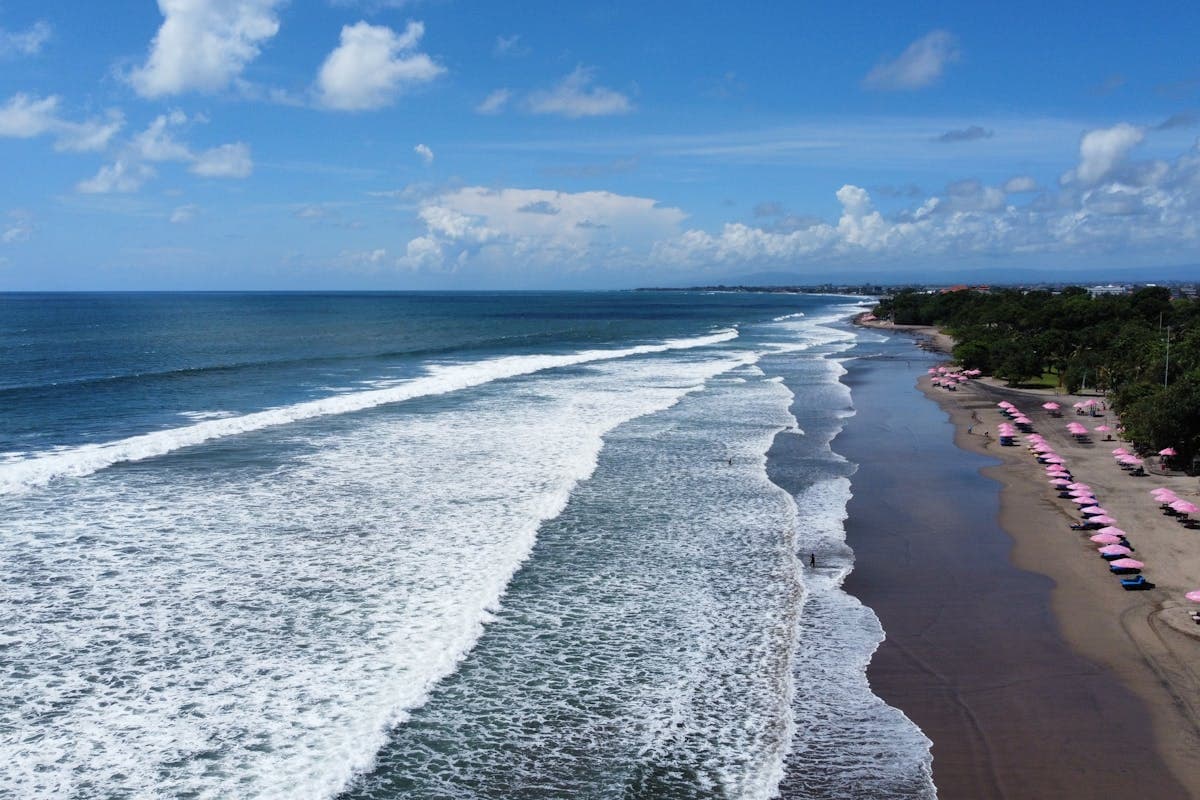
 Bali's west coast during dry season — consistent swell and beach-break access make it a beginner-to-intermediate paradise.
Intermediate Spots (Getting Serious)
Canggu — Echo Beach and Old Man's (outside)
Once you're past the inside whitewater, Canggu's outer bank is a fun, rippable left with shorter rides and more power than Batu Bolong. Intermediate heaven if you can navigate the crowds.
Balangan
Break type: Left-hand reef break Best level: Solid intermediate
South of Uluwatu, Balangan is an aesthetic, long left that breaks over shallow reef. Needs a mid-sized swell to work properly. Much less crowded than Uluwatu itself.
Keramas (East Coast)
Break type: Right-hand reef break Best level: Intermediate to advanced Best season: November–March
Keramas is the east coast's most famous wave — a fast, hollow right that can produce legit barrels on the right swell. The World Surf League has held Championship Tour events here. Works during Bali's rainy season (November–March), when the west coast is offshore in the morning but east coast swells and winds line up in the afternoon.
Nusa Dua
Break type: Right-hand reef break Best level: Intermediate Best season: November–March
The east coast equivalent of Canggu for wet-season surfers. Lined by resort hotels, boat access for the outside reef. Works when the other side doesn't.
Advanced Spots (Experienced Only)
Uluwatu
Break type: Left-hand reef break Best level: Advanced Season: April–October
Uluwatu is a legend. Five connected peaks — Temples, The Peak, Racetracks, Outside Corner, The Bombie — all breaking on a cliff-faced reef. On a 6-foot southwest swell, it's one of the best left-handers in the world.
It's also heavily crowded with expert surfers and has a strong local hierarchy. You paddle out, you wait your turn, you don't drop in. Reef is sharp volcanic rock — booties are smart, even for good surfers.
Honest note: If you're asking whether Uluwatu is too hard for you, it's too hard for you.
Padang Padang
Break type: Left reef, hollow Best level: Advanced Season: April–October
Nicknamed "the Balinese Pipeline." Short, heavy, hollow left breaking over shallow reef. World-class when it's on, very dangerous when it's not. Rip Curl's Padang Padang Cup runs here.
Bingin
Break type: Left reef, barreling Best level: Advanced Season: April–October
Between Uluwatu and Padang, Bingin is a shorter, barreling left. Incredibly hollow on the right swell, shallow reef at low tide. Expert-only.
Impossibles
Break type: Long left reef Best level: Advanced
Three connected peaks that can sometimes link up for 300-meter rides. Located between Bingin and Padang Padang. Lives up to its name when small — impossible — and becomes magic at 4–6 feet.
Want us to plan this trip for you?
Our certified guide will create a personalized itinerary based on your interests, pace, and travel style.
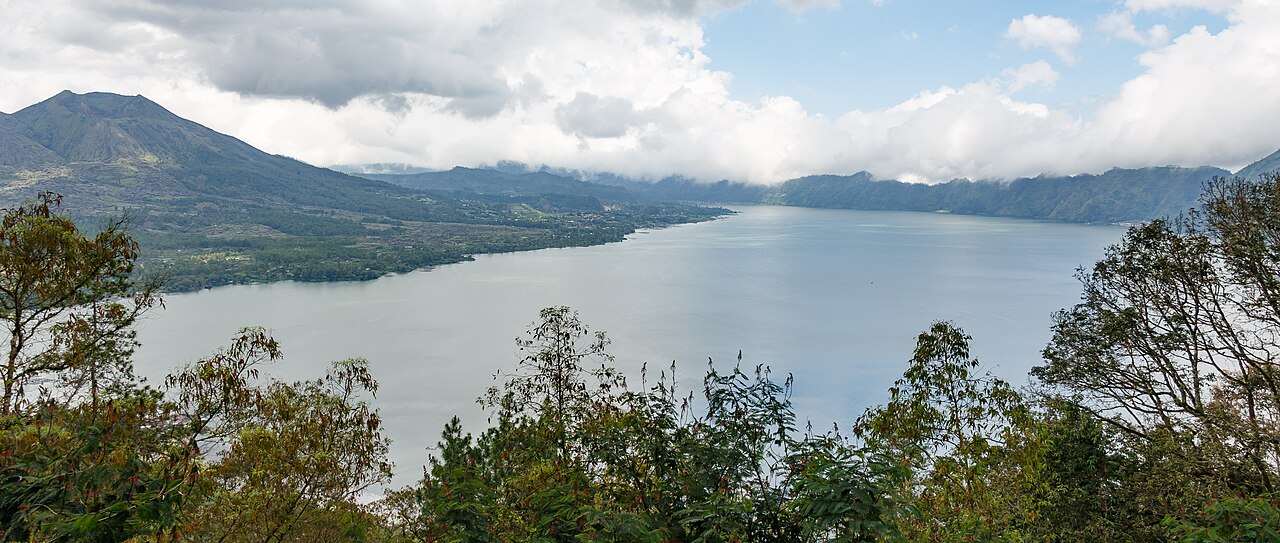
Get Your Free Itinerary The Bukit Peninsula's reef breaks — Uluwatu, Padang Padang, Bingin — sit along a dramatic clifftop coastline.
Surf Spots by Level
| Spot | Level | Coast | Best Season | Crowd |
|---|---|---|---|---|
| Kuta Beach | Beginner | West | Apr–Oct | High |
| Canggu Batu Bolong | Beginner–Int | West | Apr–Oct | Very high |
| Medewi | Beginner–Int | West | Apr–Oct | Low |
| Canggu Echo Beach | Intermediate | West | Apr–Oct | High |
| Balangan | Intermediate | West | Apr–Oct | Moderate |
| Keramas | Int–Adv | East | Nov–Mar | Moderate |
| Nusa Dua | Intermediate | East | Nov–Mar | Moderate |
| Uluwatu | Advanced | West | Apr–Oct | Very high |
| Padang Padang | Advanced | West | Apr–Oct | High |
| Bingin | Advanced | West | Apr–Oct | Moderate |
| Impossibles | Advanced | West | Apr–Oct | Low–Moderate |
Lessons and School Costs
Lesson quality in Bali is generally high. Here's what you'll pay:
- Group lesson (2 hours): $25–35 per person, typically 1 instructor per 3–4 students, board + rashguard included
- Private lesson (2 hours): $50–80, 1-on-1, much faster progression
- Multi-day package (3–5 days): $90–200, best value for beginners
- Board rental (soft-top for learners): $5–10/day
- Board rental (performance shortboard): $10–20/day
- Full surf camp (accommodation + lessons): $400–1,200/week
For beginners, do this:
- Take a group lesson on day 1 to confirm you like surfing
- If yes, switch to private lessons for days 2–4 (massive progress jump)
- By day 5, rent a soft-top and paddle out yourself at Batu Bolong or Kuta
Surf Etiquette — The Basics
Bali's lineups are crowded, and the locals tolerate visitors far more than other places I've heard about (Hawaii, Mundaka), but there are non-negotiable rules:
- The surfer closest to the peak has priority. Paddle wide around them, don't cut in.
- Don't drop in. If someone's already on the wave, you don't go. Period.
- Paddle around the lineup, not through it. Go wide, circle back.
- Locals first at every spot. Wait for your turn.
- Apologize if you mess up. Seriously. A genuine "sorry" resets the vibe.
- Don't hog the set waves if you're new. There's a difference between catching a wave you earned and snaking the only rideable wave of the set.
Ignore this, you'll end up in verbal altercations — or worse, someone will sabotage your board in the parking lot.
What to Bring and What to Rent
Bring:
- Your own reef booties if you plan to surf Uluwatu/Padang/Bingin (reef cuts are not fun)
- A rashguard (rentals are often beaten up)
- Strong zinc sunscreen (the Bali sun burns faster than you expect)
- Leash (rental leashes fail — bring your own)
Rent in Bali:
- Boards — huge selection, excellent prices. Shortboards, fishes, longboards, performance boards.
- Wetsuit — not needed 90% of the year. Rash guards are enough.
Board tip: For a 2-week trip, renting is cheaper than flying with your own board (baggage fees + reef damage risk). Unless you're an advanced surfer with a specific board you love, rent.
Where to Base Yourself
For beginners and intermediates: Canggu. Biggest surf scene, dozens of schools, excellent post-surf cafés, night life, easy living. The town guide covers accommodation.
For advanced surfers: Bukit Peninsula (Uluwatu, Bingin, Padang). Villas with views, dedicated surf culture, faster access to the reef breaks. You'll pay more for accommodation but save hours of travel.
For wet-season surfers: Sanur or Nusa Dua. Quieter than Canggu, better positioned for east coast breaks.
For variety (any season): Canggu or Uluwatu base + rent a scooter or hire a private driver for day trips across the island.
A 1-Week Bali Surf Itinerary
Days 1–3: Canggu base Morning surf sessions at Batu Bolong or Echo Beach. Afternoon board shopping, food, recovery. Evening sunset sessions if the wind backs off.
Days 4–5: Bukit Peninsula Move down to Uluwatu/Bingin area (45 minutes). Surf advanced-friendly spots if you're ready, or intermediate spots at Balangan. Watch the pros at Uluwatu even if you don't paddle out.
Days 6–7: Day trip or east coast Either drive east for Keramas/Nusa Dua (wet season), or day-trip to Medewi for long lefts (dry season), or simply rest. A recovery day before your flight home is a gift.
See our 7-day Bali itinerary if you want to mix surf with non-surf activities.
Frequently Asked Questions About Bali Surfing
What is the best time of year to surf in Bali?
For the west coast (Uluwatu, Canggu, Kuta), April to October is the best season with consistent southwest swells and offshore winds. For the east coast (Keramas, Sanur, Nusa Dua), November to March is the window. Bali has rideable waves year-round if you pick the right coast.
Can beginners surf at Uluwatu?
No. Uluwatu breaks over shallow volcanic reef with strong currents and a crowded lineup of experienced surfers. Beginners should start at Canggu's Batu Bolong or Kuta Beach, which have sandy bottoms and gentle waves. Uluwatu is an intermediate-advanced spot at minimum.
How much does a surf lesson cost in Bali?
Group surf lessons cost $25–35 per person for 2 hours, including board and rashguard. Private 1-on-1 lessons run $50–80 for 2 hours. Multi-day packages (3–5 days) drop the per-lesson cost to $25–40. Board rentals without lessons are $5–10/day for soft-tops.
Do I need a wetsuit to surf in Bali?
No. Water temperatures stay between 26–29°C year-round. A rashguard is enough to prevent board rash and sunburn. Some dawn patrol sessions in July–August feel a bit cooler, but most surfers never wear more than a rashguard or a 1mm top.
Is Bali better than Portugal or Morocco for surfing?
Bali has more consistent warm-water waves than both, with more variety across skill levels. Portugal has bigger swells in winter. Morocco has better beginner point breaks. For a balance of beginner-friendly teaching and world-class advanced waves within 30 minutes of each other, Bali is hard to beat.
Should I bring my own board to Bali?
Only if you're advanced with a specific board you love. For beginners and intermediates, rent in Bali — the selection is excellent, prices are fair, and you avoid baggage fees plus the risk of travel damage. Board rental is $5–20/day depending on type.
Ready to Paddle Out?
Surfing Bali is easier to plan than most people think — once you have the dry-season vs. wet-season logic down, everything else falls into place. Pick a coast, find a spot at your level, and get out there.
If you want the practical side of the trip handled — airport pickup, private transfers between surf towns, accommodation in the right area — our local team is happy to help. We'll connect you with trusted surf schools if you want lessons, and keep your non-surf days (rice terraces, temples, food tours) as good as the waves.
Written by Ohana, a family of guides certified by the Indonesian Ministry of Tourism. Prices verified April 2026. This article is informational — we are not a surf school. Always surf within your ability, respect local lineups, and know the reef conditions. Not a substitute for professional surf instruction.
Related Guides
<!-- internal-link-sweep:2026-04-29 -->
Certified Travel Guide & Co-Founder
A certified Bali guide credentialed by the Indonesian Ministry of Tourism, fluent in French, Mandarin, English, and Indonesian. Part of a family of certified guides who have been guiding travelers across Bali for many years — sharing temples, rice terraces, and hidden corners that never make the brochures.
Languages: French · Mandarin · English · Indonesian
Ready to discover Bali?
Tell us about your dream trip and our local experts will craft a personalized experience just for you.
Start Planning