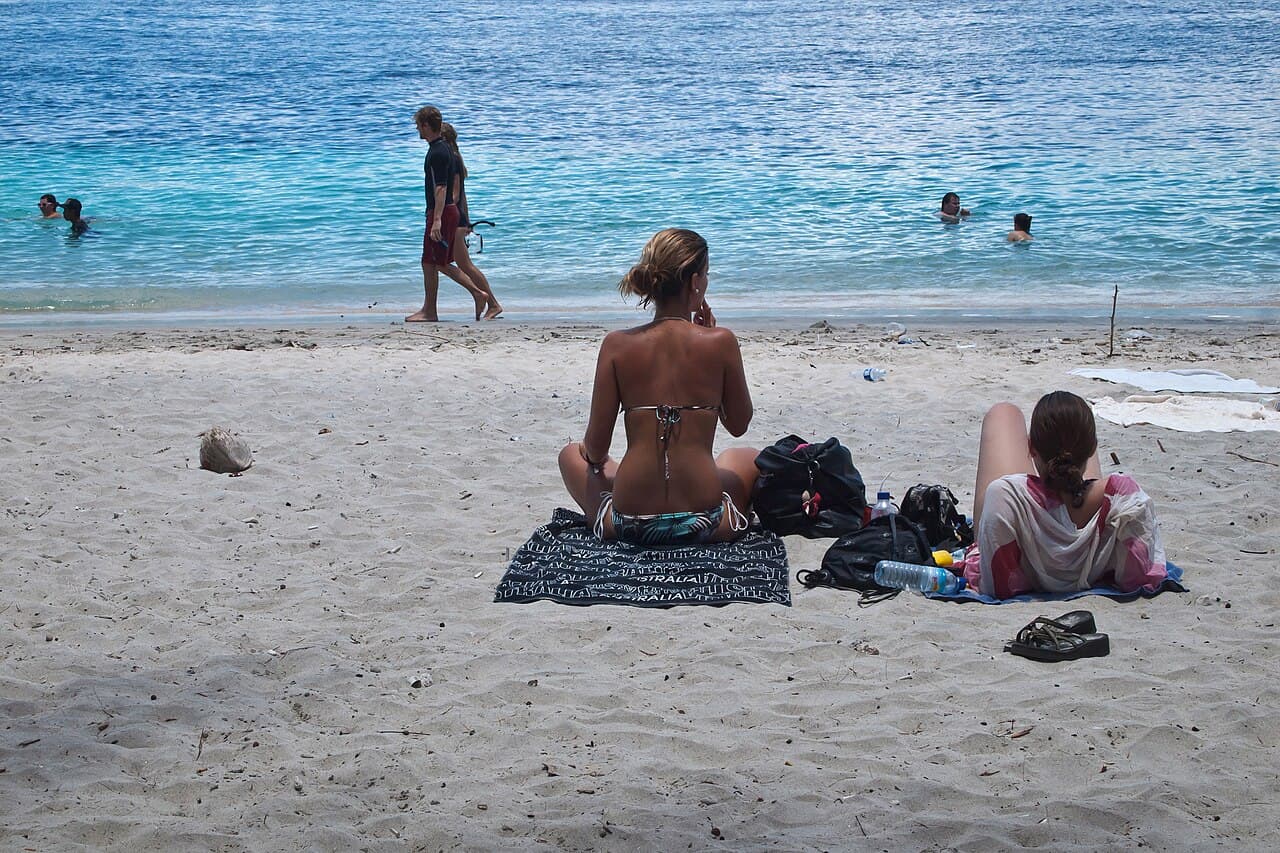
Quick answer: The Gili Islands are three small coral-fringed islands — Gili Trawangan, Gili Meno, and Gili Air — sitting off northwest Lombok and reachable from Bali in 1.5 to 2.5 hours by fast boat (from Padang Bai, Serangan/Sanur, or Amed). Trawangan is the largest and liveliest, with the best restaurants, dive shops, and nightlife. Meno is the smallest and quietest, the classic honeymoon island, and the easiest place to swim with sea turtles. Air is the balanced middle — quiet but with cafes and dive scene. None of the islands allow cars or motorbikes, so you get around on foot, by bicycle, or by cidomo horse cart. May to October is the best time to go (calm seas, clearest water). For most travelers, 3 to 5 nights is the right amount of time.
The Gili Islands are technically not part of Bali — they sit just off Lombok's northwest coast, across the Lombok Strait — but they are one of the most rewarding short trips you can add to a Bali itinerary. Three small coral islands, no motorized traffic, white-sand beaches that ring each one almost completely, reefs that start a few meters from shore, and three distinct moods that let couples, families, and divers each find their island. Our family of certified guides has been arranging Gili add-ons for years for the guests who base in Bali, and the question we get most often is not whether to go but which island to pick. This guide answers that, plus how to get there from Bali, how long to stay, and how to combine the Gilis with a Bali trip without burning a day on travel.
A note before we go further: the Gilis are a marine and Muslim cultural environment, not a Hindu Balinese one. Lombok's culture is Sasak, the call to prayer is part of the daily soundtrack on Air and Meno, and the islands' beach-and-bar identity sits inside that context. It's an easy environment to enjoy with a little awareness — cover up walking through villages, save the swimwear for the beach, and ask before photographing locals.
Gili Trawangan: the largest, liveliest island
Gili Trawangan, locally called "Gili T," is the biggest of the three at roughly 14 kilometers in circumference — small enough to walk around in 3 to 4 hours, big enough to support a full town. It is the most developed island and the one most travelers picture when they hear "Gili Islands."
The east coast (the side facing Lombok) is the main strip: a continuous line of beachfront restaurants, bars, dive centers, hotels, and beanbag-on-the-sand cafes. This is where the boats arrive, where the night market sets up after sunset, and where the music plays loudest. The dining scene is the strongest of the three islands by a wide margin — fresh seafood at the night market, a cluster of legitimately good Indonesian, Mexican, Italian and Japanese kitchens, and a few elevated restaurants that would not feel out of place in Seminyak.
Trawangan's nightlife is real and worth being honest about. There is a mid-range backpacker party scene built around a few clubs and beach bars, with parties rotating across venues by the night of the week. It is louder and busier than Meno or Air. If you are not after that, the south and west coasts of the island are dramatically quieter, the resorts there feel removed from the main strip, and a 10-minute walk gets you to empty sand and hammocks.
Trawangan is also the diving capital of the three islands, with the largest cluster of dive shops, daily PADI courses at every level, and easy access to the main dive sites between the islands. Snorkel-from-the-beach reefs run along the entire east coast — bring fins and a mask and you can spend a whole afternoon drifting along the drop-off.
Stay on Trawangan if you want the most variety of food and accommodation, you are diving for several days, you want easy nightlife, or you are traveling solo and want to meet people.
Gili Meno: the smallest, quietest island
Gili Meno is the middle island geographically but the smallest by area and the smallest by population. It is the quiet one, and locals openly call it the honeymoon island. Resorts are smaller, the beaches are wider and emptier, the dining scene is intimate (10 to 12 places along the east coast, plus a handful tucked into the interior), and there is genuinely nothing to do at night beyond dinner and walking the beach.
That is exactly the appeal. Couples who want to disconnect, travelers who want to read four books, and snorkelers who want the best chance of swimming with sea turtles all gravitate to Meno. The reef on the east and southeast sides of Meno has the highest density of green and hawksbill turtles in the archipelago — many guests see two or three on a single snorkel from the beach. The famous underwater statue circle (Bask's "Nest" by Jason deCaires Taylor) sits a short swim off the north shore and is one of Indonesia's most photographed snorkel sites.
Meno's interior holds a small saltwater lake, a bird park, and a few simple villages. You can walk around the entire island in around 90 minutes, which is both the literal time and the broader vibe.
The trade-off: dining variety is limited compared to Trawangan, accommodation runs from very simple bungalows to a few mid-range and high-end resorts, and there is no nightlife to speak of. Internet on Meno is the most patchy of the three islands.
Stay on Meno if you are on a honeymoon or anniversary, you want to swim with turtles, you want the quietest beach experience, or you want a screen-off few days.
Gili Air: the balanced middle
Gili Air is the closest island to Lombok and, in terms of vibe, sits squarely between Trawangan and Meno. It is quiet enough to sleep easily, but it has a real local village, a strong cluster of independent cafes and restaurants, several dive shops, and enough yoga and wellness scene to fill a relaxed week.
The east coast of Air, like Trawangan's, is the social side — beachfront cafes, dive shops, and small resorts looking out toward Lombok and Mount Rinjani in the distance. The north and west coasts are quieter, with the best sunset views and a string of small bungalow-style stays.
Air's snorkeling is excellent and underrated. Turtles are common off the southeast corner, the water is calm enough most of the year for beginner snorkelers, and the reef is accessible from shore at multiple points around the island.
The food scene on Air is the surprise winner for many of our guests. A handful of small kitchens (largely opened by Indonesian and expat chefs in the past few years) punch above their weight: legitimately good cafes, a couple of standout fish restaurants, and a small but dependable health-food and vegan cluster. Prices are slightly above Trawangan and Meno averages, but the quality is consistent.
Stay on Air if you want quiet evenings without sacrificing dining, you are traveling with kids, you want a balanced single-island stay of 3 to 4 nights, or you want a Gili experience without committing fully to either party (Trawangan) or honeymoon-quiet (Meno).
How to choose between Trawangan, Meno, and Air
This is the single most common question we get when guests start planning a Gili add-on. The table below summarizes how the three compare on the dimensions that matter most.
| Feature | Gili Trawangan | Gili Meno | Gili Air |
|---|---|---|---|
| Vibe | Lively, social, the most developed | Quietest, honeymoon, low-key | Balanced — quiet but with cafes |
| Size | Largest (~14 km circumference) | Smallest | Middle |
| Accommodation | Hostels to luxury resorts | Mostly mid to high end + simple bungalows | Bungalows to boutique mid-range |
| Dining | Best — full scene, night market | Limited, intimate | Strong cafe and small-restaurant scene |
| Nightlife | Yes — bars and clubs | None | Low-key — sunset bars only |
| Snorkeling from shore | Excellent (east coast) | Excellent — best for turtles | Excellent (southeast corner) |
| Diving scene | Largest, most dive shops | Few shops | Solid cluster of dive shops |
| Best for | Solo travelers, divers, food lovers | Couples, honeymoons, quiet | Families, balanced trips |
| Ferry frequency from Bali | Most direct boats land here | Some direct boats, plus inter-island | Direct boats + inter-island |
Travelers who can't decide often spend two nights on Trawangan and two nights on Meno or Air — easy, because the inter-island public boats run twice daily and a private shuttle takes 10 to 15 minutes. For most of our guests, though, picking one island and staying put gives the more relaxing trip.
Snorkeling and diving
The waters around the Gilis are part of the larger reef system that surrounds Lombok and rank among Indonesia's best easy-access reefs. The full archipelago sits inside a marine protected area, plastic-bag use is restricted on all three islands, and reef-safe sunscreen is increasingly the norm.
Snorkeling from shore. All three islands have reef accessible directly from the beach. The southeast corner of Gili Air, the east coast of Gili Meno (especially the "turtle point" stretch), and the long east-coast drift of Gili Trawangan are the easiest entries. Bring your own mask and fins or rent (50,000 to 100,000 IDR per day) at any beach shop.
Snorkel boat trips. The classic half-day snorkel boat circuit hits 3 to 4 sites between the islands: a turtle reef off Meno, the underwater statue circle ("Nest"), a coral garden between Air and Meno, and sometimes Shark Point (where small reef sharks are commonly spotted). Boats run morning (around 9:30 to 13:30) and afternoon (around 13:30 to 17:00). Cost is roughly 150,000 to 250,000 IDR (US$10 to 17) per person. Book on the beach the day before.
Diving. The Gilis are one of Indonesia's most affordable PADI training destinations. Open Water courses run roughly 5,500,000 IDR (US$370), Advanced courses around 4,500,000 IDR (US$300), and fun dives 600,000 IDR (US$40) each. Trawangan has the most dive shops (15+), Air has a dependable cluster (10+), Meno has a few. Visibility is best in the dry season and the most popular dive sites — Shark Point, Manta Point (rare manta sightings), Hans Reef, and Deep Halik — sit between the islands.
If you are serious about underwater photography or marine biodiversity beyond the Gilis, Amed on Bali's northeast coast is the natural partner stop — a private driver shuttle plus the Amed-to-Gilis fast boat is a common combination.
No motor vehicles: getting around the islands
This is the single most distinctive feature of the Gilis. There are no cars and no motorbikes on any of the three islands — by local regulation, enforced for years. Locals get around on foot, by bicycle, or in a cidomo (a small horse-drawn cart that functions as the islands' taxi). This is what makes the Gilis feel different from anywhere else accessible from Bali.
Walking. Genuinely viable on Meno (90 minutes around) and Air (around 2 hours). On Trawangan, you can walk most distances within the main strip but the full circumference is 3 to 4 hours.
Bicycle. The default. Most hotels lend bikes to guests for free or 50,000 IDR per day; rental shops are everywhere. The paths are sandy in stretches and rough in others — fat-tire bikes are the norm. Cycling around an entire island takes 1 to 2.5 hours depending on which one and how often you stop.
Cidomo. The local horse cart, used for short luggage transfers from the boat to your hotel and for occasional rides across the island. Useful but not cheap — expect 100,000 to 200,000 IDR (US$7 to 13) for a short hop, and there is no formal meter. We recommend agreeing the price before you climb in.
A note on animal welfare. Cidomo horses on the Gilis have been a subject of public concern for years. Working horses in tropical heat is not without ethical complication, and conditions vary widely between operators. Several local NGOs (the Gili Eco Trust among them) have improved standards meaningfully in the past decade, but if cidomo welfare matters to you, walking and cycling are easy defaults on islands this small.
How to get there from Bali
Fast boats run daily from three or four pickup points on Bali. Choose based on where you are starting in Bali — the boat companies and crossing times overlap heavily.
| Departure point in Bali | Crossing time | Notes |
|---|---|---|
| Padang Bai (east coast, ~2 hours from Ubud) | 1.5 to 2 hours | Most direct boats, cheapest tickets, longer drive on the Bali side |
| Serangan / Sanur (south coast) | 2 to 2.5 hours | Easiest from Seminyak, Canggu, Sanur, or the airport |
| Amed (northeast Bali) | 45 to 75 minutes | The shortest sea crossing — works perfectly if you are already in Amed for diving |
Operators. Eka Jaya, Blue Water Express, Wahana, Gili Getaway, Scoot, and Idola Express are the main fast-boat companies. Ticket quality varies — newer boats are larger and more comfortable, older boats tend to be smaller and feel more crossing-dependent. We typically book guests on Eka Jaya, Wahana, or Blue Water Express.
Round-trip ticket vs separate. Always book round-trip with the same operator if you can. It saves around 15 percent and means a single phone number to call if anything shifts.
Hotel transfer included? Most operators include free hotel transfer in south Bali (Seminyak, Kuta, Canggu, Jimbaran, Sanur), Ubud, and Padang Bai. Some include Amed for boats originating there. Confirm at booking.
Sea conditions. January and February can be rougher — afternoon swells and afternoon wind. Mornings are usually calmer. Bring motion sickness medication if prone to seasickness. We always recommend the morning departure (around 8 to 9 am) over the afternoon for both calmer water and the bonus of a full day on the islands.
For a full Bali-side context — including how to combine the Gilis with east-coast Bali — see our Nusa Penida destination guide for the closer Bali-side island archipelago, and our Amed destination page for the easiest mainland Bali base before crossing.
How many days to stay
The right number depends on how far you've come and how many islands you want.
2 nights, one island. The minimum to make the round-trip ferry feel worth it. Works if you are stretched on time and pick a single island (Trawangan if you want activity, Meno or Air if you want stillness).
3 to 4 nights, one island. The sweet spot for most of our guests. You get a full beach day, a snorkel day, a dive day, and a slow last morning before the ferry back. This is what we recommend by default.
5+ nights, island hopping. The trip if you want the full Gili experience. Two nights on Trawangan, two on Meno or Air, and a final night before catching the ferry back. Works especially well combined with PADI training (you can complete Open Water in 3 to 4 days on Trawangan).
A week. If you are diving every day, learning to free dive, doing yoga, or genuinely disconnecting, the islands hold up to a full week. We have guests who stayed five days planning a "short visit" and ended up extending their flights.
Where to stay
All three islands have the full range from backpacker to beach-resort, but the distribution is different.
Budget (350,000 to 700,000 IDR / US$23 to 45 per night). Hostels and basic bungalows. Trawangan has the largest cluster (around the village interior); Air has a steady supply behind the east coast; Meno has the fewest options at this tier.
Mid-range (800,000 to 2,000,000 IDR / US$50 to 130 per night). Boutique bungalows and small beachfront hotels. This is where the Gilis shine — the quality-to-price ratio is better than equivalent stays in south Bali. All three islands have strong options here.
Boutique and high-end (2,500,000 IDR+ / US$165+). A small but growing cluster of beachfront resorts, especially on Meno (honeymoon-targeted) and the south of Trawangan. Meno's resort scene punches above its weight for couples; Trawangan offers more variety.
A practical note: the east coast of Trawangan is the busiest and loudest. If you are staying on Trawangan and want quiet sleep, ask explicitly for the south or west side of the island, or for a back-from-the-strip room.
Gili Islands vs Nusa Penida: which to add to a Bali trip?
This is the second most common question we get, and the honest answer is that they offer different experiences. Many of our guests do both — a few days on Penida, a few days on the Gilis — but if you have to pick, the table below should help.
| Feature | Gili Islands | Nusa Penida |
|---|---|---|
| Geography | Three small coral islands off Lombok | One large rugged island off Bali |
| Crossing from Bali | 1.5 to 2.5 hours by fast boat | 30 to 50 minutes by fast boat |
| Vibe | Beach holiday, no traffic, social or quiet | Cliff and viewpoint sightseeing, more rugged |
| Best for | Snorkel-and-relax, diving, honeymoons | Photo viewpoints, day-trip sightseeing |
| Roads | None (no cars or motorbikes) | Rough, narrow, 4WD recommended |
| Beaches accessible from town | Yes, ring of white sand | Mostly via long staircase descents |
| Snorkeling | World-class reef from shore | Manta Point + Crystal Bay (boat trips) |
| Stay length | 3 to 5 nights typical | 1 to 2 nights typical |
| Pairs well with | Amed, east Bali, end-of-trip beach time | Sanur, Ubud, mid-trip 1 to 2 night break |
For most of our first-time-Bali guests, the answer is: do Penida as a 1- to 2-night trip from Sanur, and add the Gilis at the end of the trip if you have 4 to 5 days to spare. If you can only do one, Penida is the easier add-on; the Gilis are the better destination on their own merits if you can give them the time.
FAQs
How do I get to the Gili Islands from Bali?
Fast boats run daily from three main pickup points on Bali. Padang Bai on the east coast is around a 1.5- to 2-hour crossing and the most direct option. Serangan and Sanur in the south are 2 to 2.5 hours but easier if you are starting in Seminyak, Canggu, or near the airport. Amed in the northeast offers the shortest sea crossing at 45 to 75 minutes — ideal if you are already there for diving. Reputable operators include Eka Jaya, Blue Water Express, Wahana, Gili Getaway, and Scoot. Book round-trip with the same operator for a small discount and easier rebooking if anything shifts.
Which Gili island should I choose?
Trawangan if you want nightlife, the strongest dining scene, the most dive shops, and the widest accommodation choice. Meno if you are on a honeymoon, want the quietest beaches, and want to swim with sea turtles directly from shore. Air for the balanced middle — quiet evenings but with cafes, a real local village, dive shops, and a strong yoga scene. Most of our guests pick one island and stay put for 3 to 4 nights; couples who can't decide commonly do 2 nights Trawangan + 2 nights Meno or Air.
How much does a Gili Islands trip from Bali cost?
Round-trip fast boat tickets are 600,000 to 1,200,000 IDR (US$40 to 80) per person depending on operator and pickup point. Accommodation runs from 350,000 IDR (US$23) per night for backpacker bungalows to 2,500,000 IDR+ (US$165+) for boutique and high-end resorts; mid-range is the sweet spot at 800,000 to 1,800,000 IDR (US$50 to 120). Plan an extra US$30 to 60 per day per person for food, snorkel boat trips, dive fees, and bike rental. A typical 4-night two-person trip with mid-range accommodation lands at around US$700 to 1,200 per person all-in.
Are the Gili Islands safe after the 2018 earthquake?
Yes. The August 2018 Lombok earthquake was a significant event — all three islands were temporarily evacuated and infrastructure was damaged, particularly on Trawangan. Reconstruction was largely complete within 12 to 18 months, and the Gilis have welcomed travelers normally for years now. Hotels, dive operators, and restaurants are all running, the reefs have largely recovered (with active reef-restoration work ongoing on Air and Meno), and underlying infrastructure (electricity, freshwater desalination, ferry piers) has been rebuilt. As with any coastal destination in Indonesia, follow local advice during heavy weather.
Are the Gili Islands kid-friendly?
Yes — particularly Gili Air and Gili Meno. The full ban on cars and motorbikes makes the islands genuinely safer for children to walk and cycle than almost anywhere else in Indonesia. Beaches are shallow at low tide and the reef snorkeling is accessible from shore, so families can swim and snorkel without booking a boat. Resorts on Meno and Air increasingly cater to families with shallow pools and family bungalows. Trawangan is also fine for families during the day — the parties are concentrated on a few specific blocks and easy to avoid — but families looking for a quiet evening usually prefer Air or Meno. For broader family planning, see our Bali with kids guide.
Should I book ferry tickets in advance?
Yes — especially for travel between July 1 and early September, and around Christmas and New Year. Boats genuinely sell out on peak-season mornings and you may not get the operator or departure time you want if you wait until the day before. Outside peak season, day-before booking is usually fine but adds some risk if seas are rough and operators reshuffle schedules. We book all ferry tickets for our guests as part of a custom itinerary, which means the timings line up with the rest of the trip and the transfers on both sides — Bali driver to the pier, Gili island arrival to your hotel — are taken care of.
Related guides
- Nusa Penida destination guide — the closer Bali-side island archipelago.
- Amed destination guide — the easiest east-coast Bali base before crossing to the Gilis.
- Custom itineraries — how we combine Bali, Penida, and the Gilis into a single trip.
- Private driver service — for the Bali-side transfers to and from your fast-boat pier.
- Bali with kids guide — family planning context, including which Gili island fits.