Bali Cooking Class Guide — Where to Learn Balinese Cuisine in 2026
A certified guide family's honest guide to Bali cooking classes — what they cost, what you actually learn, the best spots in Ubud, Seminyak, and Canggu, and how to pick a class that matches your kitchen at home.
In This Guide
- What a Bali cooking class actually involves
- How much does a cooking class in Bali cost
- The best areas for a Bali cooking class
- Ubud — the highest concentration and most authentic options
- Seminyak — convenient, polished, less of a market scene
- Canggu — surf-town casual, fewer options
- North and east Bali — for travelers going off the standard route
- What you'll actually learn
- How to choose the right cooking class
- Cooking class with kids
- Common questions before you book
- How a cooking class fits into a Bali itinerary
- Bali cooking class booking checklist
- Sources & further reading
- Bali cooking class FAQ
- How much does a cooking class in Bali cost?
- How long is a Bali cooking class?
- Where is the best place in Bali for a cooking class?
- Do I need to book a cooking class in advance?
- Are Bali cooking classes vegetarian-friendly?
- Can children join a Bali cooking class?
- What's the difference between Balinese and Indonesian cooking classes?
- Related Guides
Quick answer: A Bali cooking class typically costs IDR 450,000–950,000 (~$28–60 USD), runs 4–6 hours, and includes a market visit, hands-on prep of 4–8 Balinese dishes, and the meal you cook. Ubud has the highest concentration of authentic, family-run classes; Seminyak and Canggu offer more polished hotel-based versions. Look for a class with a small group (under 10), a real local kitchen (not a restaurant prep station), and a market visit included.
By the Ohana Agency team — a family of certified Bali guides (French + Mandarin speaking). About us →
We're a family of certified Bali guides, and a cooking class is one of the experiences we suggest most often. Usually on day three or four of a trip, once people have eaten enough Balinese food to wonder how it's made. Done well, it's the rare souvenir you can recreate at home for years.
Done badly, it's a hotel chef demonstrating a dish you watch but barely touch. This guide is about how to tell the difference.
Who this is for: travelers who want a hands-on cooking class on their Bali trip (couples, families, food-curious solo travelers) and need to know what to book, where, what it costs, and what they'll walk away knowing.
On this page
- What a Bali cooking class actually involves
- How much it costs
- Best areas: Ubud, Seminyak, Canggu
- What you'll actually learn
- How to choose the right class
- Cooking class with kids
- How a cooking class fits an itinerary
- Booking checklist
- FAQ
What a Bali cooking class actually involves
The standard Bali cooking class follows a fairly consistent format, which is reassuring once you know it. You'll be picked up from your hotel between 7:30 and 9:00 AM, and the day usually unfolds in four parts:
- Local market visit (45–90 minutes). You walk a traditional market — Ubud's Pasar Ubud, or a village market like Payangan — with the chef. You'll see ingredients you've eaten without recognizing: galangal, kencur, salam leaves, fresh turmeric root, candlenuts, palm sugar discs the size of your fist. Good chefs let you taste things as you go.
- Cooking session (2.5–3.5 hours). Hands-on. You'll prep base genep (the foundational Balinese spice paste), then build 4–8 dishes around it. Typical menu: chicken sate lilit, gado-gado, sayur urab, beef rendang or chicken curry, nasi kuning, and a black rice pudding for dessert.
- The meal (45–60 minutes). You eat what you cooked, usually at a long communal table in a garden setting.
- Drop-off and recipe pack (~3–5 PM). Most schools email you a PDF of the recipes within a day or two.
A class without a market visit is fine if you've already done one elsewhere on the trip. For first-time visitors though, skipping the market cuts out half the value. The market is where Balinese food stops being abstract.
How much does a cooking class in Bali cost
Pricing is fairly consistent across the island once you adjust for what's included.
| Class type | Price (IDR) | Price (USD) | Includes |
|---|---|---|---|
| Village / family-run | 450,000–650,000 | $28–40 | Market visit, transport, meal |
| Mid-range Ubud | 600,000–800,000 | $37–50 | Market visit, transport, meal, recipe PDF |
| Hotel / Seminyak polished | 850,000–1,500,000 | $50–95 | Hotel kitchen, no market, premium drinks |
| Private class (1–2 people) | 1,200,000–2,500,000 | $75–155 | Fully bespoke, your hotel or chef's home |
Children under 10 are usually half-price or free if they're not cooking. Vegetarian, vegan, and gluten-free menus are available almost everywhere — flag this when you book, not on the morning. For broader meal pricing context, our Bali food guide covers how restaurant meals compare across regions.
The best areas for a Bali cooking class
Ubud — the highest concentration and most authentic options
If you have one cooking class in your trip, do it in Ubud. The town has been Bali's cultural and culinary hub since the 1930s, when foreign artists like Walter Spies and Rudolf Bonnet started bringing visitors in (history documented by the Indonesian Ministry of Tourism). The classes range from polished commercial operations to small family kitchens that take six guests at most.
Paon Bali Cooking Class (Laplapan village, 15 minutes north of central Ubud) is the famous one. Puspa and her family have been running it since 2009 and it's still one of the most-booked classes on the island. Groups of 12–18, organized like clockwork, market visit included, IDR 600,000 for the morning session. Not the smallest option, but a solid benchmark for what a good Bali cooking class should feel like.
Casa Luna Cooking School (central Ubud) sits at the higher end with smaller classes, a pretty garden kitchen, and Janet DeNeefe's long-standing reputation for elevating Balinese home cooking. IDR 850,000–1,200,000 depending on the menu.
Smaller village classes (look for ones based in Penestanan, Sayan, or Petulu villages around Ubud) tend to be six to eight guests, run by a single family in their actual home, and cost IDR 450,000–650,000. These are our favorites when travelers want the village feel without busload pacing. The trade-off: fewer reviews online and less English polish.
For ideas on what else to do during your Ubud days, our things to do in Ubud guide covers the area in depth.
Seminyak — convenient, polished, less of a market scene
Seminyak's cooking classes lean toward hotel kitchens and chef-led restaurant setups. They're a good fit if you're staying in Seminyak and don't want to lose half a day driving to Ubud and back. Expect a more boutique feel, less mud-on-shoes market authenticity, and a higher price tag (typically IDR 850,000–1,500,000).
Bumbu Bali Cooking School in Tanjung Benoa (about 30 minutes south of Seminyak) is the long-standing benchmark for serious Balinese cuisine. Chef Heinz von Holzen wrote the cookbooks the rest of the island teaches from. It's a half-day commitment, worth it if you're food-serious.
Canggu — surf-town casual, fewer options
Canggu has fewer dedicated cooking schools. A handful of guesthouses and surf villas run small classes for their guests, but quality varies a lot. If you're staying in Canggu and want a class, drive the 45 minutes to Ubud rather than settle for a so-so Canggu option.
North and east Bali — for travelers going off the standard route
If your itinerary takes you to Sidemen, Munduk, or Amed, ask your accommodation about classes. Many family-run homestays in these areas offer cooking sessions for IDR 350,000–500,000 that beat Ubud's on authenticity: smaller groups, slower pace, vegetables often grown in the garden you're sitting in.
What you'll actually learn
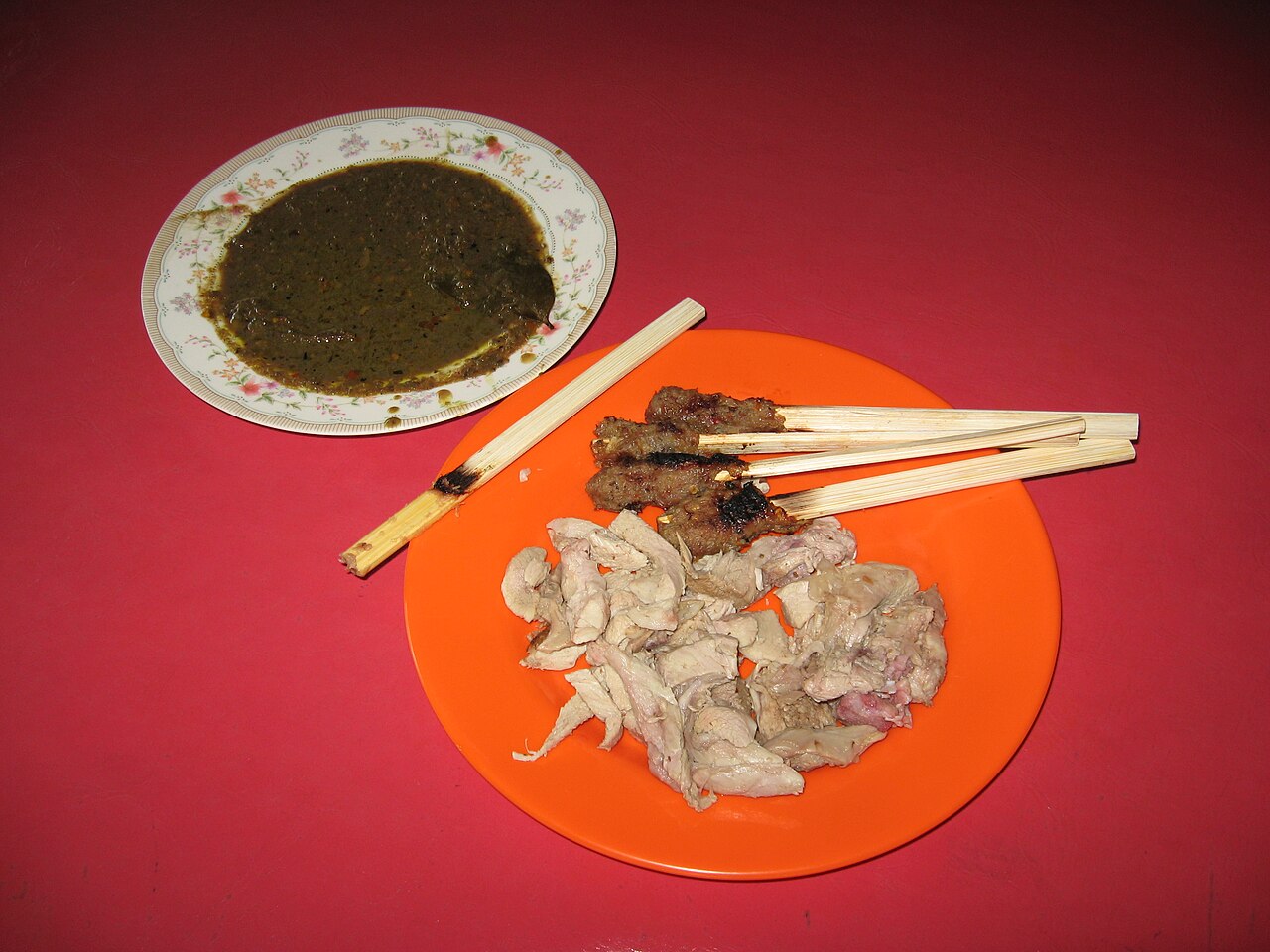 Sate lilit on lemongrass sticks served with sambal — one of the standard dishes you'll learn to make. Photo by Crisco 1492 via Wikimedia Commons, CC BY-SA 3.0.
A good Bali cooking class starts with base genep before any specific dish. Base genep is the foundational Balinese spice paste: shallots, garlic, ginger, galangal, kencur, turmeric, chilies, candlenuts, and coriander seeds, ground and slow-cooked into a fragrant base. Get base genep right and most of Balinese savory cooking starts to make sense. Curries, satay marinades, vegetable dishes, sauces — they all begin here. The technique was popularised internationally by chef Heinz von Holzen's Bali: The Food of My Island Home cookbook, still used as a reference by most cooking schools on the island.
Typical dishes you'll cook in a half-day class:
- Sate lilit — minced chicken or fish blended with grated coconut, base genep, and lime leaves, wrapped around a lemongrass stick and grilled
- Gado-gado — blanched vegetables, tofu, tempeh, boiled egg, and hand-pounded peanut sauce
- Sayur urab — long beans and grated coconut tossed with base genep
- Nasi kuning — turmeric and coconut milk rice
- Pepes ikan — fish steamed in banana leaves with spice paste
- Bubur injin — black rice pudding with palm sugar and coconut cream
You'll do most of the work yourself, with the chef hovering and adjusting. Expect sore arms after — the spice paste is pounded by hand in a stone mortar — and a much better sense of why Balinese food tastes the way it does.
Want us to plan this trip for you?
Our certified guide will create a personalized itinerary based on your interests, pace, and travel style.
Get Your Free ItineraryHow to choose the right cooking class
After organizing dozens of these for our clients, the questions that actually matter are short:
1. Group size? Anything over 14 starts feeling like a lecture. Six to ten is what you want: small enough to ask questions, big enough to share the prep work.
2. Is the market visit included? For first-time Bali visitors, this is the most memorable part. Without it, you're getting a cooking lesson rather than the cultural experience.
3. Is it a real kitchen or a teaching kitchen? Both work, but the feel is different. A family kitchen in someone's home gives you context: kids running around, temple offerings being prepared next door. A purpose-built teaching kitchen is cleaner and more efficient.
4. Vegetarian or dietary needs? Bali handles this well — tell them when you book. Many of the standard dishes (sate lilit, beef rendang) are meat-based, and the menu can be swapped to tempeh, tofu, jackfruit, or vegetable equivalents.
5. Transport included? Most Ubud classes include hotel pickup within the Ubud area. If you're staying in Seminyak or Canggu and want an Ubud class, factor in IDR 400,000–600,000 for a private driver, or budget extra for the round trip.
6. Is the dessert real? A surprising number of "Balinese cooking classes" end with a Western dessert. The right answer is black rice pudding, dadar gulung (pandan crepes with coconut), or fresh fruit with palm sugar syrup.
Cooking class with kids
Most schools welcome children from about age six. They'll handle the safer prep work (pounding spices, wrapping sate lilit on lemongrass sticks, plating) and skip the open-flame steps. Pricing is usually 50% for ages 6–12 and free under 6. Our Bali with kids guide covers other family-friendly experiences worth pairing with a class.
One thing we've learnt: book the morning session, not the evening. Kids fade fast in the afternoon heat, and Balinese ingredients can be intense for younger palates. Having lunch as the meal then a free afternoon at the pool works much better than cooking dinner.
Common questions before you book
Will you actually use the recipes at home? The honest answer is maybe. Base genep is straightforward to make if you can source galangal, kencur, and candlenuts — most Asian groceries in major cities stock these. The cooking techniques (slow simmering, banana-leaf steaming, grilling on coconut shells) translate fine to a Western kitchen. Where it gets harder is ingredients: salam leaves and good palm sugar are tougher to find. Most travelers we hear from cook 2–3 of the dishes regularly back home.
Is one class enough? For most travelers, yes. If you're food-obsessed, doing two classes in different parts of Bali (one in Ubud, one in Sidemen or Amed) gives you a noticeable contrast — Ubud cuisine leans more toward refined ceremonial food, while east-Bali villages cook more rustic, vegetable-forward.
Can a private chef come to your villa instead? Yes — this is increasingly popular for groups of four or more. A private chef will market-shop, set up in your villa kitchen, walk you through the cooking, and clean up. Pricing is IDR 1,500,000–3,000,000 for the chef plus IDR 250,000–400,000 per person for ingredients. We arrange these regularly for clients in Seminyak and Canggu villas — message us below if you want a quote.
How a cooking class fits into a Bali itinerary
Day three or four works best. You've already eaten enough Balinese food to recognize the dishes, you're past jet lag, and you have enough trip left to enjoy what you cook for lunch (and it is a lot of food).
A common pairing we suggest: a cooking class in Ubud the day after a Mount Batur sunrise trek or temple tour. The trek starts at 3 AM, you sleep in the next day, then ease into a half-day class. High-effort morning, low-effort afternoon.
Skip cooking classes on your first or last day. First day you're too jet-lagged to absorb anything. Last day you want to be packing and resting, not committing to a 6-hour culinary experience.
Bali cooking class booking checklist
Use this checklist before you confirm a booking — it covers the questions that catch travelers out most often.
- [ ] Group size confirmed (target 6–10 people; over 14 starts feeling like a lecture)
- [ ] Market visit included (essential for first-time visitors)
- [ ] Hotel pickup confirmed and zone clarified (Ubud-only or wider)
- [ ] Dietary needs flagged in writing (vegetarian, vegan, gluten-free, allergies)
- [ ] Children's pricing confirmed if applicable (typically 50% for ages 6–12)
- [ ] Recipe pack / PDF included or available
- [ ] Cancellation policy in writing (especially for high-season bookings)
- [ ] Class language confirmed (English standard; French or Mandarin on request via our family)
- [ ] Total time commitment + finish time (so you can plan dinner)
Save this list to your phone or print it before the day.
Sources & further reading
- Indonesian Ministry of Tourism — Bali — official destination portal with regional context.
- Bali: The Food of My Island Home by Heinz von Holzen — the reference cookbook that codified modern Balinese cuisine for international readers.
- UNESCO Subak system listing — the centuries-old rice-irrigation system that supplies the rice you'll cook with.
- Wikipedia — Balinese cuisine — broader entity overview including base genep and ceremonial dishes.
Bali cooking class FAQ
How much does a cooking class in Bali cost?
A typical Bali cooking class costs IDR 450,000–950,000 (~$28–60 USD) per adult. Family-run village classes start around IDR 450,000, mid-range Ubud schools sit at IDR 600,000–800,000, and polished hotel-based classes in Seminyak run IDR 850,000–1,500,000. Most include a market visit, transport, and the meal you cook.
How long is a Bali cooking class?
Most full classes run 4–6 hours total: roughly 1 hour at the market, 3 hours cooking, and 1 hour eating and finishing up. Half-day evening classes (3 hours, no market) are available at some schools for travelers short on time.
Where is the best place in Bali for a cooking class?
Ubud has the highest concentration of authentic, family-run classes and is the standard recommendation. Paon Bali, Casa Luna, and smaller village kitchens all sit within 20 minutes of central Ubud. Seminyak offers polished hotel-based classes for travelers who don't want to drive to Ubud.
Do I need to book a cooking class in advance?
Yes, especially in June–September and December–January. Smaller family-run classes with limits of 6–10 guests fill up a week ahead in high season. Larger schools take same-day bookings if there's space. Book 2–3 days ahead to be safe.
Are Bali cooking classes vegetarian-friendly?
Yes, very. Almost every school offers vegetarian, vegan, and gluten-free versions on request — flag dietary needs when you book, not on the morning. Tempeh, tofu, jackfruit, and Bali's enormous range of vegetables make plant-based menus genuinely satisfying rather than a substitute experience.
Can children join a Bali cooking class?
Most schools welcome children from age six. Kids handle the safer prep work (pounding spice paste, wrapping sate lilit, plating) and skip the open-flame steps. Pricing is typically 50% for ages 6–12 and free under 6. Book the morning session — kids fade in afternoon heat.
What's the difference between Balinese and Indonesian cooking classes?
A Balinese class focuses on the local cuisine of Bali — base genep paste, sate lilit, lawar, ceremonial dishes that originated in Hindu Balinese culture. An Indonesian class covers the broader national repertoire — beef rendang from Sumatra, Javanese gado-gado, soto ayam — which Balinese chefs also cook well. Most Bali classes blend both, but the most distinctive experience is a Balinese-focused class with a local family.
If a cooking class is going to be part of your Bali trip, we can build the rest of the day around it — market visit in the morning, class through lunch, then a temple visit or rice-terrace walk in the afternoon with one of our certified guides. Send us a WhatsApp below and we'll put a half-day plan together.
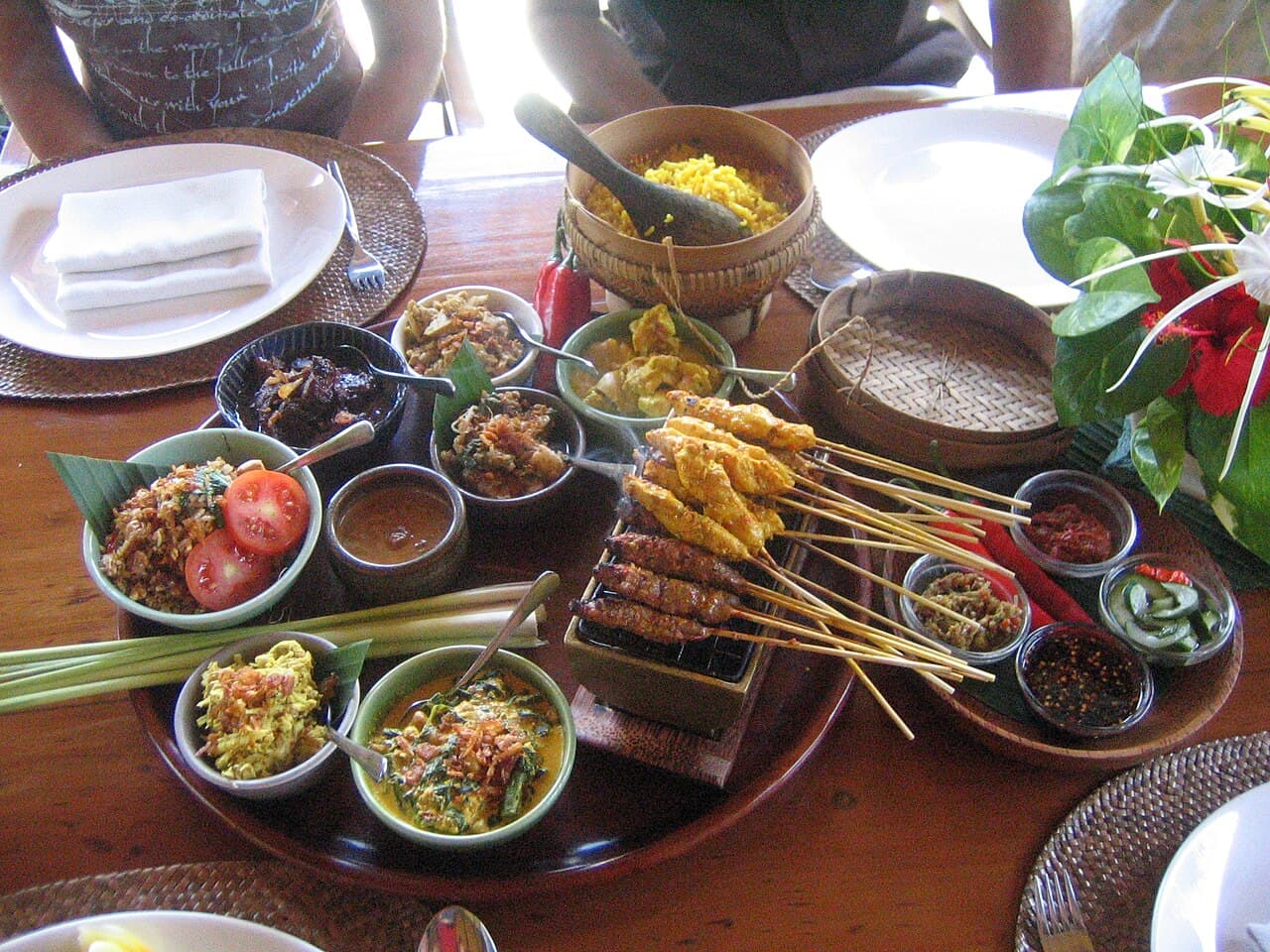
Cover photo: "Bali cuisine.jpg" by Everett Harper from San Francisco, USA via Wikimedia Commons, licensed under CC BY-SA 2.0.
Related Guides
<!-- internal-link-sweep:2026-04-29 -->
Certified Travel Guide & Co-Founder
A certified Bali guide credentialed by the Indonesian Ministry of Tourism, fluent in French, Mandarin, English, and Indonesian. Part of a family of certified guides who have been guiding travelers across Bali for many years — sharing temples, rice terraces, and hidden corners that never make the brochures.
Languages: French · Mandarin · English · Indonesian
Ready to discover Bali?
Tell us about your dream trip and our local experts will craft a personalized experience just for you.
Start Planning