Bali has over 20,000 temples, and every village maintains at least three. But visiting a Balinese temple without context is like walking through a cathedral without knowing anything about Christianity — you see beautiful architecture, but the meaning is invisible. This full-day cultural immersion changes that entirely. With a certified guide who speaks your language and understands both the theology and the daily practice of Balinese Hinduism, you experience temples not as tourist attractions but as the living spiritual infrastructure of the island.
Quick answer: This is a full-day guided tour of Bali's most significant temples and cultural sites, including Tirta Empul (sacred spring purification), Besakih (the Mother Temple), and a traditional village visit with a local family. Your certified guide provides in-depth commentary on Hindu-Balinese philosophy, ceremony, and daily ritual life. Traditional dress is provided, and the pace allows time for genuine understanding rather than rushed photo stops.
What Makes This Experience Special
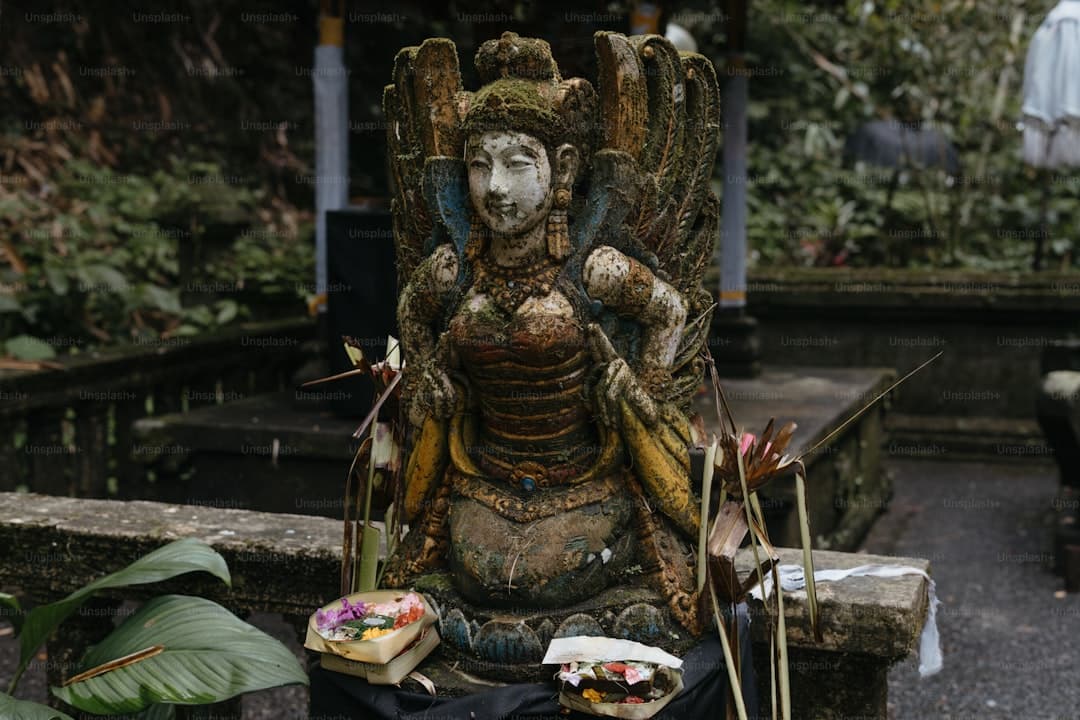
Balinese Hinduism is distinct from Indian Hinduism in important ways. It blends Hindu theology with animist beliefs, Buddhist elements, and local Balinese traditions that predate any of these influences. The result is a spiritual system that is deeply woven into every aspect of daily life — from the small canang sari offerings placed on sidewalks each morning to the elaborate multi-day cremation ceremonies that can involve entire communities.
Understanding this requires more than a guidebook summary. Our guides have grown up within these communities and can explain not just what you are seeing, but why it matters. Why certain temples face the mountain and others face the sea. Why offerings include specific flowers in specific colors. What the different levels of a meru tower represent. Why some ceremonies are joyful and others deliberately solemn. This is the kind of cultural knowledge that transforms sightseeing into genuine understanding.
We also time our visits carefully. Temples in Bali have active ceremony schedules, and arriving during or just after a ceremony gives you an entirely different experience than visiting an empty temple. Your guide monitors the ceremonial calendar and adjusts the itinerary when possible to coincide with authentic ritual activity — not performances staged for tourists, but real community worship.
What to Expect
Morning — Tirta Empul Sacred Spring Temple
The day begins at Tirta Empul, one of the holiest water temples in Bali, located near the village of Tampaksiring. This temple was founded in 926 AD around a natural spring that Balinese Hindus believe was created by the god Indra. The spring feeds a series of purification pools where worshippers undergo melukat, a cleansing ritual that is both physical and spiritual.
Your guide explains the protocol before you enter: the significance of each of the fountain spouts (there are over 30, and you do not use all of them — some are reserved for specific ceremonies), the prayers spoken at each stage, and the meaning of the ritual within broader Balinese spiritual practice. If you wish to participate in the purification yourself, your guide walks you through every step. Traditional sarongs and sashes are provided.
The temple complex also includes courtyard areas where you can observe local worshippers preparing offerings and praying. Your guide translates what is happening and answers questions — this is where much of the deeper learning occurs, in quiet conversation beside the temple pools.
Midday — Besakih Mother Temple
From Tirta Empul, you drive northeast to Besakih, Bali's largest and most important temple complex. Besakih sits at roughly 1,000 meters elevation on the southwestern slopes of Mount Agung, and on clear days the volcano towers directly above the temple rooflines — one of the most photographically striking temple settings in Southeast Asia.
Besakih is not a single temple but a complex of 23 separate temples spread across the mountainside, with Pura Penataran Agung at the center. The complex has been a place of worship since prehistoric times, and its current form reflects over a thousand years of construction and reconstruction. Your guide walks you through the hierarchy of the temples, explaining which clans and castes worship at which structures, and how the spatial layout mirrors the Balinese cosmological order of mountains, middle world, and sea.
This is also where your guide shares the story of the 1963 eruption of Mount Agung, which devastated surrounding villages but largely spared the Besakih complex — an event that profoundly reinforced the temple's sacred status in Balinese belief.
A traditional Balinese lunch is included, either at a warung near the temple with views over the eastern slope, or at a local family compound depending on the day's arrangements.
Afternoon — Traditional Village and Artisan Visit
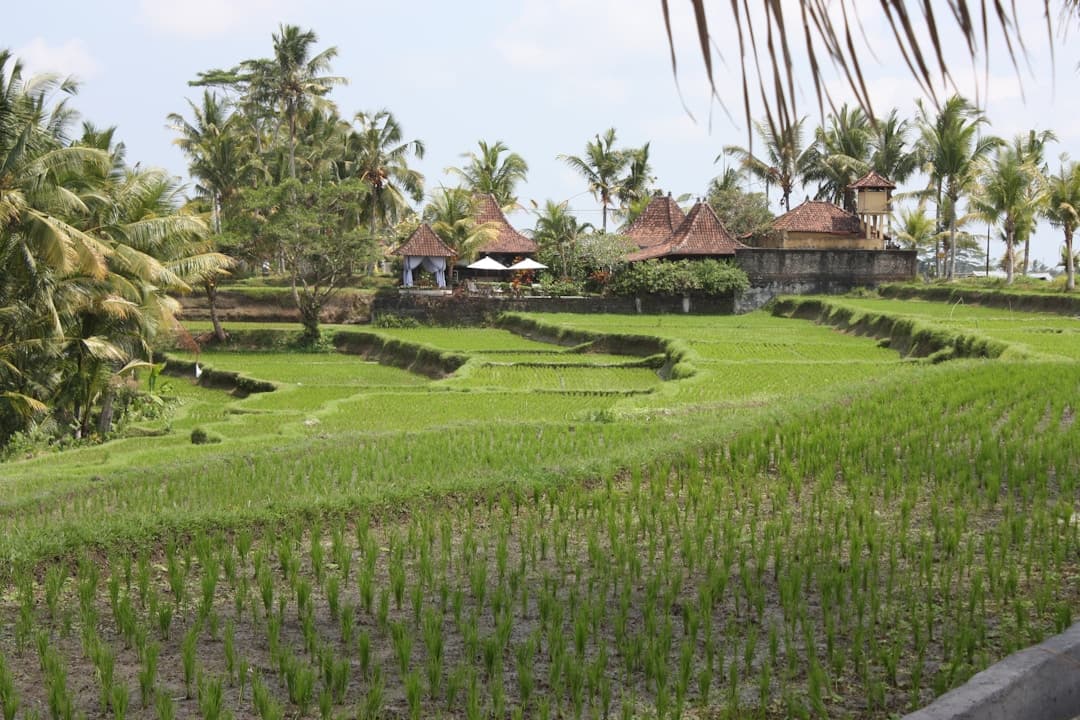
The afternoon takes you away from the major temple circuit and into a traditional Balinese village. This is not a tourist village set up for performances — it is a working community where families live according to the banjar (neighborhood council) system that has governed Balinese village life for centuries.
Your guide introduces you to the village layout: the pura puseh (temple of origin) at the mountain-facing end, the pura desa (village temple) in the center, and the pura dalem (temple of the dead) at the sea-facing end. This tri-temple structure is replicated in every traditional Balinese village and reflects the fundamental cosmological orientation of Balinese Hinduism.
You meet local artisans — woodcarvers, painters, or weavers depending on the village — and see their work in the context of the family compounds where they live and create. Your guide explains how artistic traditions are passed down within families and how temple commissions drive much of the island's finest craft production.
The visit typically concludes with coffee or tea at a family compound, where conversation with your hosts (translated by your guide when needed) offers a personal window into contemporary Balinese life.
What's Included
- Private transportation for the full day with air-conditioned vehicle
- Certified guide speaking French, Mandarin, English, or Indonesian
- Traditional sarong and sash for temple entry
- Temple entrance fees at all sites
- Traditional Balinese lunch
- Bottled water throughout the day
- Cultural briefing materials
Practical Tips
Dress code: Temples require modest clothing — shoulders and knees covered. We provide traditional sarongs and sashes, but wearing trousers or a long skirt underneath is more comfortable than shorts with a sarong over them.
Footwear: Comfortable walking shoes are best. You will be on your feet for extended periods on stone temple steps and village paths. Some temple areas require removing shoes, so slip-on shoes are more convenient than lace-ups.
Sun protection: Besakih in particular has limited shade, and the midday sun at altitude is strong. Bring sunscreen, sunglasses, and a hat. Your guide carries an umbrella that doubles as a parasol.
Photography: Temples welcome respectful photography. Your guide advises on when and where photos are appropriate — during active prayer, for instance, discretion is expected. Never stand higher than a worshipper who is praying, and never point your feet toward a shrine.
Best time to go: Temple visits work year-round. The dry season (April to October) means more reliable sunshine for Besakih views, but the wet season has its own atmosphere — mist rolling through the temple courtyards creates remarkable photographic conditions. Major ceremony days (Galungan, Kuningan, Nyepi preparations) offer extraordinary cultural richness but also larger crowds.
Children: This tour works well for children who are curious and comfortable with a slower pace. Younger children may find the full day long — ask us about a half-day temple option that focuses on Tirta Empul and a village visit.
Who Is This For?
This experience is designed for travelers who want to understand Bali, not just photograph it. Couples looking for meaningful shared experiences that go deeper than a beach holiday. Solo travelers with genuine curiosity about spirituality and culture. Families who value cultural education and want their children to engage with a living tradition. Repeat visitors to Bali who have done the standard tourist circuit and are ready for real depth.
It is particularly valuable for French-speaking and Mandarin-speaking travelers, since having a certified guide explain complex cultural and spiritual concepts in your own language makes an enormous difference in comprehension. Religious and philosophical terminology does not translate well through basic English — subtleties that matter are often lost.