Mount Batur Sunrise Trek — What to Expect and How to Prepare
A complete guide to the Mount Batur sunrise trek from a certified local guide who has done this hike hundreds of times. Everything you need to know about timing, difficulty, gear, costs, and what the summit experience is really like.
In This Guide
- How to Book the Mount Batur Sunrise Trek
- What Time Do You Start?
- The Route — What the Hike Is Actually Like
- Stage 1: The Forest Trail (30–40 minutes)
- Stage 2: The Rocky Scramble (40–50 minutes)
- Stage 3: The Final Push (20–30 minutes)
- Difficulty Level — The Honest Assessment
- What to Wear and Bring
- What You See at the Summit
- Breakfast at the Summit
- Coming Back Down
- Cost Breakdown (2026 Prices)
- Best Time of Year for the Mount Batur Sunrise Trek
- Tips From Someone Who Has Done This Trek Hundreds of Times
- How Mount Batur Fits Into a Bali Itinerary
- FAQ
- Is the Mount Batur sunrise trek safe?
- Can I do the Mount Batur trek without a guide?
- How fit do I need to be for the Mount Batur trek?
- What happens if it rains or is cloudy?
- Is the Mount Batur sunrise trek worth it?
- Can children do the Mount Batur trek?
- Related Guides
Quick answer: The Mount Batur sunrise trek is a pre-dawn hike up an active volcano in Bali's northeast highlands, starting around 3:30 AM from Toya Bungkah village. It takes roughly two hours to reach the 1,717-meter summit along a well-maintained trail. At the top, you watch the sun rise over Mount Agung and Lake Batur while guides cook breakfast using volcanic steam. All treks require a registered PPPGB local guide. Moderate difficulty, suitable for anyone with reasonable fitness. Best April to October (dry season).
The Mount Batur sunrise trek is a pre-dawn hike up an active volcano in Bali's northeast highlands, starting around 3:30 AM and taking roughly two hours to reach the 1,717-meter summit, where you watch the sun rise over Mount Agung and Lake Batur while local guides cook eggs and bananas in volcanic steam vents.
It is one of the most popular outdoor activities in Bali, and for good reason. The sunrise view from the summit is genuinely spectacular — not in a "nice Instagram photo" way, but in a way that makes you stand still and forget about the two hours of uphill walking that got you there. I have guided this trek more times than I can count, and the summit moment still lands every time.
But the experience involves more planning and physical effort than most travel blogs let on. This is everything you actually need to know before you go.
How to Book the Mount Batur Sunrise Trek
There are two main ways to do this trek:
Option 1: Book through a local trekking association. The Mount Batur area is managed by the PPPGB (Association of Mount Batur Trekking Guides), and all treks require a registered local guide. You cannot legally hike Batur without one. Prices through the association start around IDR 600,000–800,000 per person depending on group size and route.
Option 2: Book through a tour operator or your accommodation. Most hotels and villas in Bali can arrange the trek for you. This typically includes pickup and drop-off from your accommodation, the trekking guide, breakfast at the summit, and a flashlight. Prices range from IDR 500,000 to IDR 1,200,000 per person depending on how much is included and whether it is a private or group trek.
If you are staying in the Ubud or Kintamani area, transport is shorter and some operators charge less. If you are staying in the south (Seminyak, Canggu, Uluwatu), the drive is longer and you will want to arrange a private driver or book a package that includes transport — waking up at 1:30 AM and then trying to navigate dark mountain roads yourself is not advisable.
What I recommend: Book a private trek rather than joining a large group. The price difference is modest, and you get to set your own pace, stop when you want, and have the guide's full attention. Group treks can have 15–20 people moving at the slowest person's speed, which either means you are waiting constantly or being rushed.
What Time Do You Start?
The timeline depends on where you are staying:
From Ubud: Pickup around 2:00–2:30 AM. Drive time is roughly 45 minutes to the trailhead.
From Canggu or Seminyak: Pickup around 1:30–2:00 AM. Drive time is about 1.5–2 hours.
From Uluwatu or the Bukit: Pickup around 1:00–1:30 AM. Drive time is approximately 2–2.5 hours.
From Kintamani or around Lake Batur: Pickup around 3:00 AM. You are already close.
You arrive at the trailhead (near Toya Bungkah village) around 3:30 AM. The trek begins in darkness — you will use a headlamp or flashlight for the first hour or more. The goal is to reach the summit before sunrise, which in Bali happens between 6:00 and 6:30 AM year-round (Bali is close to the equator, so sunrise times barely shift between seasons).
Yes, the early wake-up is brutal. There is no way around it. But the pre-dawn drive through empty Balinese roads, the stars overhead as you begin hiking, and the slow brightening of the sky as you climb — it all becomes part of the experience.
The Route — What the Hike Is Actually Like
The standard route starts from Toya Bungkah and follows a well-worn trail up the southeast slope of Mount Batur. Here is what to expect at each stage:
Stage 1: The Forest Trail (30–40 minutes)
The first section is a relatively gentle incline through a sparse forest. The path is wide and easy to follow even in the dark. Your guide will lead with a flashlight, and you will likely see the bobbing lights of other trekking groups ahead and behind you. The ground is mostly packed dirt with some loose gravel.
This is the easy part. Enjoy it.
Stage 2: The Rocky Scramble (40–50 minutes)
The trail transitions to loose volcanic rock and becomes noticeably steeper. This is where the trek gets physically demanding. The footing is less stable — volcanic scree shifts under your feet — and the incline is steep enough that you will be using your hands occasionally to steady yourself on larger rocks.
This is the section where people start questioning their life choices. It is completely normal to stop every few minutes to catch your breath. Your guide will set a steady pace, and there is no shame in asking to slow down.
Stage 3: The Final Push (20–30 minutes)
The last stretch before the summit is the steepest and most exposed. You are above the tree line now, and if you look back, you can start to see the first hints of light on the eastern horizon. The trail narrows and zigzags up the final slope.
The total trek time from trailhead to summit is roughly 1.5 to 2 hours, depending on your fitness level and pace. Most people complete it in about 1 hour 45 minutes.
Difficulty Level — The Honest Assessment
I want to be straightforward about this because I see a lot of blogs calling this trek "easy" or "suitable for beginners," and that sets the wrong expectation.
The Mount Batur sunrise trek is moderate in difficulty. It is not technical climbing — you do not need ropes, special equipment, or mountaineering experience. But it is a sustained uphill hike with significant elevation gain (about 700 meters from the trailhead to the summit), loose volcanic terrain, and steep sections that will get your heart rate up.
Who can do it: Most reasonably fit adults can complete this trek. If you can walk uphill for two hours without stopping, you will be fine. If you exercise semi-regularly — even just walking or casual cycling — you can do it.
Who will struggle: If you have knee problems, serious respiratory issues, or have not done any physical activity in months, this trek will be very challenging. It is not impossible, but you should be honest with yourself about your current fitness level.
Who should skip it: Very young children (under 8–10), anyone with a serious heart condition, and anyone who is not comfortable walking on uneven rocky terrain in the dark.
The altitude factor: At 1,717 meters, altitude sickness is not a concern. But the temperature at the summit can drop to 10°C (50°F) or lower, especially with wind. If you have been in tropical Bali for a few days, that temperature shock is noticeable.
What to Wear and Bring
This is where preparation makes a real difference:
Footwear: Closed-toe hiking shoes or sturdy sneakers with good grip. Trail running shoes work well. Do NOT wear sandals, flip-flops, or smooth-soled shoes. The volcanic rock is loose and uneven, and you will slip.
Clothing layers:
- A moisture-wicking base layer (t-shirt is fine)
- A warm mid-layer (fleece, hoodie, or light jacket)
- A windbreaker or light rain jacket for the summit
- Long pants or leggings (shorts are fine for the hike up but you will be cold at the summit)
Essentials to bring:
- Headlamp or flashlight (most guided tours provide one, but bring your own as backup)
- Water — at least 1 liter, ideally 1.5 liters
- Small backpack to carry your layers and water
- Camera or phone for photos
- Cash for tips and any purchases at the summit
Nice to have:
- Gloves (your hands get cold at the summit, and you may use them on rocks during the scramble)
- Snack bars for energy on the way up
- Sunglasses for after sunrise
- Sunscreen for the descent
Do not bring: Heavy packs, drones (not permitted), or anything you would not want to carry uphill for two hours.
What You See at the Summit
You arrive at the summit in darkness or near-darkness. The summit area is a broad, rocky plateau — not a narrow peak. There is space for dozens of people to spread out, sit on rocks, and find their viewing spot.
Then you wait.
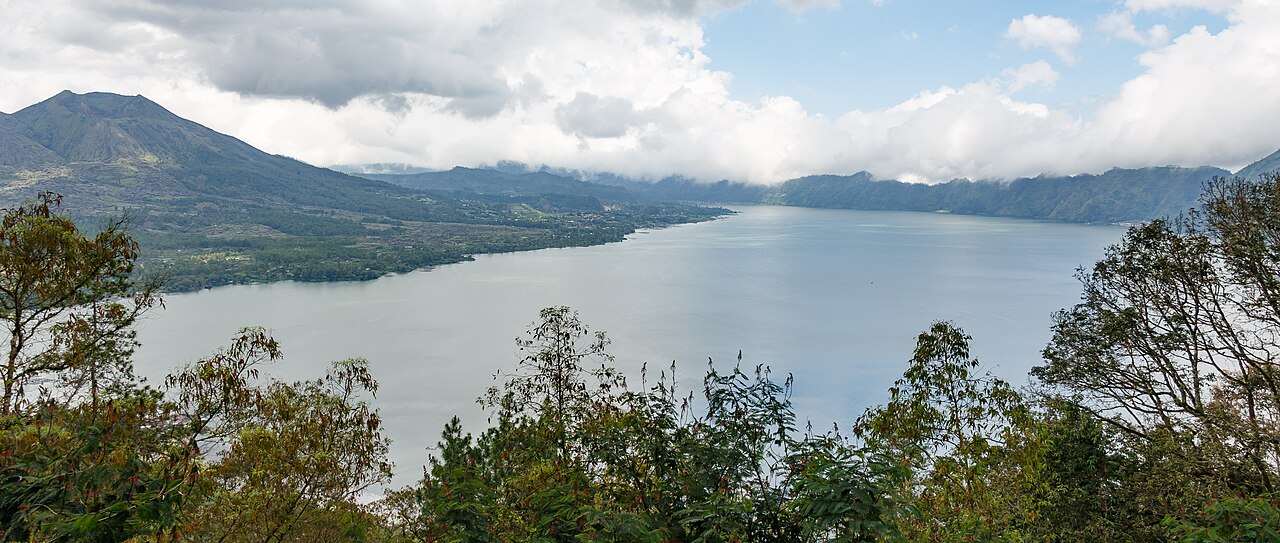
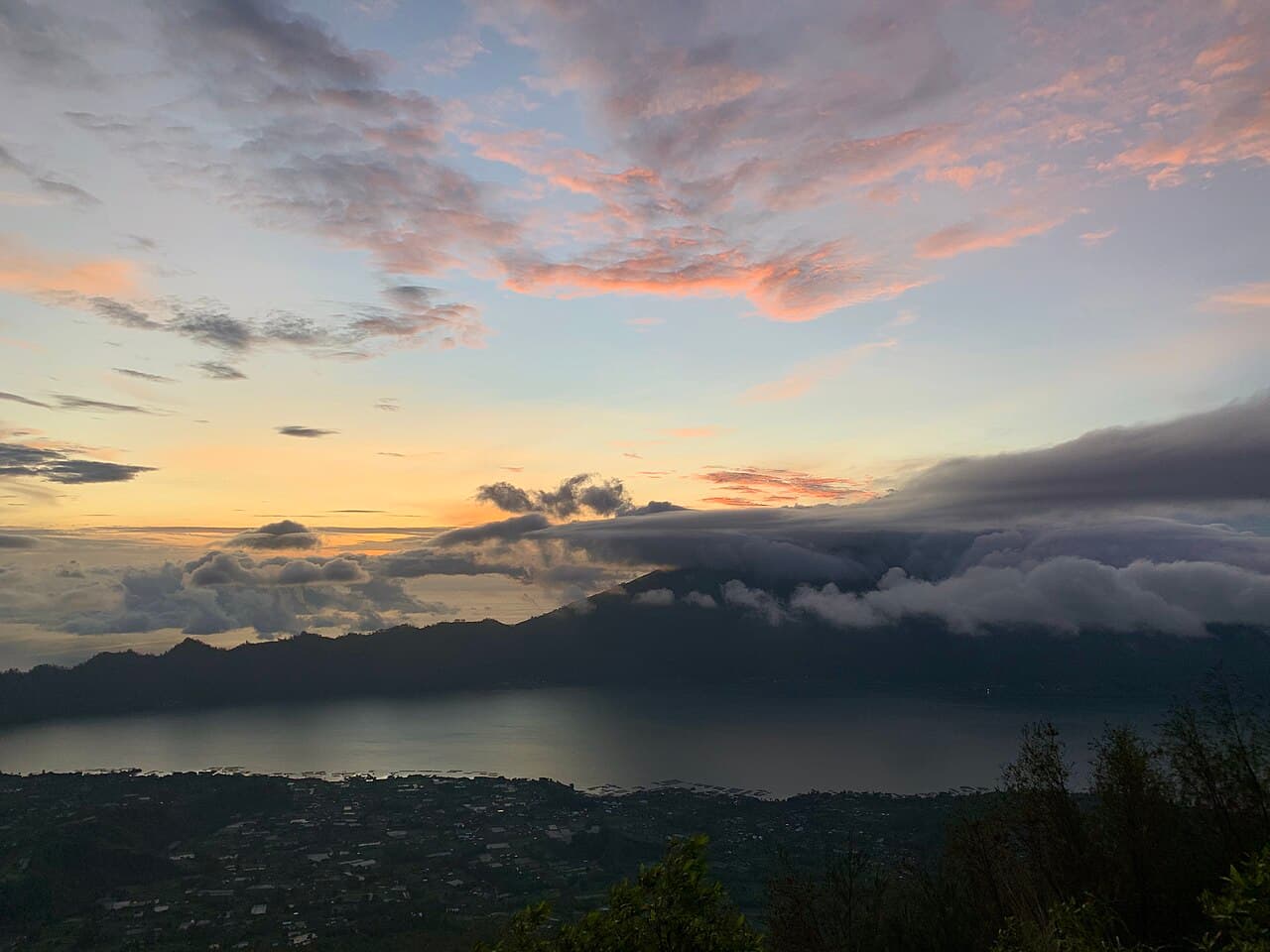
The eastern horizon begins to glow. Mount Agung — Bali's highest and holiest volcano at 3,031 meters — stands as a massive dark silhouette against the brightening sky. Below you, Lake Batur reflects the changing colors. The caldera rim curves around the lake in a dramatic crescent.
As the sun breaks the horizon, the entire landscape transforms. The light hits Agung first, then spills down the ridgelines, across the lake, and into the valley below. On a clear day, you can see Lombok's Mount Rinjani to the east. The colors shift from deep purple to orange to gold to daylight white over about 20 minutes.
It is genuinely one of the most beautiful natural spectacles in Southeast Asia. Photos do not fully capture it — the scale of the caldera, the depth of the lake below, the feeling of standing on an active volcano while the world wakes up.
Want us to plan this trip for you?
Our certified guide will create a personalized itinerary based on your interests, pace, and travel style.
Get Your Free ItineraryBreakfast at the Summit
One of the unique touches of the Batur trek is breakfast cooked using volcanic steam. Your guide will find one of the active steam vents on the summit (the volcano is still active — last erupted in 2000) and use the natural heat to cook eggs and bananas.
It is more of a symbolic experience than a full meal — you get a couple of boiled eggs, a banana or two, and some toast or simple sandwiches that the guide packed. But eating warm food on a cold volcano summit after a two-hour hike while watching the sunrise over Bali is one of those moments that stays with you.
Some operators also provide coffee or hot chocolate, which is extremely welcome at summit temperatures.
Thinking about trekking Batur but want the logistics handled for you? We organize private sunrise treks with transport from anywhere in Bali, experienced local guides, and a pace that suits your group. Chat with us on WhatsApp to plan your trek.
Coming Back Down
The descent takes about 1 to 1.5 hours. The route down is the same trail, and in daylight, you can actually see the landscape you hiked through in the dark — which is both beautiful and slightly alarming when you realize what you scrambled over.
The volcanic scree sections are harder going down than up. The loose rock means your feet slide with each step. Take it slow, watch your footing, and use a walking stick if your guide offers one. Knee strain is the most common complaint on the descent.
By the time you reach the trailhead (usually between 7:30 and 8:30 AM), the morning is warm and bright. Most guided tours include a stop at a natural hot spring near the lake, which is an excellent way to soothe tired legs. The hot springs cost around IDR 200,000 for entry if not included in your package.
From there, your driver takes you back to your accommodation. Most people are back at their hotel by 10:00–11:00 AM if staying near Ubud, or by noon if heading to the south.
Plan a relaxed afternoon. You will have been awake since 1 or 2 AM, and the physical exertion catches up. A pool day, a spa visit, or a slow lunch is the right pace for the rest of the day.
Cost Breakdown (2026 Prices)
Here is what the Mount Batur sunrise trek actually costs:
Trekking guide fee (mandatory): IDR 600,000–800,000 per person for a group trek; IDR 1,000,000–1,500,000 for a private guide (1–2 people).
Transport from your hotel: Varies by distance. From Ubud: IDR 200,000–350,000 return. From Seminyak/Canggu: IDR 400,000–600,000 return. From Uluwatu: IDR 500,000–700,000 return. Using a private driver you already have booked for the day is the most economical approach.
Hot springs (optional): IDR 200,000 per person.
Breakfast at summit: Usually included in the guided trek package.
Tips for your guide: Not mandatory but appreciated. IDR 50,000–100,000 is standard.
All-inclusive package (guide + transport + breakfast + hot springs): IDR 800,000–1,500,000 per person depending on pickup location and group size.
Total realistic budget: Plan for IDR 1,000,000–1,500,000 per person (roughly USD 60–90) for the complete experience including transport, guide, breakfast, and hot springs.
Best Time of Year for the Mount Batur Sunrise Trek
The trek runs year-round, but conditions vary significantly by season:
Best months (April–October): Dry season means clearer skies, better summit visibility, and a more comfortable hike. The trail is less slippery, and you are more likely to get an unobstructed sunrise view. September and October are particularly good — fewer crowds than the July–August peak.
Wet season (November–March): The trek still operates, but there is a higher chance of cloud cover obscuring the sunrise view. The trail is muddier and more slippery. Rain during the hike is possible. If you are visiting during wet season, your guide can check conditions the night before and advise whether it is worth going.
Full moon nights: Some operators offer full moon treks that start even earlier, allowing you to hike under moonlight without flashlights. These are special but weather-dependent.
For broader trip planning around weather and seasons, see our guide to the best time to visit Bali.
Tips From Someone Who Has Done This Trek Hundreds of Times
Go to bed early. This sounds obvious, but most people underestimate how much a 1:30 AM alarm affects the experience. If you are out at a beach club until midnight, the trek will be miserable. Get to bed by 8 or 9 PM the night before.
Eat something small before you leave. A banana, a few biscuits, or a granola bar. You do not want a full stomach, but hiking for two hours on empty is not ideal either.
Bring more water than you think you need. Dehydration is the number one reason people feel terrible during the hike. The air is cooler and drier at altitude, so you do not feel yourself sweating as much, but you are losing fluids.
Do not compare your pace to others. Every group moves differently. Some practically run up, some take it slow with lots of breaks. Both approaches get to the summit in time for sunrise. Go at whatever pace lets you enjoy the experience rather than survive it.
Charge your phone the night before. The summit sunrise is genuinely spectacular, and a dead phone battery means no photos. Consider bringing a small power bank.
The descent is where injuries happen. Going up is tiring but controlled. Coming down on loose volcanic rock requires concentration. Take your time, step carefully, and use the walking stick option if available.
How Mount Batur Fits Into a Bali Itinerary
The Mount Batur trek pairs well with time in the Ubud and central highlands area. A common approach:
- Spend a few days in or around Ubud exploring rice terraces, temples, and the cultural scene
- Schedule the Batur trek for one morning during your highlands stay
- Recover that afternoon with a spa or pool session
- Continue to your next destination the following day
If you are working from our ultimate Bali travel guide, the Batur trek slots naturally into the Ubud/highlands portion of any itinerary.
The trek also combines well with a visit to the Tegallalang rice terraces or Tirta Empul temple on the way back — both are on the route between Kintamani and Ubud. Your driver can stop at either one without a significant detour.
FAQ
Is the Mount Batur sunrise trek safe?
Yes. The volcano is active but closely monitored, and the trekking route is well-established and maintained. Thousands of people complete the trek every week. The main safety considerations are proper footwear (no sandals), adequate hydration, and careful footing on the descent. All treks require a registered local guide who knows the route and current conditions.
Can I do the Mount Batur trek without a guide?
No. The local trekking association (PPPGB) requires all hikers to use a registered guide. This rule is enforced at the trailhead. Beyond the regulation, the trail is not marked and you start in complete darkness — having an experienced guide is genuinely valuable for safety and navigation.
How fit do I need to be for the Mount Batur trek?
You should be able to walk uphill continuously for about two hours. The trek involves approximately 700 meters of elevation gain over roughly 4 kilometers. If you can climb several flights of stairs without stopping, you can likely complete the trek. People with moderate fitness complete it regularly, though the pace varies. If you have knee problems or respiratory conditions, consult your doctor first.
What happens if it rains or is cloudy?
Light rain does not cancel the trek — you just hike in your rain jacket. Heavy rain or thunderstorms may cause cancellation for safety reasons, and reputable operators will reschedule or refund. Cloud cover at the summit means you may miss the actual sunrise view, though the above-the-clouds scenery can be dramatic in its own way. Dry season (April–October) offers the highest chance of clear skies.
Is the Mount Batur sunrise trek worth it?
If you are reasonably fit and willing to lose one night of sleep, yes. The summit sunrise over Mount Agung and Lake Batur is one of the most visually striking experiences available in Bali. The volcanic breakfast is memorable, and the sense of achievement is real. It is not a casual morning activity — it requires early rising and genuine physical effort — but the vast majority of people who complete it say it was a highlight of their trip.
Can children do the Mount Batur trek?
Children aged 10 and above who are active and accustomed to walking can typically complete the trek. Below that age, the combination of early wake-up, darkness, steep terrain, and cold summit temperatures makes it very challenging. For families with younger children, consider the sunrise viewpoint at Kintamani instead — you get a panoramic view of Mount Batur and the lake without the hike.
Ready to experience the Batur sunrise for yourself? We arrange private Mount Batur sunrise treks with door-to-door transport from anywhere in Bali, handpicked local guides, and flexible pacing for your group. As certified guides who speak French, Mandarin, and English, we handle every detail so you can focus on the experience. See our volcano trek experience for the full guided package, or pair it with private driver door-to-door transport. Get in touch on WhatsApp and we will set it up for your preferred date.
Related Guides
<!-- internal-link-sweep:2026-04-29 -->
Certified Travel Guide & Co-Founder
A certified Bali guide credentialed by the Indonesian Ministry of Tourism, fluent in French, Mandarin, English, and Indonesian. Part of a family of certified guides who have been guiding travelers across Bali for many years — sharing temples, rice terraces, and hidden corners that never make the brochures.
Languages: French · Mandarin · English · Indonesian
Ready to discover Bali?
Tell us about your dream trip and our local experts will craft a personalized experience just for you.
Start Planning