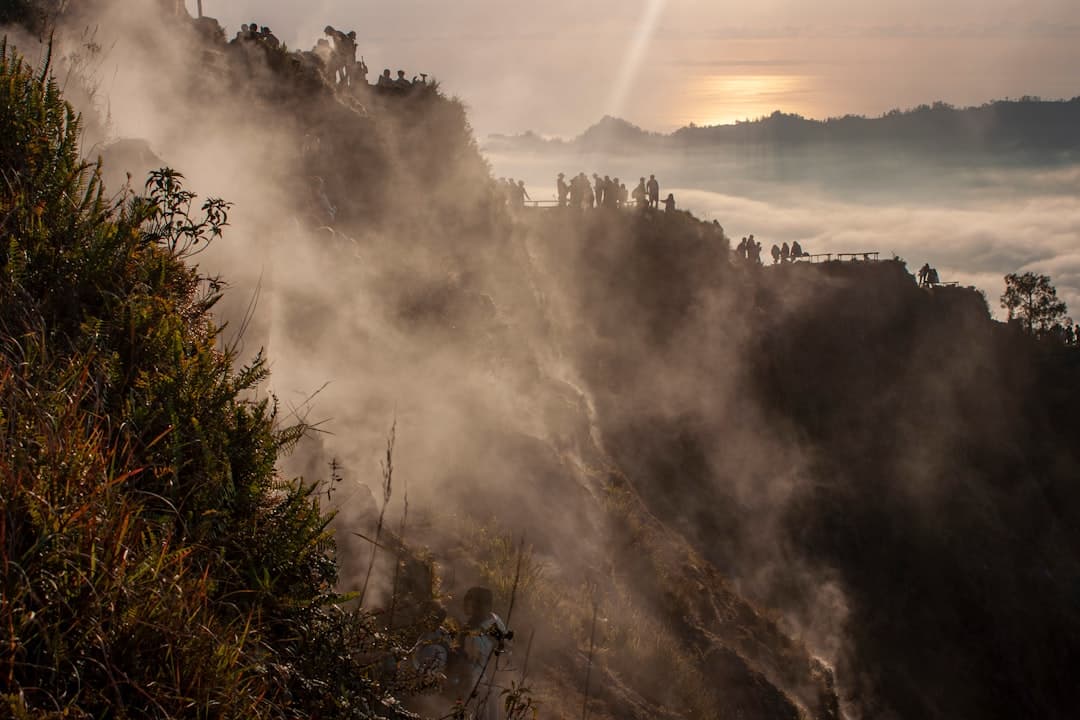
Standing on the rim of an active volcano as the first light of day breaks over Bali is one of those travel moments that stays with you permanently. Mount Batur rises 1,717 meters above sea level in the Kintamani highlands, and the pre-dawn trek to its summit delivers a panorama that stretches from the caldera lake below to the towering cone of Mount Agung on the horizon. This is not a passive sightseeing stop — it is an earned experience, and that is exactly what makes it unforgettable.
Quick answer: The Mount Batur sunrise trek is a guided pre-dawn hike starting around 3:30 AM from the village of Toya Bungkah. The ascent takes roughly two hours along a well-maintained trail, and the reward is a spectacular sunrise viewed from the crater rim, followed by breakfast cooked using volcanic steam vents. It is Bali's most popular volcano trek and suitable for anyone with moderate fitness.
What Makes This Experience Special
Mount Batur is one of only two active volcanoes on the island (the other being Mount Agung), and its caldera is among the most visually dramatic volcanic landscapes in Indonesia. The trek itself is not technically difficult, but doing it in darkness with headlamps, surrounded by the sounds of the pre-dawn forest, creates an atmosphere that is entirely different from a daytime hike.
What sets our trek apart from the dozens of operators running this route is the quality of guiding. Your trekking guide is a certified local who has climbed Batur hundreds of times and knows the mountain intimately — not just the main trail, but the geology of the lava flows, the history of the 1963 and 2000 eruptions, and the spiritual significance of the volcano to the surrounding Kintamani communities. When we say "guided," we mean genuinely informative, not someone walking ahead with a flashlight.
We also keep group sizes small. The main trail can get crowded during peak season, and large groups tend to bottleneck at certain sections. By limiting numbers, we maintain a comfortable pace and ensure you actually have space to enjoy the summit rather than jostling for a photo spot.
What to Expect
2:00 AM — Hotel Pickup
Your driver collects you from your accommodation. If you are staying in Ubud, the drive to Toya Bungkah takes about an hour. From Canggu or Seminyak, allow closer to two hours. We recommend going to bed early the night before — this is a genuinely early start, and you will enjoy it far more if you are rested.
3:30 AM — Trailhead Registration and Briefing
You arrive at the base of Mount Batur near Toya Bungkah village. Your trekking guide meets you, distributes headlamps, and gives a brief safety overview. The trail conditions and weather are assessed — in the rare event of unsafe conditions, the guide will advise accordingly.
3:45 AM — The Ascent Begins
The first section of the trail passes through sparse forest on volcanic soil. The footing is generally stable but uneven in places, so proper footwear matters (more on that below). After about 45 minutes, you emerge above the tree line and the trail becomes steeper, crossing old lava fields. Your guide points out geological features along the way — solidified lava flows from different eruptions have distinct textures and colors visible even by headlamp.
5:15 AM — Approaching the Summit
As you near the crater rim, you begin to see the first hints of light on the eastern horizon. The final push to the summit is the steepest section, but it is short. Your guide positions you at a viewpoint with the best angle toward Mount Agung and the caldera lake.
5:30–6:00 AM — Sunrise
The sunrise itself unfolds over roughly 30 minutes. First the sky shifts from deep indigo to orange and pink, then the sun clears the horizon behind Mount Agung. Below you, Lake Batur reflects the changing light, and on clear mornings you can see all the way to Lombok's Mount Rinjani. This is also when your guide prepares breakfast using the volcanic steam vents near the crater — eggs, bananas, and coffee heated by the earth itself.
6:00–7:00 AM — Summit Exploration
After sunrise, there is time to explore the crater rim. Your guide can take you along the ridge to see the active fumaroles up close, where sulfur deposits create vivid yellow patches against the dark volcanic rock. The steam vents are hot enough to burn, so your guide ensures you stay at safe distances while getting the best views.
7:00–8:30 AM — Descent and Hot Springs
The descent follows a different route where possible, giving you new perspectives of the caldera. It takes about 90 minutes at a relaxed pace. At the base, you have the option to soak in the natural hot springs at Toya Bungkah — volcanic-heated water at a comfortable temperature, with views back up at the mountain you just climbed.
9:30–10:00 AM — Return to Hotel
Your driver returns you to your accommodation, typically arriving before midday. Most people find they have plenty of energy left for a relaxed afternoon.
What's Included
- Return transportation from your hotel (Ubud, Canggu, Seminyak, Sanur, or Kintamani area)
- Certified local trekking guide
- Headlamp for the pre-dawn ascent
- Breakfast cooked at the summit using volcanic steam
- Entrance fees and trekking permits
- Access to natural hot springs after the descent
- Water and light snacks
Practical Tips
Footwear: Proper closed-toe shoes with grip are essential. Trail runners or hiking boots work best. Sandals and flip-flops are not suitable — the volcanic rock is sharp and loose in sections.
Clothing: It is noticeably cold at the summit before sunrise, often dropping to 10-15 degrees Celsius. Bring a warm layer (fleece or light jacket) and long trousers. Once the sun is up, it warms quickly, so layers you can remove are ideal.
Fitness level: The trek is moderate. You do not need to be an athlete, but you should be comfortable walking uphill for two hours on uneven terrain. The altitude gain is roughly 700 meters from the trailhead. If you walk regularly, you will manage fine. Children aged 10 and up generally handle it well.
Best time to go: The dry season (April to October) offers the clearest skies and best chance of an unobstructed sunrise. During the wet season (November to March), the trek still operates but cloud cover is more common and the trail can be slippery. We always check conditions and advise honestly if visibility is likely to be poor.
What to bring: A small backpack with water, your camera, a warm layer, and sunscreen for the descent. Leave valuables you do not need at your hotel.
Photography: Bring your camera fully charged. The sunrise light is extraordinary for photography, and the combination of volcanic terrain, lake reflections, and distant peaks gives you compositions you cannot get anywhere else on the island. A headlamp frees both hands, so you do not need to choose between lighting and shooting.
Who Is This For?
This trek suits a wide range of travelers. Couples looking for a shared adventure that goes beyond beach and pool. Solo travelers wanting to connect with Bali's volcanic landscape in a meaningful way. Families with children old enough for a moderate hike (roughly 10 years and up). Photographers — both serious and casual — who want golden-hour conditions in a dramatic natural setting. And anyone who has looked at Mount Batur from a distance and wondered what it is like up there.
It is not suited for travelers with significant mobility limitations or very young children, simply because the terrain is uneven and the pre-dawn start is demanding. If you are unsure whether the trek is right for you, ask us — we will give you an honest assessment.