Quick answer: Tabanan is the regency that covers most of west and central-west Bali — home to the UNESCO-listed Jatiluwih rice terraces (600+ hectares, inscribed 2012), the iconic Tanah Lot sea temple, and the sacred Mount Batukaru jungle. It is the off-beat side of Bali: working farmland, ancient temples, and quiet mountain villages, all within an hour of south Bali and Ubud. One to two nights is enough to take in Jatiluwih, Pura Luhur Batukaru, and a Tanah Lot sunset. Best visited April to October for dry trails and clear views.
Tabanan is the regency most travellers drive through without realising it. It stretches from the south-west coast at Tanah Lot up to the volcanic shoulders of Mount Batukaru, covering paddy fields, jungle, and traditional villages that have farmed the same valleys for a thousand years. While most visitors come for a quick photo at Tanah Lot and leave, Tabanan rewards anyone willing to spend a night or two — this is where you find Bali's largest and most authentic rice landscape, the UNESCO-listed Jatiluwih terraces, and a quieter side of the island that feels closer to how Bali looked twenty years ago.
The regency name (Tabanan) is what shows up on maps and addresses. Jatiluwih is the famous rice terrace village inside it, sitting at roughly 700 metres elevation on the southern slopes of Mount Batukaru, around 45 minutes inland from Tabanan town and about 90 minutes from Canggu or Seminyak. To the south-west, Tanah Lot juts out into the Indian Ocean. To the north, Pura Luhur Batukaru hides in dense jungle. Together, these three sites — terraces, sea temple, mountain temple — form the heart of what Tabanan offers.
Why Tabanan vs other Bali bases
Tabanan is not a base in the way Ubud, Canggu, or Sidemen are. It is more often a one-night stop or a long day trip, but it can absolutely anchor a slower itinerary if you want a working-farmland landscape without the crowds.
| Feature | Tabanan / Jatiluwih | Ubud | Sidemen |
|---|---|---|---|
| Vibe | Working rice farms, jungle temples | Cultural hub, art, yoga | Sleepy valley with Mount Agung views |
| Crowds | Low to moderate (Tanah Lot busy at sunset) | High in centre | Very low |
| Signature sight | Jatiluwih UNESCO terraces | Sacred Monkey Forest, palace | Bukit Cinta and Agung sunrise |
| Beach / coast | Tanah Lot sunset | None | None |
| Stay length | 1-2 nights or day trip | 3-4 nights | 2-3 nights |
| Best for | Photographers, slow travel, authenticity | First-time culture | Retreat, weaving, volcano views |
If you are choosing between Tabanan and another quiet base, Sidemen leans toward Mount Agung and east Bali culture, while Tabanan leans toward UNESCO scale and the west-coast sea temple.
Jatiluwih Rice Terraces
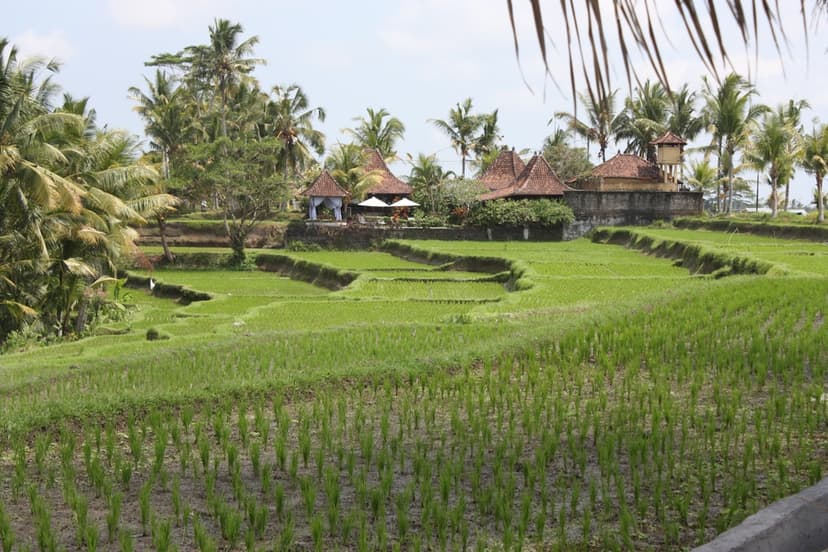
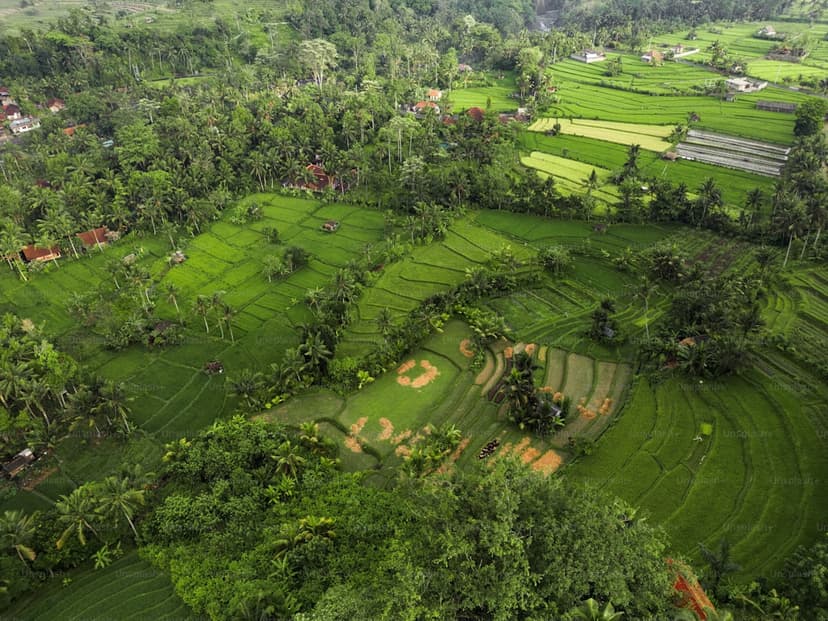
Jatiluwih is the reason most people visit Tabanan, and for good reason. The terraces cover more than 600 hectares of working rice fields — large enough that you cannot see them all from a single viewpoint — sloping gently from the lower valleys up toward Mount Batukaru. They were inscribed on UNESCO's World Heritage List in 2012, recognised not just for their visual beauty but for the cultural landscape they represent: a millennium-old, community-managed irrigation system called subak.
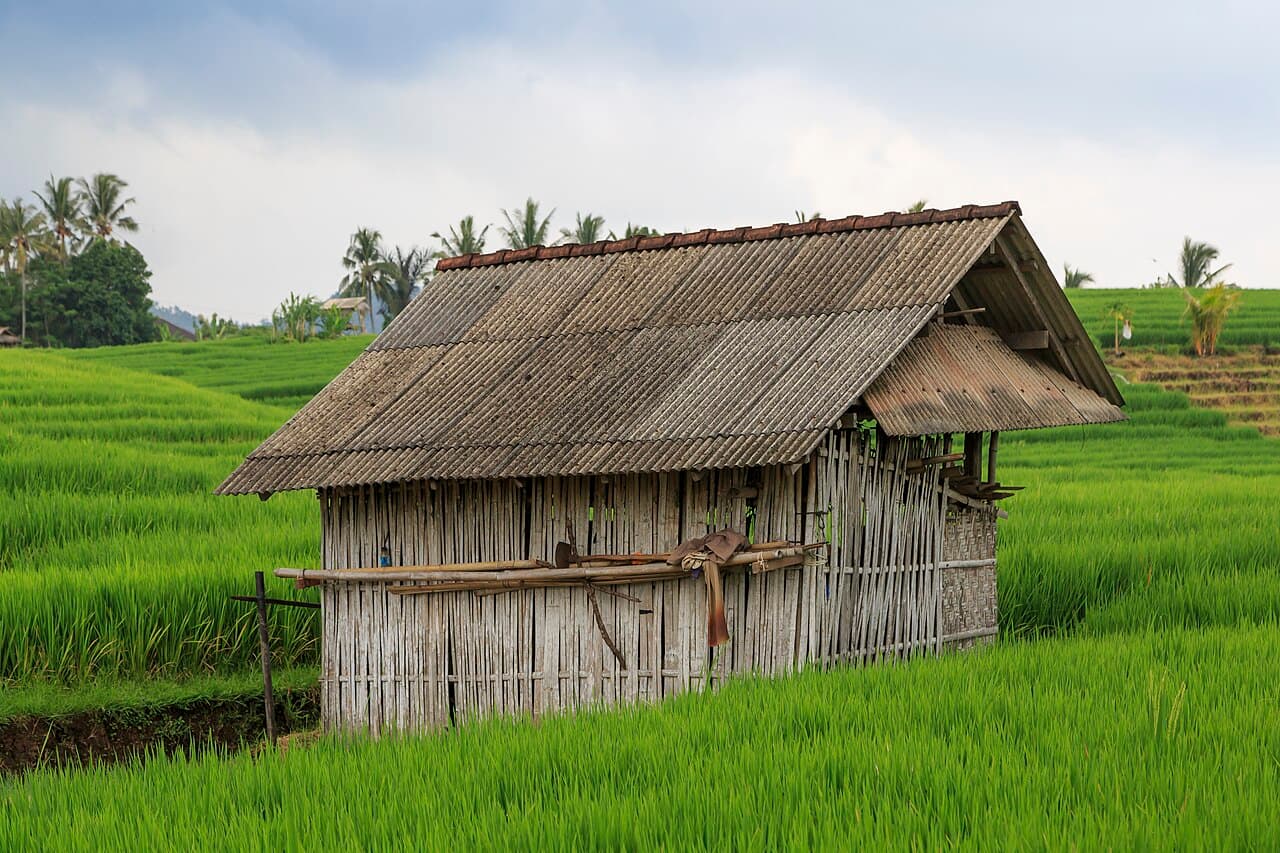
Unlike Tegalalang near Ubud, where the terraces have largely become a photo-stop with swings, cafes, and crowds funnelled into a small valley, Jatiluwih is genuinely vast and genuinely working. Farmers wade through the paddies barefoot, ducks are herded along the irrigation channels, and outside of harvest season you might walk for an hour and meet only a handful of people. Our blog comparison of Tegalalang and Jatiluwih, the Tegalalang rice terrace guide, goes into detail on which is best suited for which kind of traveller.
There are five marked walking circuits at Jatiluwih, ranging from a 30-minute loop to the longer 2.5-hour Penatahan circuit that descends into the valley and crosses streams and farmer paths. Most visitors do the easier middle loops (1 to 1.5 hours), which are well worth the time. The trails are marked but uneven in places — sandals are fine in dry season, but proper shoes are better.
When to walk — Early morning, between 7 AM and 10 AM, is the best window. The light is soft, temperatures are cool (Jatiluwih sits at elevation, so mornings can be in the high teens Celsius), and farmers are typically active in the fields. By midday, the heat builds and clouds often start to gather around Mount Batukaru. Late afternoon (4 PM onwards) is the second-best window, with golden light on the western-facing terraces.
Entry fee — There is a small per-person fee at the gate (typically 50,000 IDR / about US$3), which goes toward maintaining the trails and the subak system itself. Keep your ticket — it is sometimes checked at trail intersections.
Tanah Lot Sea Temple
Tanah Lot is one of the most photographed sights in Indonesia, and it sits firmly inside Tabanan regency — though most visitors arrive on a day trip from south Bali and never realise where they are. The temple itself perches on a small rocky island that becomes accessible at low tide and surrounded by sea at high tide, with waves crashing dramatically on the volcanic rock at sunset.
The site is sacred to the Balinese — it is one of seven sea temples that ring the island, each within sight of the next. Non-Balinese cannot enter the inner shrines, but you can walk down to the base of the rock at low tide, where a holy spring pours out of the cliff and a priest offers blessings (a small donation is appropriate). The clifftop walking path along the south side of the complex offers the best angle for sunset photographs.
Practical notes — Sunset is the busiest time and also the most spectacular; arrive at least an hour before sunset to find a good spot. Tickets cost roughly 75,000 IDR (about US$5) per person, with a reduced rate for children. There is a large parking area, and the walk from car park to coast takes about 10 minutes through a corridor of food stalls and souvenir shops. Avoid the extra fee "tour guide" offers near the entrance — they are not necessary if you are just walking the public path.
Mount Batukaru and Pura Luhur Batukaru
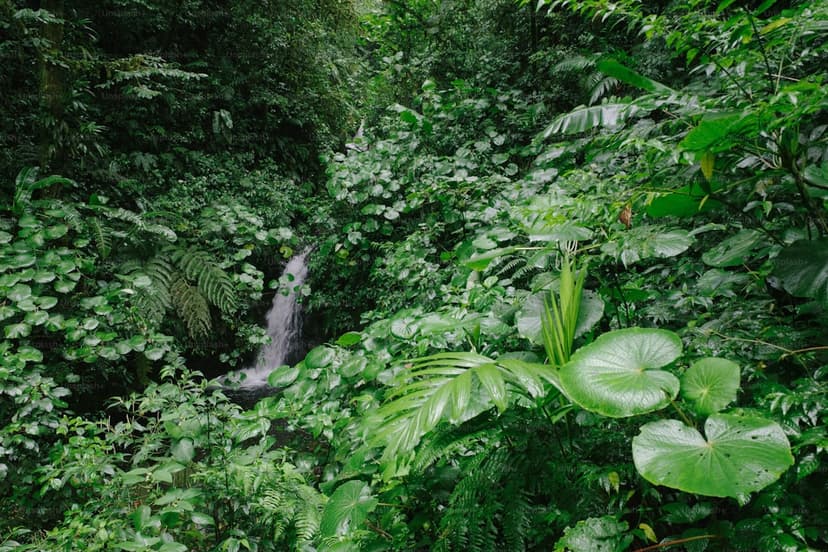
Mount Batukaru (2,276 metres) is Bali's second-highest peak and one of the most sacred mountains on the island. Unlike Mount Agung or Mount Batur, Batukaru is not popular for sunrise treks — the trail is muddy, the jungle is thick, and the summit rarely offers views thanks to almost-permanent cloud cover. What it offers instead is one of the densest, most untouched forests left in Bali.
Pura Luhur Batukaru is the temple at the foot of the mountain, set in deep jungle at around 800 metres elevation. It is one of the nine "directional" temples that protect Bali from natural and spiritual threats, and the air here genuinely feels different — cool, slightly misty, and quiet apart from birdsong and gamelan-style metallic insect calls.
Dress code — This is a working temple, and the dress code is strict. Visitors must wear a sarong and sash (rentable at the entrance for a small fee or included with the ticket). Shoulders must be covered. Menstruating women are traditionally asked not to enter, in line with Balinese custom — this is signposted at the entrance. The atmosphere is contemplative; speak quietly, and ask before photographing anyone in prayer.
Hiking — A guided jungle hike on Mount Batukaru's lower slopes is a quiet alternative to the more famous treks. Trails range from 2-hour loops in the foothills to the demanding 7-hour summit attempt. A local guide is essential — paths are easy to lose, and conditions change quickly.
The Subak Irrigation System
What makes Jatiluwih a UNESCO site is not just the visual scale but the cultural system that created it: subak. Subak is a thousand-year-old water-sharing co-operative, in which all the farmers along a single irrigation network (typically running off a small temple at the highest spring) co-ordinate when to plant, how much water each farmer receives, and when to leave fields fallow.
Each subak is governed democratically by its members, and decisions are reinforced through religious ceremonies at temples called pura subak (water temples) scattered through the landscape. UNESCO inscribed five rice landscapes — including Jatiluwih, Pakerisan, and the Pura Taman Ayun area in Mengwi — collectively in 2012, recognising subak as a living cultural landscape rather than a frozen monument.
Walking through Jatiluwih, you can see subak at work: small concrete sluice gates direct streams from one terrace to the next, and the lowest tier of any system always feeds back into the river before being lifted again upstream for the next group of farmers. It is an early form of sustainable agriculture and water management that pre-dates anything similar in Europe by centuries.
Day Trips from Tabanan
Tabanan is well-positioned for several short drives that round out a one or two-night stay.
Bedugul and Ulun Danu Beratan (1 hour north) — Lake Beratan is a crater lake in the highlands, with a small temple complex that appears to float on the water on misty mornings. The botanical gardens nearby are excellent for a slower walk. Combine with Jatiluwih for a full mountain day.
Munduk waterfalls (1.5 hours north) — Push slightly further past Bedugul and you reach Munduk, the highland village with the Munduk, Red Coral, and Golden Valley waterfalls. It is the natural next stop if you are heading north into the mountains. Our best Bali waterfalls guide ranks Sekumpul and other serious-chaser options, though it is a longer drive on the far side of the central range.
Tanah Lot (45 minutes south-west) — As described above, the sunset visit pairs perfectly with a morning at Jatiluwih. If you are based in Pacung or Penebel, you can do both in a single day.
Taman Ayun (30 minutes east) — A second UNESCO subak temple in Mengwi, with elegant moats and shrines in tiered courtyards. Far less crowded than the famous temples and well worth a stop on the way back to Canggu or Seminyak.
Where to Stay in Tabanan
Tabanan does not have the dense accommodation infrastructure of Ubud or Seminyak, which is part of its charm. Three areas are worth considering, each suited to a different kind of traveller.
Pacung valley — A small village south-east of Jatiluwih with a few mid-range ecolodges and boutique hotels offering valley views and infinity pools facing Mount Batukaru. Quiet, atmospheric, and well-placed for both Jatiluwih and Tanah Lot day trips.
Penebel and around Jatiluwih — Closer to the rice terraces themselves, this area has a growing collection of small guesthouses and family-run homestays. Dinner options are limited but some of the lodges have terrace-view restaurants serving simple Balinese food.
Tabanan town and the south coast — More functional than scenic, but useful if you want to be closer to Tanah Lot or are doing Tabanan as part of a coast-then-mountains route. Most south-coast travellers prefer to day-trip from Canggu or Seminyak rather than stay overnight here.
If you are unsure, a common pattern is one night in Pacung or Penebel for the rice terraces, then continuing north to Munduk for a second night of mountain scenery before heading back to the coast.
How Many Days in Tabanan
One night — Enough for a half-day Jatiluwih walk, lunch at a terrace warung, a visit to Pura Luhur Batukaru, and Tanah Lot sunset. The most efficient option for travellers fitting Tabanan into a wider Bali itinerary.
Two nights — Adds time for a longer Jatiluwih circuit, a Mount Batukaru jungle hike, a slower drive through the smaller villages, and the option to detour to Bedugul or Taman Ayun. Two nights is the comfortable sweet spot.
Day trip from Ubud or Canggu — Workable. Leave by 8 AM, walk one of the shorter Jatiluwih circuits, lunch with a view, visit Pura Luhur Batukaru, return via Tanah Lot for sunset. This is one of the better day-trip routes in Bali if you have a private driver to handle the timing.
Getting to Tabanan
There is no airport, train, or useful public transport in Tabanan — getting around the regency relies on a private vehicle. From Ngurah Rai airport, Tanah Lot is about 1 hour, Tabanan town is 1 to 1.5 hours, and Jatiluwih is 1.5 to 2 hours depending on traffic and which mountain road you take.
From Ubud, Jatiluwih is about 1 hour west via the back roads through Apuan and Penebel — a beautiful drive that climbs through smaller paddy villages most tourists never see. From Canggu or Seminyak, the most common route is up through Mengwi and then north into the foothills, taking 1.5 to 2 hours.
A private driver is the easiest option and usually costs 600,000 to 900,000 IDR (US$40-60) for a full day. Our private driver service handles route planning, timing, and stops along the way. For travellers wanting to combine Tabanan with several other destinations, a custom itinerary is the cleanest way to plan a multi-region trip.
Scooters are technically possible but the mountain roads to Jatiluwih and Batukaru are winding, narrow, and slick after rain — only experienced riders should consider it. Self-drive cars are workable for confident drivers, though navigating to the smaller back-road viewpoints can be challenging without a local who knows where to turn.
Tegalalang vs Jatiluwih — Quick Comparison
Many travellers research Tegalalang first and only stumble across Jatiluwih later. Here is the honest side-by-side we share with our clients.
| Feature | Jatiluwih (Tabanan) | Tegalalang (Ubud) |
|---|---|---|
| Size | 600+ hectares | Roughly 5 hectares |
| UNESCO status | Yes (2012) | No |
| Working farmland | Active subak farming | Mostly maintained for tourism |
| Crowds | Low to moderate | High (especially mid-day) |
| Photo stops | Self-guided trail circuits | Curated swings and cafes |
| Time needed | 1.5-2.5 hours minimum | 30-60 minutes |
| Distance from Ubud | 1 hour | 15 minutes |
| Best for | Authenticity, scale, slower travel | Quick visit, social-media stops |
Both have their place. If you have one rice-terrace stop on your trip and value scale and authenticity, choose Jatiluwih. If you are based in Ubud and want a quick visit, Tegalalang is closer.
Practical Tips
Bring layers — Jatiluwih and Pura Luhur Batukaru sit at altitude, and mornings can be 17-19°C. A light fleece or long sleeves is comfortable for early walks, even in dry season.
Cash — ATMs are scarce once you leave Tabanan town. Bring cash for entry fees, parking, warung lunches, and small offerings. Pacung and Penebel guesthouses generally accept transfers but smaller stalls do not.
Footwear — Paddy paths are mud after rain and dusty in dry season. Trail runners or sturdy sandals with grip are fine. Avoid white shoes.
Local food — The terrace-view warungs at Jatiluwih serve good, simple Balinese food (nasi campur, mie goreng, fresh juice) at fair prices. The black rice pudding here is a regional speciality made from locally grown black sticky rice. Ask your guide for their preferred warung — the best ones are not always the most visible from the road.
Ceremonies — Tabanan is a regency where temple ceremonies still happen frequently. If you encounter a procession, pull over and let it pass — both as a courtesy and because the music and the women carrying offerings on their heads are one of the most photogenic moments of any Bali trip. Always ask before photographing people directly.
Connecting with Local Knowledge
Our family is a household of certified guides — Indonesian, originally from Medan, settled in Bali for many years. Our wife is a certified French and Mandarin speaking guide, and her parents are official Mandarin-speaking guides. When we plan Tabanan visits, we draw on local relationships that go beyond what a typical day-tour driver can offer: which subak is currently planting, which warung in Pacung serves the best babi guling, and which jungle trail on Batukaru is dry enough to walk after recent rain.
If you would like that kind of trip rather than a generic stop-and-photo route, we can build it around your dates and pace.
FAQs
When is the best time to visit Tabanan and Jatiluwih?
April to October (dry season) is the most reliable window. Trails through the Jatiluwih terraces are firm, mountain views toward Batukaru are clearest, and Tanah Lot sunsets are reliably cloud-free. February to April produces the most vivid green paddies (newly planted), while July and August deliver the golden colours of harvest. Early morning visits — before 9 AM — give you the softest light, the lowest crowds, and the best chance of seeing farmers actively tending the fields.
How does Jatiluwih differ from Tegalalang?
Jatiluwih is roughly 600 hectares of working UNESCO-listed terraces sloping toward Mount Batukaru, where farmers still co-ordinate planting through the thousand-year-old subak system. Tegalalang, near Ubud, is much smaller (around five hectares) and largely set up for quick photo stops, swings, and cafes. Choose Jatiluwih if you want scale, authenticity, and a longer walk; Tegalalang if you are based in Ubud and want a quick visual stop. Our Tegalalang rice terrace blog post covers the comparison in more depth.
How do I get to Tabanan from Ubud or south Bali?
Tabanan town is about 1 hour from Seminyak and Canggu, and about 1 hour from Ubud. Jatiluwih is a further 45 minutes inland, so plan on around 1.5 to 2 hours from south Bali to the rice terraces. There is no useful public transport, so a private driver is essential. The drive from Ubud through Apuan and Penebel is itself one of the most scenic back-road routes on the island.
How long should I spend in Tabanan?
One to two nights covers most of what Tabanan offers. A single night allows a Jatiluwih walk, Pura Luhur Batukaru, and a Tanah Lot sunset. Two nights opens up Mount Batukaru jungle hiking and slower exploration of villages around Pacung and Penebel. Many travellers also visit as a long day trip from Ubud or Canggu — workable, but rushed if you want to do justice to all three main sights.
Is Tabanan kid-friendly?
Yes. Jatiluwih has well-maintained walking circuits ranging from 30 minutes to 2.5 hours, on relatively gentle terrain — easy for children aged six and up. Tanah Lot is family-friendly with paved paths, food stalls, and dramatic sea views. Mount Batukaru jungle hikes are more demanding and better suited to teenagers and adults. Bring sun protection, water, and shoes with grip, and avoid mid-day walks when the heat builds.
Can I do Tabanan as a day trip from Ubud?
Yes, and it is one of the most rewarding day trips from Ubud. The drive to Jatiluwih is about 1 hour each way through scenic backroads. A typical day starts at 8 AM, walks one of the Jatiluwih circuits, has lunch at a terrace warung, visits Pura Luhur Batukaru for the cooler jungle atmosphere, and returns via Tanah Lot for sunset. Our private driver handles the timing so you can focus on the landscapes rather than the logistics.