Tanah Lot Temple Bali 2026 — Visiting Tips, Sunset & Times
A certified local guide breaks down Tanah Lot Temple in 2026 — opening hours, ticket prices, the best sunset arrival time, photography spots and how to combine it with other sights.
In This Guide
- What is Tanah Lot Temple?
- Where is Tanah Lot?
- How to get to Tanah Lot
- Best time to visit Tanah Lot
- Tanah Lot at sunset
- Tanah Lot tickets and opening hours 2026
- What to see at Tanah Lot
- Combining Tanah Lot with other sights
- Practical tips
- Tanah Lot photography guide
- Frequently Asked Questions
- Is Tanah Lot worth visiting?
- What is the best time to arrive at Tanah Lot for sunset?
- How much does it cost to enter Tanah Lot in 2026?
- Can you go inside Tanah Lot Temple?
- Are there sea snakes at Tanah Lot?
- Should I visit Tanah Lot or Uluwatu for sunset?
- Is it easy to park at Tanah Lot at sunset?
- What should I wear to Tanah Lot Temple?
- Can I visit Tanah Lot in the rainy season?
- How long should I spend at Tanah Lot?
- Related Guides
Quick answer: Tanah Lot is a 16th-century Balinese sea temple perched on a small rock island off the coast of Tabanan, about 45–60 minutes from Seminyak and Canggu. Open daily from 7am to 7pm, entry is around IDR 75,000 for adults and IDR 40,000 for children (verify on arrival 2026). The best time to visit is around 4:30pm to settle in for the 6pm sunset — the iconic photo. Access to the rock base is only possible at low tide.
I have been bringing visitors to Tanah Lot for years, and it is still the temple I most often recommend for a first sunset in Bali. The setting — a small black rock crowned by a tiered Hindu sea shrine, waves wrapping around it as the light turns gold — is the image many travelers already carry of Bali before they ever land. As a family of certified guides, we drive guests out here most weeks, and the experience changes a lot depending on what time you arrive, what tide is rolling in, and whether you know where to stand.
In this guide I walk through Tanah Lot the way I'd brief a guest in person: the history and meaning behind the temple, exactly how to get there from the main tourist zones, what to expect at sunset, the 2026 ticket structure, what to see beyond the main temple, and how to combine it with other sights for a full half-day. I also cover the practical details — sarong rules, photography positioning, scams to watch for, and whether the holy-water cave is worth the queue.
What is Tanah Lot Temple?
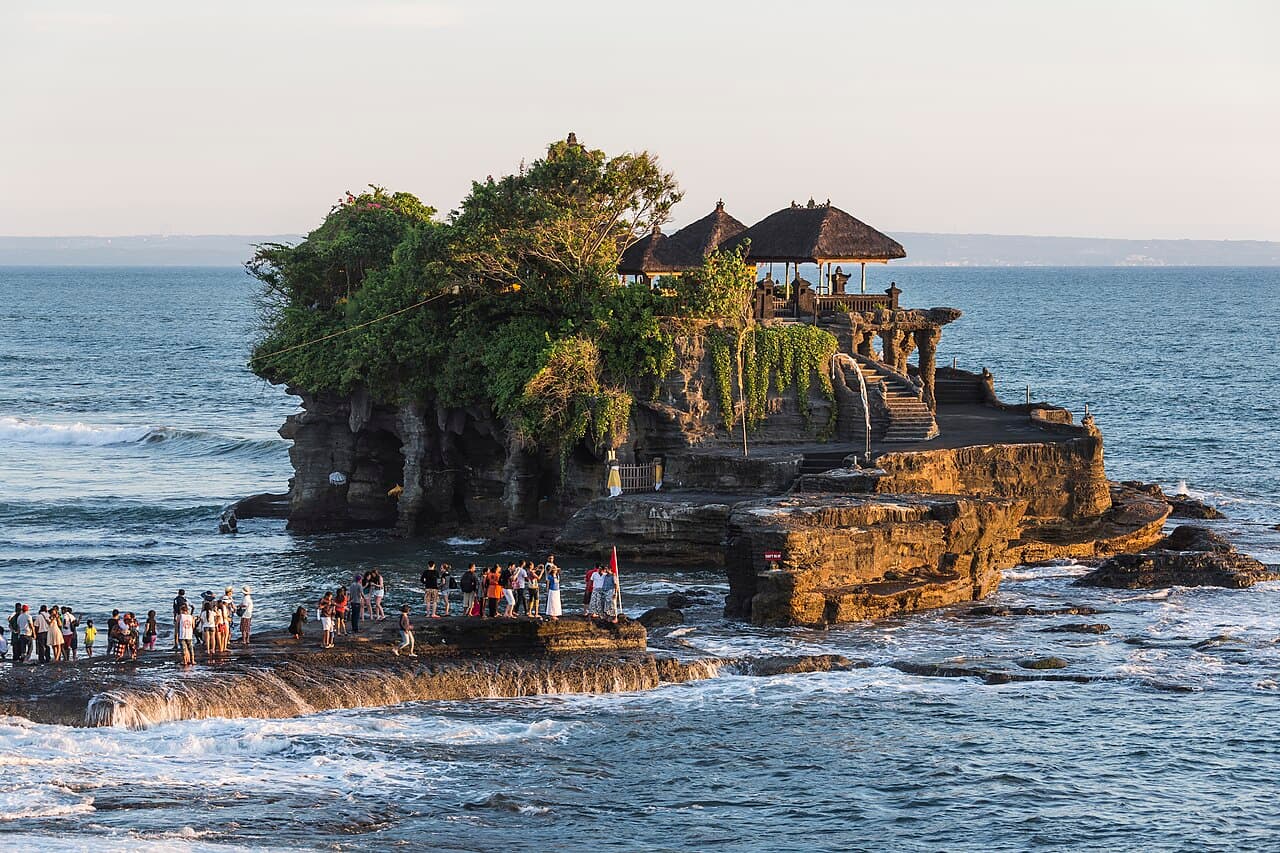
Tanah Lot — Pura Tanah Lot in Indonesian — is one of seven sea temples that ring the coast of Bali, each placed within sight of the next so that the whole circle protects the island from negative spirits coming from the ocean. The name translates roughly as "land in the sea," which is exactly what it is: a small rock island, perhaps thirty meters across, sitting just offshore at the edge of Tabanan regency.
The temple itself is a tiered meru shrine dedicated to the sea gods, in particular Dewa Baruna (the Balinese god of the sea) and Dewi Danu (the goddess of water). Tradition places its founding in the 16th century with the Hindu priest Dang Hyang Nirartha — a Javanese sage who travelled across Bali establishing temples wherever he saw places of strong spiritual energy. When he reached this point on the southwest coast, the story goes, he saw the rock and asked local fishermen to build a shrine there. Over the centuries Tanah Lot grew into one of the most important pilgrimage sites on the island.
Two details give Tanah Lot its mystique. First, the rock is partly hollow — at low tide you can walk across the wet sand and reach a small cave at the base, where Balinese priests offer holy water blessings to visitors. Second, sea snakes (banded kraits) live in the crevices around the rock and are considered the temple's spiritual guardians. They are kept in a small viewing area today; they are real, they are genuinely venomous, and they are part of why locals consider this place sacred rather than just scenic.
When I take guests here, I always tell them the same thing: Tanah Lot is touristy, yes — it is one of the most visited sights in Bali — but it is also a working temple. Ceremonies happen here. The priest at the base of the rock is not a performer; he is a pemangku doing his daily duty. Treat the visit with that in mind and the experience deepens beyond the photo opportunity.
Where is Tanah Lot?
Tanah Lot sits on the southwest coast of Bali, in Beraban village, Tabanan regency, roughly 20 km northwest of the airport. It is not in the famous Seminyak/Canggu strip, but it is close enough that most south-Bali travelers can do it as a half-day trip.
Approximate one-way drive times in 2026 traffic:
| From | Distance | Drive time (off-peak) | Drive time (peak / sunset) |
|---|---|---|---|
| Canggu | 18 km | 35–45 min | 60–75 min |
| Seminyak | 22 km | 45–55 min | 75–90 min |
| Kuta / Airport | 28 km | 50–65 min | 90–120 min |
| Ubud | 40 km | 75–90 min | 120–150 min |
| Uluwatu | 45 km | 75–90 min | 120 min+ |
The "peak" column matters more than the distance. Late-afternoon traffic heading toward Tanah Lot for sunset is genuinely heavy — narrow rural roads, scooters, tour buses queueing for the same parking lot. I tell my guests to leave Seminyak no later than 3:30pm, and Ubud guests no later than 2:30pm, if they want a comfortable arrival around 4:30pm.
For more on the closest base, see Canggu and the broader Seminyak area — both make sensible launch pads for a Tanah Lot afternoon.
How to get to Tanah Lot
There are three honest options. Each comes with trade-offs.
Private driver — what I recommend for most visitors. A local driver knows the back roads to dodge sunset traffic, drops you at the entrance, waits while you visit (typically 2–3 hours on site), and drives you home afterward. Cost is roughly IDR 600,000–900,000 for the round trip from Seminyak or Canggu (estimations 2026 — verify on arrival). Includes parking and waiting time. The calmest option for couples, families, and anyone who does not want to navigate Bali's roads at dusk. See our private driver service for details.
Organized half-day tour — usually combines Tanah Lot with one or two other sights (Taman Ayun temple is the standard combo). Cheaper per head if you are a small group, but you trade flexibility for a fixed itinerary and shared van. Reasonable if Tanah Lot is your only "must-see" temple and you want minimal logistics.
Scooter — possible, and cheaper still. The roads from Canggu to Tanah Lot are reasonably flat, but the last few kilometers fill with traffic at sunset, and the parking lot is chaotic at golden hour. Riding back in the dark with no streetlights is genuinely risky if you are not an experienced scooter rider. I do not recommend it for most travelers — see our Bali scooter rental guide for an honest breakdown of when scooter is and is not the right call.
For the broader logistics of moving around the island, our private driver guide covers daily rates, etiquette, and how to handle a half-day vs full-day booking.
Best time to visit Tanah Lot
The honest answer is sunset — but the better answer is "sunset, plus a margin." The temple is famous for the silhouette photograph in golden hour, and the entire site is built around delivering that view. Plan for arrival at 4:30pm if you want to:
- Park without circling
- Walk through the main entrance and shopping arcade without queueing
- Reach the cliff-side viewing area before the front rows fill
- See the temple in clear afternoon light before the sun starts to drop
- Get a few photos with the rock in different light stages — bright, golden, then silhouette
Sunset itself in Bali falls around 6:00pm to 6:30pm year-round (Bali sits close to the equator, so the variation is small). The best 30 minutes are roughly 5:45pm to 6:15pm — that is the golden-hour window when the rock turns warm orange and the sky behind it lights up.
If you arrive at 5:45pm, you will park 1 km away, walk in a stream of visitors, and stand five rows back from the cliff. You will still see the sunset — but the experience is much smaller than what a 4:30pm arrival gives you.
For travelers who want to skip the crowds entirely, morning visits are quiet, cool, and atmospheric. Sunrise is not the right light for the iconic photo (the rock faces west), but if you arrive at 7am when the gates open, you may have the whole site to yourself for an hour. I recommend morning visits to guests who have already been to Tanah Lot once and want a calmer return.
For broader trip-planning context, see best time to visit Bali — sunset times shift slightly across the year and the dry season (May–October) gives you the highest probability of clear horizons.
Tanah Lot at sunset
I have watched maybe a hundred Tanah Lot sunsets, and the pattern is always the same.
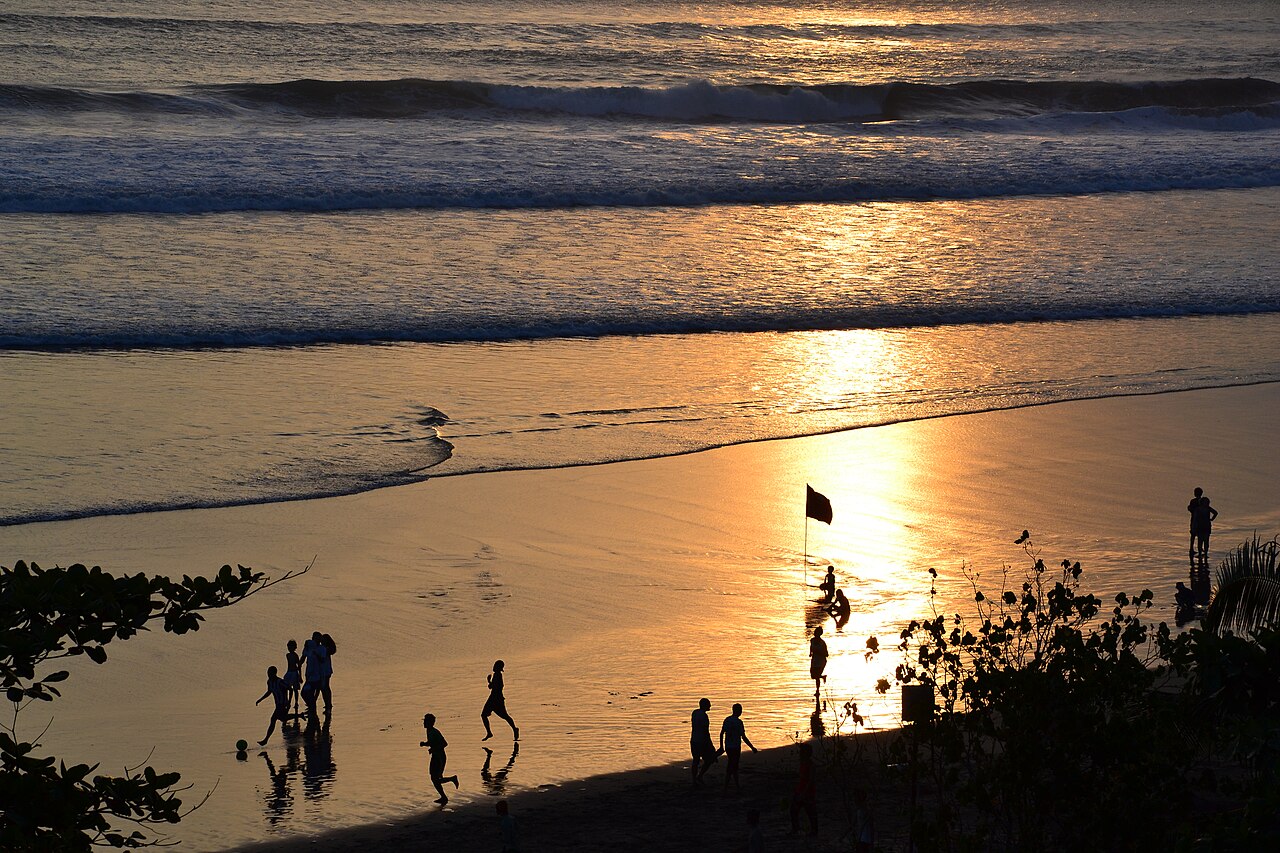
Around 4:45pm the cliff-side path fills with families and tour groups, and the open-air bars on the headland behind the temple start serving Bintangs to anyone with a view seat. From 5:00pm to 5:30pm the light is bright and warm — you can see every detail of the rock and the meru shrine. From 5:30pm to 5:55pm the sun lowers behind a thin band of haze on the horizon, the rock gradually loses detail, and the silhouette emerges. The actual moment the sun touches the horizon is brief — five or six minutes — and the entire crowd goes quiet. Once the sun is gone, the sky behind the temple often glows pink and orange for another 15–20 minutes; many visitors leave too early and miss this second window.
Where to stand depends on what photo you want. The classic "rock against the orange sky" frame is shot from the main north cliff viewing area — most people end up there by default. For a tighter, less crowded angle, walk south along the headland to the secondary cliffs near Pura Batu Bolong (covered below) — fewer visitors, better foreground for wide shots that include both temples. For the rock at low tide with no people around it, you have to come at sunrise.
Crowd reality check: Tanah Lot at sunset is one of the busiest tourist sights in Bali. Expect to share the cliff with 1,000+ other visitors on a typical dry-season evening. If crowd anxiety is a real concern, either visit in the morning or pair the trip with a quieter alternative — see the comparison table further down.
For more on sunset choices across the island, our things to do in Uluwatu covers the main alternative.
Tanah Lot tickets and opening hours 2026
The site is open to visitors daily from 7:00am to 7:00pm. The main entrance closes at 7pm; the temple complex itself remains in use for ceremonies after dark, but tourists are not admitted after closing.
Entry fees in 2026 (estimations — verify on arrival):
| Ticket | Price (IDR) | Approx. USD |
|---|---|---|
| Foreign adult | 75,000 | $5 |
| Foreign child (5–10) | 40,000 | $2.50 |
| Indonesian adult | 30,000 | $2 |
| Parking (car) | 5,000 | $0.30 |
| Parking (scooter) | 2,000 | $0.15 |
Ticket booths take cash (Indonesian rupiah). Some booths now accept QRIS digital payments — bring a card or e-wallet as backup but expect cash to be the smoothest option. Tickets are scanned once at the inner gate.
Important: only Hindu worshippers may enter the temple proper on top of the rock. Visitors are restricted to the surrounding cliffs and the path that leads down to the wet sand at low tide. This is normal practice at all major Balinese temples — see our Bali temples guide for the broader etiquette around what is and is not accessible to non-Hindu visitors.
Low tide vs high tide matters a lot at Tanah Lot. At low tide, you can walk across the exposed sand to the base of the rock, take photos directly underneath the meru shrine, and queue for the holy-water cave blessing (more on that below). At high tide, the rock becomes an island again and you can only view it from the cliffs. There are six high tides and six low tides in any 24-hour period — the timing shifts daily. Check a Bali tide chart before your visit if base access matters to you. As a rough rule, dry-season afternoons frequently have low tide around sunset, but this is not guaranteed.
What to see at Tanah Lot
The site is bigger than just the famous rock. A complete visit covers four main features.
Pura Tanah Lot (the main rock temple) — the iconic image. The tiered meru shrine is restricted to worshippers, but the rock itself is the reason most people come. At low tide you can walk to its base; at high tide you view from the cliff. Either way, the silhouette at sunset is the photo most travelers carry home.
Want us to plan this trip for you?
Our certified guide will create a personalized itinerary based on your interests, pace, and travel style.
Get Your Free ItineraryThe snake cave and holy water (Goa Naga) — a small cave at the base of the rock where a pemangku (priest) offers a blessing using fresh water that flows from a small spring within the rock. The blessing is short — a few drops of water on your forehead, a flower behind the ear, a grain of rice pressed onto your forehead. A small donation (IDR 10,000–25,000) is appropriate. Sea snakes live in the rocks here; they are kept in a viewing enclosure that you pass on the way to the cave. The blessing is only available at low tide.
Pura Batu Bolong — a second sea temple about 200 meters south along the cliff, sitting on a rock arch (batu bolong means "the rock with a hole"). Smaller, much less crowded, and visually striking against the open ocean. I always send my guests this way for 15 minutes — it is the calm counterpoint to the main temple.
The cliffs and shopping arcade — a long curving headland with food stalls, souvenir shops, and open-air bars selling Bintang and jaffles with sunset views. Reasonable for a snack and a drink while waiting for golden hour. Prices are tourist-rate — expect IDR 30–50K for a beer, IDR 50–80K for simple grilled food.
A thorough visit takes 90 minutes to 2 hours. Most guests stay 2–3 hours including a drink before sunset.
Combining Tanah Lot with other sights
Tanah Lot is naturally a half-day trip. The classic combinations:
Tanah Lot + Taman Ayun — Pura Taman Ayun is a beautiful 17th-century royal water temple in Mengwi, about 25 minutes inland from Tanah Lot. Open during the day, far less crowded, surrounded by lotus ponds. The standard half-day tour stops here on the way out and at Tanah Lot for sunset. This is the combo I most often plan with families.
Tanah Lot + Pura Ulun Danu Bratan — Ulun Danu sits on Lake Bratan in the central highlands, the famous "lake temple" that appears on the IDR 50,000 banknote. About 90 minutes from Tanah Lot. This makes a longer day trip — possible, but tight. Better as part of a north-Bali day plus an overnight in the highlands.
Tanah Lot vs Uluwatu sunset — the choice many first-time visitors face. Both are sea temples, both are famous for sunset, both are crowded.
| Tanah Lot | Uluwatu | |
|---|---|---|
| Setting | Rock island offshore | Cliff-top temple 70m above sea |
| Vibe | Touristy, beach-town feel, shopping arcade | More dramatic, wilder cliffs |
| Crowd at sunset | Very busy (ground-level) | Very busy (limited cliff space) |
| Iconic shot | Rock silhouetted against orange sky | Cliff temple with surfers below |
| After-sunset entertainment | Beach restaurants, bars | Kecak fire dance at 6pm or 7pm |
| Distance from Seminyak | 45–55 min | 45–60 min |
| Monkeys | None on site | Yes — watch belongings |
| When I recommend it | First-timers, families, sea-temple atmosphere | Couples, dramatic photographers, fans of dance ceremonies |
A common pattern with my guests: Tanah Lot on day 2, Uluwatu plus the Kecak fire dance on day 4. They are different experiences and worth doing both.
Practical tips
A few details that make the day smoother.
Dress code — Tanah Lot is a Hindu temple. Shoulders and knees should be covered. Sarongs are not required for the cliff viewing area, but a sarong and sash are required if you go down to the holy-water cave. Free sarongs are typically loaned at the entrance to the inner area; bringing your own is faster.
What to bring — small denomination IDR cash for the ticket, snake-cave donation, parking and food; a refillable water bottle (Bali sun is fierce until 5pm); a light scarf if you tend to feel cool when the sea breeze picks up after sunset; mosquito repellent for golden-hour bites.
Footwear — flip-flops or sport sandals are best. The path includes wet sand at low tide and slippery rocks; closed shoes that you do not mind getting wet are better than fashion sneakers.
Food and drink — the headland has plenty of options, but quality is uneven and prices reflect the captive audience. I usually have my guests eat a proper dinner after the sunset, in Canggu or Seminyak on the way back. A Bintang at a sunset bar inside the complex is fine; a full dinner there is rarely worth it.
Scams and pushy sellers — Tanah Lot has a long shopping arcade you walk through to reach the cliffs. Vendors are persistent but not aggressive. Standard rules apply: a polite "tidak, terima kasih" (no thanks) is enough. Watch for "free temple guide" offers that turn into a paid tour; the temple does not assign guides at the gate. The holy-water priest, by contrast, is genuine — small donation is appropriate, no pressure.
Toilets and changing rooms — clean toilets are available near the main entrance and around the food court. Plan for one stop before the sunset rush at 5:30pm — queues lengthen sharply after sundown.
Accessibility — the path to the cliff viewing area is paved and gently sloped. The descent to the wet sand at low tide involves stairs and uneven rocks; not suitable for wheelchairs or travelers with mobility issues. The cliff view alone is still worth the trip.
Tanah Lot photography guide
A few practical positions and settings, since photography is the main reason most travelers come at sunset.
Golden-hour positioning:
- Main north cliff — the standard frame: rock + meru shrine + ocean + sun. Wide-angle (24–35mm equivalent) captures the scene; standard (50mm) tightens to the rock alone.
- South cliff toward Pura Batu Bolong — frames both temples in one shot, with much less crowd in the foreground. Slightly longer lens (50–85mm) helps compress the two rocks.
- Beach level at low tide — directly under the temple. The wet sand reflects the sky, creating a mirrored sunset frame. Stand 20 meters back from the rock for foreground reflections.
Tides matter for photography. At high tide the rock is a clean island and the silhouette is uncluttered. At low tide, exposed reef adds foreground texture but also adds shoes and crowd in your frame. Both are valid choices — pick based on the photo you want.
Camera settings for the silhouette at sunset:
- Manual mode if your camera allows
- ISO 100–200, no need to push it
- f/8 to f/11 for depth of field through the whole rock
- Spot meter on the brightest part of the sky just above the rock, then close down -1 stop to deepen the silhouette
- A tripod helps after the sun is gone (shutter speeds drop fast in the 15 minutes after sundown)
Phone shooters: tap to expose on the bright sky, hold the focus lock, then recompose. HDR mode often blows out the orange — turn it off and trust the silhouette.
The crowd problem: every position above is busy at sunset. Either commit to elbows-out at the front cliff, or accept that people in your foreground are part of the experience and frame around them. The cleanest "no people" Tanah Lot photo is shot at sunrise, not sunset.
Frequently Asked Questions
Is Tanah Lot worth visiting?
Yes — for the sunset alone, it is one of the most cinematic landmarks in Bali. The crowds are real and the shopping arcade is touristy, but the rock-temple silhouette against the sea is genuinely iconic, and combining the visit with Pura Batu Bolong and a sunset drink makes it a satisfying half-day. I always recommend at least one Tanah Lot visit to first-time Bali travelers.
What is the best time to arrive at Tanah Lot for sunset?
Aim to arrive around 4:30pm. Sunset in Bali is roughly 6:00pm–6:30pm year-round. A 4:30pm arrival gives you time to park easily, walk in without queueing, see the temple in afternoon light, and choose your viewing position before the front-row spots fill. Arriving after 5:30pm means parking far from the entrance and standing several rows back from the cliff.
How much does it cost to enter Tanah Lot in 2026?
Foreign adult entry is approximately IDR 75,000 (~$5 USD), foreign child IDR 40,000 (~$2.50). Indonesian residents pay around IDR 30,000. Parking is IDR 2,000–5,000. Cash is the smoothest payment option — bring small denominations in rupiah. Verify the exact rate on arrival as fees are reviewed annually.
Can you go inside Tanah Lot Temple?
No — the temple proper, on top of the rock, is reserved for Hindu worshippers. Visitors can walk along the cliff viewing area, descend to the base of the rock at low tide, and receive a holy-water blessing in the small cave at the foot of the rock. The temple's tiered meru shrine is viewable but not enterable. This restriction is normal across major Balinese sea temples.
Are there sea snakes at Tanah Lot?
Yes. Banded sea kraits live in the rock crevices near the base of the temple and are considered the temple's spiritual guardians. They are kept in a small viewing enclosure on the path to the holy-water cave, where visitors can see one safely behind glass. The snakes are real and venomous in the wild, but the contained viewing area poses no risk. Locals consider them sacred — touching is not permitted.
Should I visit Tanah Lot or Uluwatu for sunset?
Both are excellent. Tanah Lot is more famous for the silhouette photograph and feels like a beach-town destination with restaurants and shops; Uluwatu is more dramatic with cliff-top setting and the Kecak fire dance ceremony at 6 or 7pm. If you can only choose one, I usually recommend Tanah Lot for first-time visitors traveling with families, and Uluwatu for couples and visitors who want a dance performance after sunset. Both are about 45–60 minutes from Seminyak.
Is it easy to park at Tanah Lot at sunset?
It can be tight from 5pm onward. Several large lots serve the site; the closest fills first, and overflow lots are 500m–1km from the entrance with shuttle service or a long walk. Arriving by 4:30pm gives you a high chance of parking close to the entrance. Private drivers know the layout and will drop you near the gate before parking themselves.
What should I wear to Tanah Lot Temple?
Smart-casual, respectful clothing covers the requirements. Shoulders and knees should be covered, particularly if you plan to descend to the holy-water cave (where a sarong is required and usually provided). Flip-flops or sport sandals work better than dress shoes — paths get wet at low tide. A light layer for after-sunset breeze is useful in the dry season.
Can I visit Tanah Lot in the rainy season?
Yes, the site is open year-round. The rainy season (November to March) brings shorter visits — afternoon storms can roll in fast and obscure the sunset. The trade-off is far smaller crowds and more dramatic skies on clear days. If you visit in the rainy season, build in flexibility (a backup day for sunset) and check the forecast in the morning. See Bali rainy season for a deeper look.
How long should I spend at Tanah Lot?
Plan for 2 to 3 hours on site. That gives you time to walk through the main complex, visit Pura Batu Bolong on the southern cliffs, queue for the holy-water cave at low tide if accessible, watch the sunset, and stay for the post-sunset glow. Anything less than 90 minutes feels rushed; anything more than 3 hours becomes diminishing returns once it is dark.
Cover photo: Tanah Lot Temple, Bali — a 16th-century Balinese sea temple at sunset, photographed from the public viewing cliffs.
Related Guides
<!-- internal-link-sweep:2026-04-29 -->
Certified Travel Guide & Co-Founder
A certified Bali guide credentialed by the Indonesian Ministry of Tourism, fluent in French, Mandarin, English, and Indonesian. Part of a family of certified guides who have been guiding travelers across Bali for many years — sharing temples, rice terraces, and hidden corners that never make the brochures.
Languages: French · Mandarin · English · Indonesian
Ready to discover Bali?
Tell us about your dream trip and our local experts will craft a personalized experience just for you.
Start Planning