Ubud Monkey Forest 2026 — Visiting Tips, Tickets & Safety
A certified local guide explains how to visit the Sacred Monkey Forest Sanctuary in Ubud — tickets, opening hours, safety with the macaques, and what to expect at the temples in 2026.
In This Guide
- What is the Ubud Monkey Forest?
- Where is the Monkey Forest in Ubud?
- Tickets and opening hours 2026
- What to expect inside
- Monkey behavior and safety
- Photography tips
- How long to spend at Monkey Forest
- Best time to visit
- Combining Monkey Forest with other Ubud things to do
- Practical tips
- Is the Ubud Monkey Forest ethical?
- Frequently Asked Questions
- How much does the Ubud Monkey Forest cost in 2026?
- What time does the Monkey Forest open and close?
- Are the monkeys dangerous?
- Can children visit the Monkey Forest?
- Do I need to wear a sarong?
- Can I feed the monkeys?
- What should I wear and bring?
- How long should I spend at the Monkey Forest?
- Is the Monkey Forest walkable from Ubud center?
- What if a monkey grabs my phone or sunglasses?
- Is the Ubud Monkey Forest worth it?
- Related Guides
Quick answer: The Ubud Monkey Forest (Sacred Monkey Forest Sanctuary) is a 12.5-hectare temple complex in Padangtegal, a 10-minute walk south of Ubud center, home to roughly 1,260 long-tailed macaques and three Hindu temples. Entry in 2026 runs around IDR 80,000 for adults and IDR 60,000 for children (verify on arrival). Open daily 9am–6pm. Plan 1–2 hours. Leave sunglasses, hats, food, and loose bags in the car — the monkeys will grab them.
I have been guiding visitors around Ubud for years, and the Sacred Monkey Forest is on almost every itinerary I plan. It is one of the most photographed places in Bali — moss-covered temple gates, banyan-tree roots draped over stone walls, and macaques walking the bridges like they own the place. They essentially do.
But the Ubud Monkey Forest is also where most guests get into small trouble. A monkey grabs a phone. A pair of sunglasses disappears off a head. A water bottle gets opened by a curious macaque on a railing. None of it is dangerous if you understand the rules going in — and that is what this guide is for. As a family of certified Bali guides, we walk groups through the forest most weeks, and below is exactly the briefing I give every guest before we step through the gate.
What is the Ubud Monkey Forest?
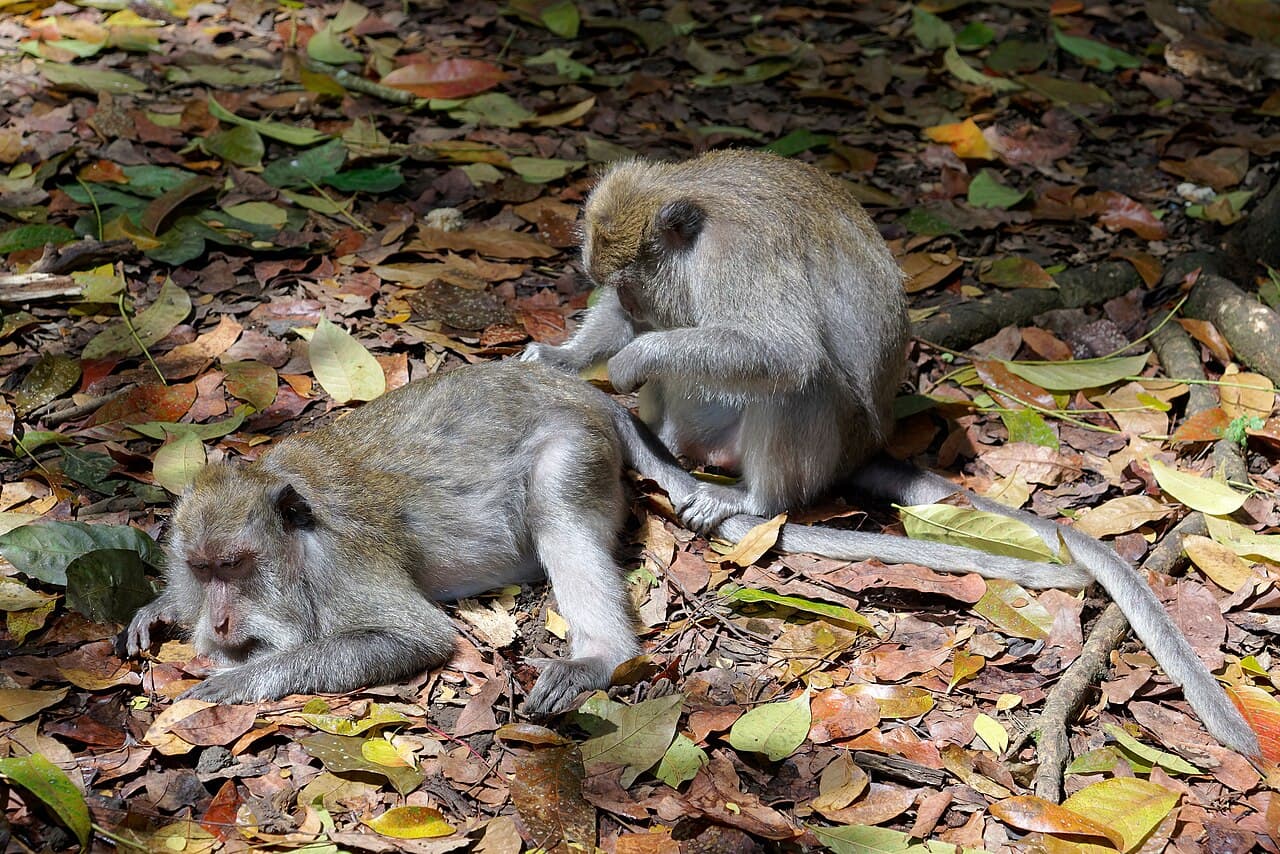
The official name is Mandala Suci Wenara Wana — the Sacred Monkey Forest Sanctuary. It is a 12.5-hectare nature reserve and active Hindu temple complex on the southern edge of Ubud, in the village of Padangtegal. It is not a zoo. It is not a tourist attraction built around monkeys. It is a religious site where roughly 1,260 long-tailed macaques (Macaca fascicularis) live wild, and where the local Padangtegal community holds ceremonies at the three temples inside the forest.
That distinction matters. The macaques are not fed on a tourist schedule for entertainment — they are fed by forest rangers as part of habitat management. The temples are not décor — they are consecrated, with restricted inner courtyards reserved for praying Balinese. When you visit, you are walking through a working temple complex that happens to be co-inhabited by a large troop of monkeys.
The forest is governed by the Padangtegal village (desa adat) and run as a non-profit conservation site. Ticket revenue funds primate research, the village, the temple maintenance, and the rangers who keep the troops in check. For a wider look at Ubud's spiritual side, see our Ubud destination page and the broader Bali temples guide.
Where is the Monkey Forest in Ubud?
The Sacred Monkey Forest sits at the south end of Jalan Monkey Forest (yes, the road is named after it), in the Padangtegal banjar of Ubud. From the Ubud center — measured from Ubud Royal Palace — it is roughly 1 km south, a flat 10–15 minute walk along Jalan Monkey Forest, or a 5-minute scooter ride. Most central Ubud hotels are within 15 minutes on foot.
The walk down Jalan Monkey Forest is part of the experience. You pass cafes, art galleries, warungs, and yoga studios — Ubud at its most photogenic. If you are coming from outside Ubud (Seminyak, Canggu, Sanur, or the airport), expect a 60–90 minute drive depending on traffic. We arrange private drivers for guests who want to combine the Monkey Forest with rice terraces or other Ubud sites in one day.
Parking is available near the main entrance on Jalan Monkey Forest — small fee, usually IDR 5,000–10,000 for cars. Scooter parking is closer and cheaper. If your driver drops you, the standard plan is to be picked up at the same entrance after 1–2 hours.
Tickets and opening hours 2026
Entry is paid at the booth at the main gate. Estimations 2026 — verify on arrival, prices have risen steadily in recent years:
- Adult ticket: IDR 80,000 (Monday–Friday); slightly higher on weekends and holidays — sometimes IDR 100,000.
- Child ticket (3–12 years): IDR 60,000.
- Children under 3: free.
Opening hours are 9:00am to 6:00pm daily (last entry around 5:30pm). The forest is open every day of the year, including major Hindu ceremonies, though parts may be closed off if a temple is in active ceremony — the rangers will redirect you.
Tickets are paper, not digital. Cash is accepted; many guests report that card payment is now available, but I would not bet on the connection — bring cash. There is no online booking system, and you cannot skip the line by buying ahead. The line moves quickly even at peak times.
For seniors, students, and group rates: there are no posted discounts. Do not waste time at the booth asking. The pricing is simple by design.
What to expect inside
Once you pass the gate, the forest unfolds into a network of stone-paved paths winding under a canopy of giant banyan and pule trees. The ambient temperature drops noticeably — even at midday, the forest is cooler and shadier than Ubud town. You hear macaques before you see them: rustling in branches above, then suddenly a family group crosses the path in front of you.
The forest's three temples are the spiritual heart of the site. They were built around the mid-14th century:
- Pura Dalem Agung Padangtegal — the "Great Temple of Death" at the center. Used for funeral and Pitra Yadnya ceremonies. The carved Rangda figures at the entrance are the most photographed details in the whole forest. Inner courtyard restricted to praying Balinese.
- Pura Beji — the "Holy Spring Temple" at the northwestern corner, used for purification rituals. There is a stone-lined water basin where ceremonies take place; the surrounding moss-covered carvings are extraordinary.
- Pura Prajapati — the cremation temple in the southwestern corner, connected to the village cemetery just outside the forest perimeter.
Beyond the temples, the path leads you to several signature spots:
- The dragon bridge — a stone bridge with dragon-headed balustrades crossing a small ravine in the southwestern part of the forest. The most photographed bridge on the property, especially in early-morning light.
- The holy banyan tree — an enormous strangler fig with aerial roots cascading down a stone wall, often draped in offerings. Locals consider it a spiritually charged spot.
- The river gorge — a deeper section in the south where the path follows a small stream. Quieter, fewer tourists, and where you sometimes spot juvenile macaques playing in the water.
Allow time to look up — many of the best photos are in the canopy, not at eye level. Mothers carrying infants, juveniles play-fighting on branches, and adult males watching the foot traffic from elevated perches are all part of what you came to see.
Monkey behavior and safety
This is the section every guest should read before entering. The macaques are wild, intelligent primates that have learned, over decades of close human contact, exactly what a tourist is carrying and how to extract it. They are not aggressive in a "stalking and attacking" sense, but they are opportunistic — and opportunity, to a Monkey Forest macaque, looks like a sunglasses-on-head, an open backpack, or a snack in a side pocket.
The honest brief I give every guest:
- Do not make direct eye contact for more than a moment. A long stare is read as a threat or a challenge in macaque language. Look at them, take your photo, then look away. Do not lock eyes the way you would with a friendly dog.
- Do not bare your teeth in a smile. A wide-toothed smile is, again, a threat display in macaque body language. Keep your mouth closed when you smile near them.
- Do not bring food into the forest. Period. Even snacks zipped in a backpack are detectable to a determined adult male. The rangers do the feeding.
- Do not bring loose plastic bags. Crinkling plastic = food sound to them. They will grab it to find out.
- Take off sunglasses and hats before entering, or stash them in a closed bag. This is the single most common item lost. A monkey jumps on your shoulder, lifts your sunglasses, and is gone in three seconds. The rangers can sometimes recover items by trading peanuts, but not always.
- Do not carry water bottles loose. Visible bottles are routinely grabbed and opened. Put them inside a closed bag.
- Do not touch the monkeys, even if they climb on you. Stay still, do not panic, and let them get bored and leave. They will. Touching — especially trying to push them off — is read as aggression.
- If a monkey grabs something, do not fight it. A real story from one of our recent groups: a guest tried to pull her phone back from a juvenile, the juvenile screamed, three adults appeared instantly. We got the phone back via a ranger and a peanut trade. Lesson: let it go, find a ranger, do not engage.
- Watch children at all times. Toddlers at macaque eye-level can be intimidating to the troop. Keep small kids on the inside of the path, hand held. For a fuller take on visiting Bali with little ones, see our Bali with kids guide.
- Do not visit if you have an open wound or are sick. Macaques can transmit several diseases through bite or scratch, including herpes B (rare but documented). If you do get bitten or scratched and the skin is broken, wash with soap and water for 15 minutes immediately and see a doctor that day. The Ubud BIMC clinic is the standard referral.
The vast majority of visits are uneventful. Tens of thousands of people walk through every month without incident. The rules above are the ones that, when ignored, produce 95% of the small problems guests experience.
Photography tips
The Ubud Monkey Forest is one of the most photographable sites in Bali, but the conditions change by hour and season. What I tell guests:
- Best light: the first hour after opening (9–10am) and the last hour before closing (5–6pm). Soft directional light hits the moss-covered temple gates and the banyan roots beautifully, and the shadows are long enough to give the photos depth. Midday light is harsh and contrasty under the canopy.
- Best location for the iconic shot: the dragon bridge in the southwest, taken from the upstream side looking down. The Pura Dalem Agung Rangda gates are the second-best frame.
- Wildlife photography: bring a 24–70mm lens for general shots, a 70–200mm for tight portraits of macaques without crowding them. Phones do well for environmental shots but struggle with macaques in the canopy due to autofocus on leaves.
- Crowd management: arrive at 9:00am sharp for the cleanest shots. By 10:30am, large tour groups arrive from the south coast and the temples become very busy. The 5–6pm window is also good — light is golden and the morning crowds have left.
- Drone: not permitted inside the forest. Drone photos around the perimeter are technically possible but you need local permission — your guide can advise.
- Be respectful at the temples: do not climb on shrines, do not enter inner courtyards even for a photo, and do not pose in disrespectful ways. The site is sacred.
For a calmer shoot, the river gorge section in the south of the forest sees fewer tourists and gives you a dense-jungle backdrop without the crowds.
How long to spend at Monkey Forest
Plan 1 to 2 hours, depending on your pace. A standard visit:
- 0–20 minutes: ticket booth, walk in, first encounters with macaques near the main path.
- 20–60 minutes: the three temples and the dragon bridge — the photogenic core.
- 60–90 minutes: the holy banyan, the river gorge, the quieter southern paths.
- 90–120 minutes: a second loop or extended photography time.
If you are a wildlife enthusiast or photographer, give yourself the full two hours. If you are doing a "see it, take a few photos, move on" visit, 60–90 minutes is plenty. Less than an hour feels rushed and you will likely miss the temples.
Want us to plan this trip for you?
Our certified guide will create a personalized itinerary based on your interests, pace, and travel style.
Get Your Free ItineraryWe typically schedule the Monkey Forest as a morning stop in a one-day Ubud itinerary, leaving the rice terraces and a longer lunch for the rest of the day.
Best time to visit
Within a single day:
- 9:00–10:00am is the sweet spot. The forest just opened, the air is cool, the crowds are minimal, and the macaques are active and well-fed. Best light for photos.
- 10:30am–2:30pm is the busiest window. Tour groups, school excursions, and day-trippers from south Bali all arrive in this band. Photos will include lots of fellow tourists.
- 3:00–5:00pm thins out as groups move on to other sites. By 4:30pm the forest is much quieter again.
- 5:00–6:00pm: the closing hour. Beautiful golden light, very few tourists, but the macaques start retreating to higher branches as feeding time has passed.
By season:
- Dry season (April–October): the most popular months. Forest is dry and easy underfoot. June–September is peak crowding.
- Wet season (November–March): rain is common in the afternoon, but mornings are usually clear. Trails can be slippery — wear shoes with grip. Far fewer crowds, lush green canopy, and the moss on the temples is at its most vivid. My personal favorite season for photography.
For broader seasonal planning, see our notes on the best time to visit Bali — the answer for Monkey Forest specifically tracks the same general advice.
Combining Monkey Forest with other Ubud things to do
The Monkey Forest is rarely visited alone — most travelers pair it with two or three other Ubud highlights. A standard one-day Ubud itinerary I plan with guests:
- 8:00am: pickup from your hotel.
- 9:00am: arrive at Monkey Forest at opening.
- 10:30–11:00am: leave Monkey Forest, walk back up Jalan Monkey Forest into central Ubud.
- 11:00am: Ubud Royal Palace (Puri Saren Agung) — 30–45 minutes, free entry.
- 11:30am: Ubud Art Market across from the palace — souvenirs, sarongs, woodcarvings.
- 12:30pm: lunch in central Ubud (warung or one of the well-known spots like Locavore, Hujan Locale, or Ibu Oka for babi guling).
- 2:00pm: drive 25 minutes north to the Tegalalang Rice Terrace — the iconic green stepped paddies. See our full Tegalalang rice terrace guide.
- 4:30pm: optional stop at Tirta Empul or Goa Gajah temple on the way back.
- 6:00pm: return to hotel or sunset dinner at a restaurant overlooking the Ubud rice fields.
If you are based in south Bali (Seminyak, Canggu, Sanur), this whole itinerary fits in a single day with a private driver — about 11–12 hours door to door. For travelers staying in Ubud, you can do it slower over two days. Our broader things to do in Ubud guide covers the full menu of options.
Practical tips
What to wear and bring:
- Closed shoes or solid sandals with grip. The stone paths are uneven and can be slippery, especially after rain.
- Light, breathable clothing — long shorts and a t-shirt are fine. The forest is shaded but humid. A sarong is not required for the Monkey Forest specifically (unlike at most Bali temples), since you are not entering inner sanctums.
- Insect repellent in wet season. Mosquitoes can be active in shaded sections.
- Hand sanitizer — useful after the visit.
- A small, closed bag (zipped or buckled) for your phone, cash, and ID. No mesh, no open totes.
What NOT to bring:
- No food, no snacks, no chewing gum, no candy, even sealed. The macaques can smell it.
- No sunglasses on your head, no hats, unless you are willing to lose them. Stash them in a closed bag.
- No water bottles in your hand or in side pockets. Closed bag only. Better yet, drink before you go in and refill after.
- No selfie sticks — they are perceived as threats by adult males and will be grabbed.
- No earrings, dangling jewelry, or hair accessories that catch the eye. Macaques are drawn to shiny, dangling objects.
- No backpacks with external pockets that hold pens, water bottles, or anything reachable. If you must bring a backpack, wear it on the front and zip it fully.
A small honest moment: I have personally watched a guest's prescription glasses get lifted off her face mid-selfie. The ranger recovered them — slightly chewed — in exchange for a peanut trade. She wears them to this day. Most stories end like this. A few end with a lost phone or a stained shirt. Plan for the few.
Is the Ubud Monkey Forest ethical?
This is a fair question, and one I get from thoughtful travelers more often each year. The honest answer:
On the conservation side — yes, the Monkey Forest functions as a protected habitat for a wild macaque population. Long-tailed macaques are not endangered globally, but their natural habitat in Bali has been heavily fragmented by development. The forest provides a stable home, primate research access, and a buffer for the species. The site is run by the Padangtegal village as a non-profit, with revenue going to conservation, the temples, and the village.
On the religious-site side — yes, this is a genuine, active Hindu temple complex with daily ceremonies. The macaques and the temple have coexisted in Balinese cosmology for centuries. Visiting respectfully is not at odds with the site's purpose; that is exactly what it is for.
On the tourist-pressure side — the truth is more mixed. Heavy tourist traffic, especially in dry season, has changed macaque behavior over decades. The troops are habituated to humans, opportunistic about food, and accustomed to constant flash photography. This is not a "wild jungle experience" — it is a managed wildlife site with hundreds of visitors per hour at peak times. If you want a quieter macaque encounter without crowds, Sangeh Monkey Forest (45 minutes north of Ubud) is far less visited and more forested, though smaller in scale and with no temple complex of comparable significance.
The compromise I recommend: visit early or late, follow the rules, do not feed the monkeys, give the rangers' work the respect it deserves, and accept that you are at a heritage site that doubles as a wildlife reserve — not at a wilderness encounter. On those terms, the Monkey Forest holds up.
For comparison, here is how the three main monkey-forest options around south-central Bali stack up:
| Site | Location | Macaques | Temples | Crowd level | Honest take |
|---|---|---|---|---|---|
| Ubud Monkey Forest | Padangtegal, Ubud | ~1,260 | 3 (14th c.) | Heavy | The flagship — temples + macaques + accessibility. Crowded but unique. |
| Sangeh Monkey Forest | 45 min north of Ubud | ~600 | 1 small temple | Light | Quieter, denser jungle, fewer tourists. Less visually iconic. |
| Uluwatu Temple | Bukit Peninsula, south | ~200 | Major sea temple | Heavy at sunset | Macaques are an aside — this is a clifftop temple with a Kecak fire dance. Different experience. |
If you want to combine, Uluwatu and Ubud are 90+ minutes apart and best done on different days. Sangeh and Ubud are an easy combo for primate-focused travelers.
Frequently Asked Questions
How much does the Ubud Monkey Forest cost in 2026?
Adult tickets are around IDR 80,000 (Monday–Friday) and slightly higher on weekends and holidays — sometimes IDR 100,000. Child tickets (3–12 years) are around IDR 60,000. Under 3 is free. Verify on arrival as prices have risen steadily in recent years. Cash is the safest payment method.
What time does the Monkey Forest open and close?
The Sacred Monkey Forest Sanctuary is open daily from 9:00am to 6:00pm, with last entry around 5:30pm. The best windows for fewer crowds are 9:00–10:00am and 4:30–6:00pm.
Are the monkeys dangerous?
The macaques are wild, intelligent, and opportunistic, but rarely aggressive in an unprovoked way. The vast majority of incidents involve grabbed sunglasses, hats, food, or water bottles — not bites. If you follow the rules (no food in, no eye contact, no provocation, do not fight back if something is grabbed), the visit is safe. If you are bitten or scratched and the skin is broken, wash for 15 minutes with soap and water and see a doctor the same day.
Can children visit the Monkey Forest?
Yes. Many families visit, including with toddlers. The recommendation is to keep small children on the inside of the path, hand held at all times, and to never let them carry food or shiny objects. Toddlers at macaque eye-level can be intimidating to the troop, so a stroller or carrier helps. See our Bali with kids guide for fuller advice on family travel.
Do I need to wear a sarong?
No. Unlike at most Bali Hindu temples, you do not need to wear a sarong to enter the Monkey Forest grounds. You are not entering the temples' inner sanctums — those are reserved for praying Balinese. Standard modest clothing (shorts and a t-shirt or longer) is fine.
Can I feed the monkeys?
No. Feeding is reserved for forest rangers as part of habitat management. Feeding by tourists is prohibited, and bringing food into the forest is discouraged because the macaques can detect it through bags and will try to grab it.
What should I wear and bring?
Closed shoes or solid sandals with grip, light breathable clothing, a closed (zipped) small bag, hand sanitizer, and cash for the entry fee. Do not bring food, sunglasses on your head, hats, water bottles in hand, selfie sticks, or backpacks with open external pockets.
How long should I spend at the Monkey Forest?
Plan 1 to 2 hours. A standard visit covering the main path, the three temples, and the dragon bridge takes about 60–90 minutes. Photographers and wildlife enthusiasts often stay the full two hours. Less than an hour feels rushed.
Is the Monkey Forest walkable from Ubud center?
Yes. From Ubud Royal Palace, it is roughly 1 km south down Jalan Monkey Forest — a flat 10–15 minute walk past cafes, galleries, and warungs. Most central Ubud hotels are within 15 minutes on foot.
What if a monkey grabs my phone or sunglasses?
Do not chase, do not engage, do not try to grab it back. The macaque will scream and adults will appear. Find a ranger immediately — they carry peanuts and can often negotiate a return by offering a trade. Recovery is common but not guaranteed. Lesson: leave loose items in the car or in a closed bag.
Is the Ubud Monkey Forest worth it?
For most travelers, yes — it is unique in Bali and Southeast Asia: an active 14th-century Hindu temple complex co-inhabited by a wild macaque troop in a beautiful banyan-tree forest, walkable from Ubud center. It is crowded at midday in dry season, so plan early or late. If your priority is quiet wilderness, choose Sangeh instead. If your priority is iconic photos, ancient temples, and a meaningful Ubud half-day, Monkey Forest delivers.
Cover photo: Sacred Monkey Forest Sanctuary, Padangtegal, Ubud, Bali.
Related Guides
<!-- internal-link-sweep:2026-04-29 -->
Certified Travel Guide & Co-Founder
A certified Bali guide credentialed by the Indonesian Ministry of Tourism, fluent in French, Mandarin, English, and Indonesian. Part of a family of certified guides who have been guiding travelers across Bali for many years — sharing temples, rice terraces, and hidden corners that never make the brochures.
Languages: French · Mandarin · English · Indonesian
Ready to discover Bali?
Tell us about your dream trip and our local experts will craft a personalized experience just for you.
Start Planning