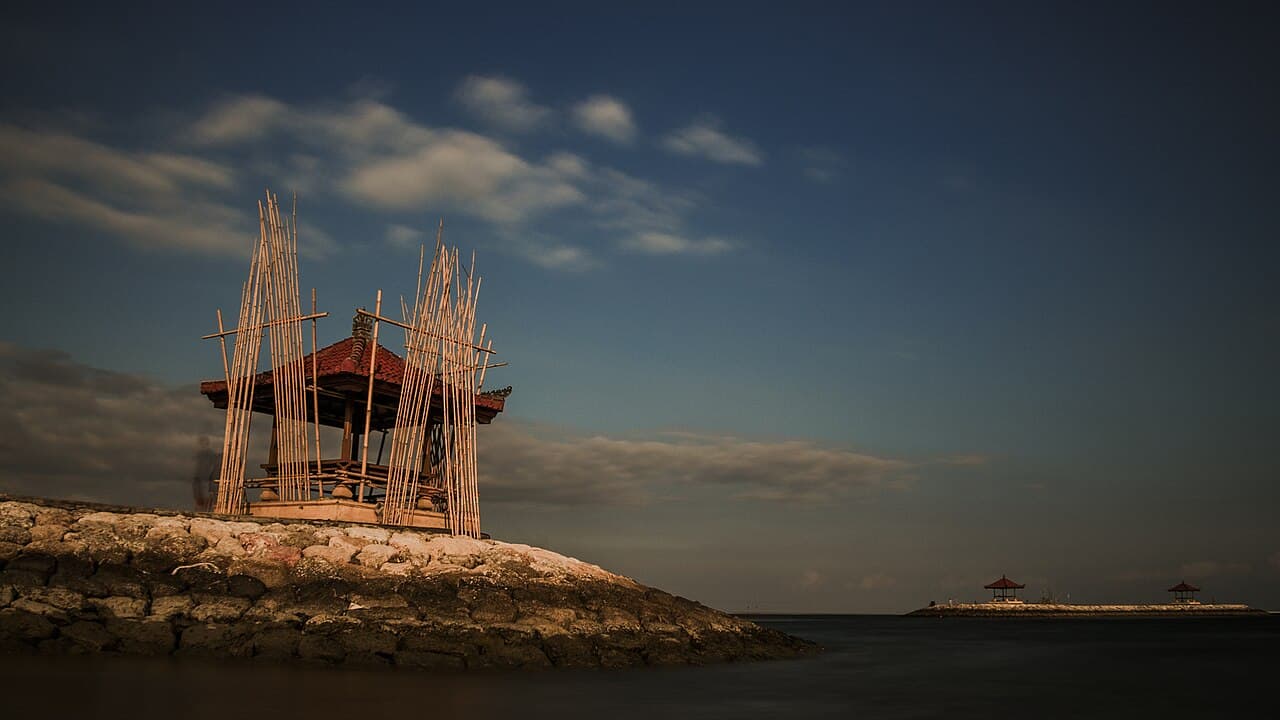
Quick answer: Sanur is Bali's calm, family-friendly beach town on the southeast coast, known for its 5 km beachfront boardwalk, reef-protected lagoon, sunrise views, and as the main ferry hub to Nusa Lembongan, Nusa Ceningan, and Nusa Penida. It is roughly 30 to 45 minutes from Ngurah Rai International Airport. Best visited April to October. Stay 2 to 3 nights for the beach and boardwalk, or 4 to 5 nights if you plan to add a Nusa island trip. Quieter than Seminyak or Canggu, ideal for families, slower travelers, and divers.
Sanur is the southeast coast's most laid-back beach town, and the part of Bali I most often recommend to families, older travelers, and anyone who wants a beach holiday that doesn't feel like a club night. Our family of certified guides has been bringing visitors here for years, and Sanur keeps surprising people who arrived expecting a quiet retirement village and instead found a real Balinese neighborhood with a long boardwalk, calm reef-protected water, a busy local food scene, and the most reliable boats to the Nusa islands. The pace is slower than Seminyak or Canggu, the architecture is lower, and most evenings end with dinner near the beach rather than at a beach club. If you're traveling with kids, a partner who hates loud crowds, or grandparents who want short walks and shallow swims, Sanur is the right base.
Sanur Beach
Sanur Beach runs roughly 5 kilometers along Bali's southeast coast, from Mertasari in the south up past Sindhu, Segara, and Karang beaches to the north. A natural reef sits about 200 to 400 meters offshore and breaks most of the swell before it reaches the sand. The result is a long, calm lagoon — shallow at low tide and never very rough at high tide — that is genuinely safe for small children and weak swimmers. This is unusual on Bali's south coast, where most beaches are surf beaches.
Because the beach faces east, the light here is different from the rest of southern Bali. The sun rises over the water — a quiet event most days, with fishing outriggers (jukung) heading out at first light. By late morning the sand is bright but the breeze keeps things comfortable. Afternoon light is soft and the beach gets its prettiest hour roughly 30 minutes before sunset, when the eastern sky turns pastel even though the sun is setting behind the island.
Swimming — The lagoon is best at mid to high tide. At very low tide the water can pull back hundreds of meters and the seabed has scattered coral fragments and rocks; reef shoes are useful then. The water temperature stays between 26 and 29°C / 79 and 84°F year-round.
Watersports — Sanur is one of the best places in southern Bali for stand-up paddleboarding, kayaking, and beginner kitesurfing because of the calm water and reliable wind. Several rental shacks operate along the boardwalk between Mertasari and Sindhu Beach. Diving and snorkeling trips depart for the reef and for nearby sites such as the Sanur wreck.
Local atmosphere — Sanur Beach is also a working beach. Local fishermen pull in their catch in the early morning, and small warungs along the sand serve them coffee. Walking south of the main hotel strip you'll find Balinese families on weekends, ceremonies on temple days, and far fewer tourists than in Seminyak.
The Sanur Boardwalk
The Sanur Boardwalk (locally called the jalur pejalan kaki or simply "the path") is the spine of the destination and one of my favorite features anywhere on the south coast. It runs roughly 5 kilometers along the back of the beach, mostly paved, mostly flat, and almost entirely free of cars. Nothing else like it exists in Bali.
You can walk the whole thing in about 75 minutes one way, but most visitors break it into shorter segments based on where they're staying. Cycling is the most popular way to experience the boardwalk; many hotels and guesthouses lend bikes to guests for free, and rental shops along the path charge around 30,000 to 50,000 IDR (US$2 to 3) per day. Joggers come out at sunrise, families with strollers fill the path mid-morning, and locals walk it after work in the early evening.
Along the way you'll pass:
- Old beachfront temples (Pura Segara is one of the best)
- Dozens of small warungs and beach bars set directly into the sand
- The Le Mayeur Museum (more on that below)
- Fishing villages where outriggers are pulled up onto the sand
- Spa pavilions and yoga shalas
The boardwalk is also the easiest way to get a feel for which part of Sanur you prefer before committing to a hotel zone. Walk it once and you'll quickly know whether you want the busier north end near Sindhu Market, the broad mid-section around Segara Beach, or the quieter southern stretch near Mertasari.
Things to do in Sanur
Watch the sunrise — Set an alarm at least once. The eastern sky lights up over the reef, fishing boats slip out, and the boardwalk is empty. Bring coffee from your hotel or buy one from a beachfront warung that opens at 6 am.
Le Mayeur Museum — A small but unusual museum at the north end of the boardwalk. Adrien-Jean Le Mayeur de Merpres was a Belgian painter who settled in Sanur in the 1930s and married a Balinese dancer, Ni Pollok. Their teak house is the museum, full of his paintings, traditional Balinese furniture, and a strong sense of pre-tourism Sanur. Entry is around 20,000 IDR, and a visit takes 30 to 45 minutes.
Sanur kite festival and Bali Kite Festival — Sanur is famous for its giant Balinese kites (bebean, janggan, and pecukan), some of which stretch over 10 meters and require entire teams to fly. The big international and Balinese festivals are usually held between July and October on Padanggalak Beach just north of Sanur, but smaller kites are flown above the rice fields throughout the dry season. Children can buy small kites at the boardwalk for a few thousand rupiah.
Snorkeling and diving — Sanur is a popular launch point for diving the wreck and the offshore reef. Visibility is generally better in the dry season. Operators in Sanur also run trips to Nusa Lembongan and Nusa Penida for manta rays and mola mola in season.
Bali Beach Golf Course — A short, walkable nine-hole course at the north end is one of the few golf options in southern Bali.
Bali Orchid Garden and Bali Bird Park — Both are short drives from Sanur and work well for a half-day with younger children.
Where to stay in Sanur
Sanur's accommodation is broader than its reputation suggests. The destination has been hosting travelers since the 1960s, so it has true heritage hotels alongside modern boutique stays and budget guesthouses tucked behind the boardwalk.
Northern Sanur (around Sindhu and Karang) — More energy, more dining, more nightlife. Closest to the Sanur ferry pier. Good for travelers who want easy access to boats and a bit more buzz.
Mid Sanur (around Segara and Sanur Beach) — The most central area, with the widest beach and the densest cluster of long-running hotels. Most resort properties sit here.
Southern Sanur (around Mertasari) — Quieter, more residential, longer walks to dining but the best stretch of beach for families. Some of the best mid-range hotels are tucked into this area.
Budget (200,000 to 600,000 IDR / US$13 to 40 per night) — Family-run guesthouses in the lanes behind the boardwalk. Clean, simple, and often within a 5-minute walk of the beach.
Mid-range (700,000 to 2,000,000 IDR / US$45 to 130 per night) — Boutique hotels and well-kept beachfront properties. This is where Sanur shines: the quality-to-price ratio is better here than in Seminyak.
Luxury (2,500,000 IDR+ / US$165+) — Heritage beachfront resorts (the area's original five-star properties from the 1960s and 70s) and a few modern villas. These are typically large garden compounds rather than skyscrapers.
A practical tip from years of arranging stays: hotels directly on the beach in Sanur are not always better than those one street back. Many of the back-lane boutique hotels have beautiful gardens and larger rooms, and the boardwalk puts you on the sand in two or three minutes anyway.
Dining and Cafes
Sanur's dining scene is unpretentious and dense. You'll find a cluster of long-running international restaurants, dozens of beachfront warungs serving grilled fish, and an increasing number of stylish cafes opened by Indonesian and expat chefs in the past few years.
Beachfront warungs — The classic Sanur experience. Plastic chairs in the sand, fresh grilled fish chosen from a tray, sambal, rice, and a cold Bintang. Expect 100,000 to 250,000 IDR (US$7 to 17) for two people. The Mertasari and Karang sections of the boardwalk have the best concentration.
Massimo Gelato — A local institution near Jalan Danau Tamblingan. Italian gelato made on-site for over 20 years; the pasta and pizza are also excellent. Expect lines on weekends.
Cafes — Genius Cafe and a string of newer specialty coffee shops along Jalan Danau Tamblingan and Jalan Danau Poso serve good espresso, brunch, and reliable Wi-Fi. Sanur has quietly become a favorite of digital nomads who want a calmer alternative to Canggu.
Indonesian cuisine — Don't miss the local nasi campur warungs in the back streets. Warung Mak Beng (locals call it simply "Mak Beng") has been serving the same set menu — fried fish, fish soup, rice, sambal — since 1941. There is usually a queue out the door at lunch, and the entire meal costs around 60,000 IDR (US$4) per person.
Fine dining — A few elevated restaurants exist (Char Ming, Three Monkeys, and the restaurants inside the heritage resorts) but Sanur is not a fine-dining destination in the way Seminyak is. Travelers who want that level of dining usually book a driver and head to Seminyak or Jimbaran for the night.
Sanur as a ferry hub
Sanur is the main launchpad for the Nusa islands — Nusa Lembongan, Nusa Ceningan, and Nusa Penida — and this single fact often determines a visitor's itinerary. The new Sanur Port (Pelabuhan Sanur), opened in 2022, replaced the old beach-launch system. Boats now leave from a proper pier with a covered waiting area, ticketed boarding, and easier luggage handling — a huge upgrade for families and anyone with mobility issues.
| Route | Crossing time | Typical departures |
|---|---|---|
| Sanur to Nusa Lembongan | 30 to 45 min | 8:00, 9:30, 11:00, 13:00, 15:00, 16:30 |
| Sanur to Nusa Ceningan | 30 to 45 min | Connects via Lembongan (bridge) |
| Sanur to Nusa Penida (Toyapakeh) | 40 to 50 min | 7:30, 8:30, 10:30, 13:00, 15:00 |
Schedules shift seasonally and on rough seas, so always reconfirm the night before. Operators include Maruti, Scoot, Caspla, Angel Billabong, El Rey, and the public-style Roro ferry. We recommend booking a round-trip ticket with the same operator and arriving 30 minutes early.
For day trips, the realistic itinerary is: 8 am ferry out, full day on the island with a driver, last ferry back at 16:00 or 16:30. For a more relaxed visit, stay one or two nights on Nusa Lembongan or Nusa Penida — see our Nusa Penida day trip guide for a full breakdown of how to plan it.
Sanur vs Seminyak vs Canggu
This is the single most common question we get from first-time visitors. The short answer is that all three are good and they serve different travelers. The long answer is below.
| Feature | Sanur | Seminyak | Canggu |
|---|---|---|---|
| Coast direction | East (sunrise) | West (sunset) | West (sunset) |
| Beach | Calm reef lagoon | Open surf beach | Black-sand surf beach |
| Best for | Families, slow travel, divers, ferry to Nusa | Couples, dining, beach clubs, shopping | Surfers, digital nomads, cafes, nightlife |
| Vibe | Quiet, residential, older | Polished, upscale | Trendy, young, busy |
| Traffic | Light to moderate | Heavy | Very heavy |
| Distance from airport | 30 to 45 min | 30 min | 45 to 70 min |
| Walkability | High (5 km boardwalk) | Medium | Low |
| Average hotel price | Lower | High | Medium to high |
I always tell guests staying with their families to base in Sanur because the beach is genuinely safe for kids and the boardwalk lets older travelers move at their own pace. Couples on a honeymoon or short trip usually prefer the dining and sunset energy of Seminyak — see our Bali honeymoon guide for honeymoon-focused planning. Surfers and remote workers tend to settle in Canggu. For families, our Bali with kids guide explains why Sanur usually beats the trendier zones.
Day trips from Sanur
Sanur's location on the southeast coast makes it a good base for the eastern half of Bali, even if it adds a bit of drive time to the western temples.
Nusa Lembongan and Nusa Ceningan (boat: 30 to 45 min) — Easy day trip or a short overnight. Snorkeling at Mangrove Point and Crystal Bay, the yellow bridge, and Devil's Tear cliff. See our Nusa Penida destination page for context on the bigger neighbor.
Nusa Penida (boat: 40 to 50 min) — Full-day trip. Kelingking Beach, Diamond Beach, Broken Beach, and Angel's Billabong. Long but spectacular. Better with one overnight.
Ubud (1 hour by car) — Bali's cultural heart. Tegallalang Rice Terraces, Sacred Monkey Forest, Goa Gajah, and a strong dance and craft scene.
Uluwatu (1 to 1.5 hours) — Clifftop temples, surf breaks, and the Kecak fire dance at sunset.
East Bali — Sidemen, Tirta Gangga, Lempuyang (2 to 2.5 hours) — A long day trip but worth it for the rice fields, water palaces, and the famous Lempuyang gates.
Tanah Lot (1 to 1.5 hours) — Sunset visit only, paired with a stop in Canggu for dinner.
All of these are best handled with a private driver so you can leave early, return on your own schedule, and adjust the route based on traffic and weather.
Practical tips
Best time to visit — April to October. The wet season is still fine for a short stay, but ferry crossings can be rougher and afternoon rain is common. See our best time to visit Bali guide for a month-by-month breakdown.
Getting around Sanur — Walking and cycling cover almost everything. For longer trips, use a Grab or Gojek (ride-hailing apps work well in Sanur, though some areas have driver-pickup restrictions, in which case you walk a block to the nearest main road). For full-day excursions outside Sanur, hire a private driver — expect 600,000 to 900,000 IDR (US$40 to 60) for 8 to 10 hours.
ATMs and money — ATMs are common along Jalan Danau Tamblingan and near hotels. Use ones attached to bank branches (BCA, Mandiri, BNI) to avoid skimmers. Most mid-range and upscale hotels and restaurants accept cards, but warungs are cash-only.
Safety — Sanur is one of the safer parts of Bali. Petty theft from beach loungers happens occasionally; don't leave phones unattended. Traffic in the back lanes is light but watch for scooters.
Wi-Fi and remote work — Reliable in cafes and most hotels. Several coworking spaces and laptop-friendly cafes have opened around Jalan Danau Tamblingan in the past few years.
Currency — Indonesian rupiah (IDR). At April 2026 rates, US$1 is roughly 16,000 IDR.
Cultural notes — Sanur is a real Balinese village. You will encounter ceremonies on the boardwalk and small temple offerings on the sand most mornings. Walk around them, not through them. Cover shoulders and knees if you visit a temple. The locals here are used to tourists but appreciate the small gestures.
Sanur is not the part of Bali that ends up on the front of glossy magazines, and that is exactly why we keep recommending it. It rewards travelers who like long mornings, calm water, easy walks, and a genuine local rhythm — and it puts you in the perfect position to add the Nusa islands to your trip without a long drive across the island. For families, slower travelers, and anyone arriving at the end of a long flight with kids in tow, this is the easiest first base in Bali.