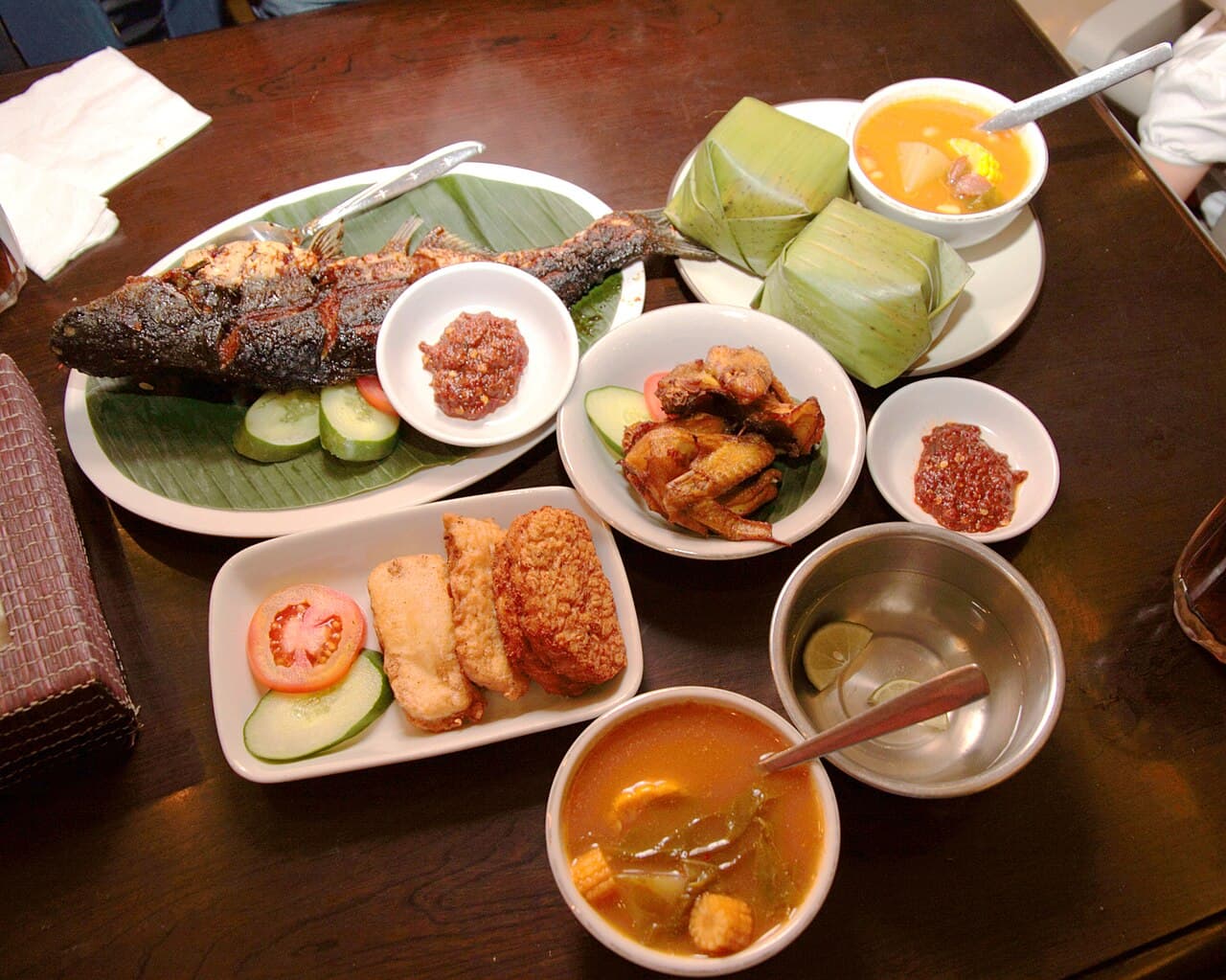
Quick answer: A Bali cooking class with Ohana costs $35-45 USD per person for a group class and $75-120 USD per person for a private class (family of four flat rate $250). The half-day experience starts with a 9 AM market visit, moves to a real Balinese family compound kitchen for hands-on preparation of 5-6 traditional dishes (sate lilit, lawar, ayam betutu, gado-gado, sambal matah, jaja kelepon), and finishes with a shared meal at 1 PM. Vegetarian, vegan and kid-friendly menus available. English, French and Mandarin speaking instructors. Hotel pickup from Ubud, Canggu and Seminyak included.
The best souvenir you can bring home from Bali is not a sarong or a wood carving — it is the ability to recreate a real Balinese meal in your own kitchen. A Bali cooking class is one of the few travel experiences that follows you home for years. Long after the tan has faded, you can still serve sate lilit at a dinner party and tell the story of the morning you ground your own bumbu in a stone mortar in a family compound outside Ubud.
Ohana is a family-run agency. We are an Indonesian family from Medan who have lived in Bali for years, and over that time we have built genuine friendships with the Balinese chef families we partner with. The class you book through us is not a hotel demo and not a 30-person tourist mill — it is a small, hands-on session in a working family compound kitchen with people we know personally, taught in English, French or Mandarin depending on your preference.
Why a Bali Cooking Class Is the Best Souvenir
Most travel experiences end the moment you leave the country. A cooking class is different. The skills travel with you. Every time you make sambal matah at home, you are back in that compound kitchen for a few minutes — the smell of fresh lemongrass, the sound of the cobek, the heat of the open kitchen.
Balinese cuisine is also one of the least understood food traditions in Southeast Asia. Most people outside Indonesia know nasi goreng and assume that is the ceiling. The reality is that Balinese cooking is built on bumbu — complex spice pastes that can contain a dozen freshly ground ingredients and take an hour of preparation. Once you understand bumbu, you understand 80% of Indonesian and a lot of Malaysian and Southern Thai cooking too. Your repertoire opens up enormously.
There is also the question of cultural depth. Balinese food is inseparable from religion and ceremony. Lawar is a temple dish. Bumbu Bali Genep contains the same five-element symbolism as Hindu cosmology. The ingredients you cook with come from a market that hasn't changed its layout in fifty years. Spending a morning inside that system, hands first, gives you a much richer understanding of Bali than any temple tour or rice-paddy photo. For a deeper read on the food itself, our Bali food guide covers what to eat across the island and the cultural context behind each dish.
What You Cook — The Menu
A typical group class moves through 5-6 dishes that together represent the breadth of Balinese home cooking. Private and family bookings can swap dishes in or out based on your interests. The standard menu rotates around these:
Bumbu base genep — The foundational spice paste of Balinese cooking, made from shallots, garlic, galangal, turmeric, ginger, lemongrass, candlenut, coriander, white pepper, palm sugar, shrimp paste and chili. You grind it yourself in a stone cobek. This is the single most important skill you take home — it is the secret behind every dish that follows.
Sate lilit — Bali's signature satay, completely different from the peanut-sauce skewers found elsewhere in Indonesia. Minced fish or chicken is mixed with grated coconut, lime leaf and bumbu, then wrapped around fresh lemongrass stalks and grilled over coconut husks. Kids especially love this dish — the wrapping is hands-on and the result looks beautiful on the plate.
Lawar — A finely chopped salad of long beans, grated coconut, palm sugar and bumbu, traditionally prepared for ceremonies. The technique is in the knife work — you achieve the texture by hand-chopping, not in a food processor. A meditative dish that teaches Balinese rhythm.
Ayam betutu — Slow-cooked chicken stuffed with bumbu and wrapped in banana leaves. The original ceremonial version from Gianyar takes 8 hours over coconut husk embers; the class version uses a faster method that captures most of the flavor in 90 minutes.
Gado-gado — Indonesia's famous mixed-vegetable salad with peanut sauce. Looks simple, deceptively technical — the peanut sauce balance of sweet, salty, spicy and sour is harder to nail than it looks. Vegetarian and gluten-free.
Sambal matah — Raw Balinese sambal of finely sliced shallots, lemongrass, lime leaf, chili and shrimp paste, finished with hot coconut oil. No cooking required, but the knife skills and balance of flavors are pure Bali.
Jaja kelepon — Sweet rice-flour balls filled with palm sugar and rolled in fresh coconut. The dessert. Children always like making these because the palm sugar bursts in your mouth on the first bite.
Most sessions cover four of these dishes plus the bumbu and sambal — six items in total. We send the full menu in advance so you can adjust for dietary preferences.
Tourist Cooking Demos vs Authentic Family-Compound Classes
The phrase "cooking class" in Bali covers a huge range of experiences, and the difference between the worst and the best is enormous. Here is what to look for and what to avoid.
Tourist demos to avoid. Hotel "cooking classes" where 30 people watch a chef cook on a stage and get a token chance to stir something. Restaurant kitchen demos where the menu is fixed, the bumbu is pre-made, and you have 90 minutes start to finish. Anything billed as a "cooking show" rather than a class. These exist throughout Seminyak and Kuta and are usually heavily marketed on hotel concierge desks.
Authentic family-compound classes. Small groups, never more than 8 people. Held in a real Balinese family compound (the household kitchen used daily by the chef's family), not a purpose-built tourist kitchen. Includes a market visit before cooking. The instructor is a Balinese cook who has been cooking these dishes their whole life, not a hospitality school graduate. You make your own bumbu from scratch. The session takes 5-6 hours including the market and the meal.
The classes Ohana books are firmly in the second category. The chef families we partner with run small operations — most receive 1 or 2 groups per day, often only one. The kitchen is the kitchen they cook for their own children in. The market is the market they shop at every morning. There is no theater and no upselling.
For a slower, more immersive version of this experience, our Balinese cooking experience page covers a longer half-day option with extended spice-garden touring. The service page you are reading is for the more flexible, conversion-focused booking — pick whichever format matches your day.
A Typical Day — The Schedule
Most classes follow this rhythm. Times shift slightly for private bookings and seasonal market hours.
8:00 AM — Hotel pickup. Your driver collects you from your accommodation in Ubud, Canggu, Seminyak, Sanur, Kuta or Jimbaran. The drive to the cooking compound is between 30 minutes and 90 minutes depending on where you are staying. We try to match drivers to language preference where possible, so a French class typically gets a French-speaking driver too.
9:00 AM — Market visit. You arrive at a working Balinese morning market — usually Pasar Ubud, Pasar Sukawati or a smaller village market depending on what is freshest that day. Your instructor walks you through every section: the spice vendors, the fresh produce stalls, the meat and fish counters, the flower vendors. You learn to identify ingredients you have probably never seen — kencur, daun salam, three varieties of shallot, terasi blocks. You select ingredients for the dishes you will cook later. This part is highly photogenic and one of the highlights for most travelers.
10:30 AM — Arrival at the family compound. A short drive to the chef's family compound. You meet the family, get a quick walk through the household altar and traditional kitchen layout, and have water or tea while the cooking station is set up.
11:00 AM — Bumbu preparation. The cooking starts with bumbu. Everyone makes their own. This is physical work — proper grinding takes 20-30 minutes — and it is also the most satisfying part of the class for many guests. By the time your bumbu is ready, you understand more about Balinese flavor than most cookbooks could teach you.
11:30 AM — Cooking the menu. You move through the dishes one by one, each demonstrated by the instructor and then cooked alongside them. This is genuine hands-on, not watching. You shape sate lilit, you chop lawar, you stir the curry, you roll jaja kelepon.
1:00 PM — The shared meal. Everything you cooked is plated up traditionally and you sit down to eat together. The instructor and often a member of the family join you. Conversation usually drifts to favorite dishes, where to eat in Bali, recipe substitutions for ingredients you cannot find at home. The recipe booklet is handed out at the table.
2:00 PM — Drop-off. Your driver returns you to your hotel. Most guests are happily food-coma'd by this point.
If you want to combine the class with other activities the same day — Tegalalang rice terraces, the Sacred Monkey Forest, an afternoon spa session — we can pair the class with our private driver service or build a longer plan via custom itinerary.
What's Included
Every Ohana cooking class booking includes the same set of items. There are no tiers and no upsells.
Round-trip hotel transfers. Pickup and drop-off from Ubud, Canggu, Seminyak, Sanur, Kuta or Jimbaran in an air-conditioned vehicle. Distance pickups (Uluwatu, Sidemen, Amed) add a small driving fee.
Guided market tour. A working Balinese market with your instructor, including ingredient identification, smell-and-taste sampling and the actual shopping for your class.
All ingredients and equipment. Every spice, every herb, every cooking utensil, every plate. You arrive empty-handed and leave with a recipe booklet.
Hands-on instruction for 5-6 dishes. Not demos — you do the work yourself, with the instructor working alongside you.
Apron and station. Your own labeled cooking station, apron and prep board.
Full meal of everything you cook. Plated traditionally, eaten together at a long table in the compound.
Bottled water, tea and coffee throughout. Plus fresh tropical fruit at the meal.
Printed recipe booklet. With the full menu, full ingredient list, technique notes and substitution suggestions for ingredients hard to find at home.
Photos. Your instructor or driver takes photos throughout — sent via WhatsApp the same evening.
Kid-Friendly Cooking Classes
We run a dedicated kids' version of the class for families with children aged 6-14. The structure is the same — market visit, bumbu, hands-on cooking, shared meal — but the tasks are adapted to age.
Children typically take charge of the dishes that are most fun to physically make: shaping sate lilit on lemongrass sticks, weaving small banana-leaf plates, rolling jaja kelepon and watching the palm sugar burst out, mixing sambal matah, grinding bumbu. Sharper knife work and hot-pan cooking go to the adults. The instructor naturally splits the kitchen so everyone is busy at once.
The market visit is a clear highlight for most kids. Live chickens, baskets of marigold flowers stacked taller than they are, weird fruits they have never seen, the smell of fresh ginger and turmeric. We pace it slowly and the instructor turns it into a treasure hunt — find the candlenut, find the kencur, find the salam leaf. By the time you reach the kitchen, the kids are usually invested.
A family of four (two adults, two kids under 14) costs a flat $250 USD all-inclusive — markedly cheaper than booking four group spots. We can also tailor the menu around picky eaters; gado-gado, jaja kelepon, sate lilit (with chicken) and sambal that is held back from spicy are usually winners.
Pricing Tiers
Pricing is per person unless otherwise noted, and includes everything described in the "What's Included" section above. No booking fees, no card surcharges, no hidden costs.
| Format | Price USD | Price IDR | Group size |
|---|---|---|---|
| Group class | $35-45 / person | 540,000-680,000 IDR | 4-8 people |
| Small group | $50-65 / person | 760,000-980,000 IDR | 2-3 people |
| Private class | $75-120 / person | 1,150,000-1,830,000 IDR | 1-2 people |
| Family flat rate (4 people) | $250 total | 3,800,000 IDR | 2 adults + 2 kids |
| Multi-family / event | from $400 total | from 6,100,000 IDR | up to 12 people |
| Vegan / dietary surcharge | $0 | 0 IDR | any size |
| French or Mandarin instruction | $0 surcharge | 0 IDR | any size |
Pricing is realistic and reflects actual chef and venue rates — we are not the cheapest cooking class in Bali (cheaper options usually skip the market or use 30-person tourist kitchens) but every dollar buys real value.
The group class is the best value if you are a couple traveling solo and don't mind sharing the kitchen with two or three other people. The family flat rate is the best value for parents traveling with children. The private class is worth it for couples celebrating anniversaries, photography projects, food bloggers, or anyone who wants the chef's full attention.
Multilingual Instruction — French, Mandarin, English
This is one of the genuine differentiators of booking your cooking class through Ohana. Our family includes a certified French and Mandarin speaking guide whose certification is registered with the Indonesian tourism authority, and her parents are official Mandarin tour guides. We work with a small pool of bilingual instructors who can teach the entire class — market visit, technique explanations, recipe details, cultural context — in French or Mandarin Chinese with no language compromise.
For French-speaking travelers, this is rare in Bali. Most "French cooking classes" advertised online are English classes with a translator who handles the basics. Ours is the real thing — a class taught from start to finish in French, with French-language recipe booklets to take home.
For Mandarin speakers, the same applies. We can run classes in Mandarin Chinese with Mandarin recipe booklets, particularly useful for travelers from mainland China, Taiwan, Singapore and Malaysia who want to ask detailed technique questions in their own language.
There is no surcharge for French or Mandarin instruction. We just need 48 hours notice so we can match the right instructor to your booking. English remains the default and is available every day with no advance notice.
Frequently Asked Questions
How much does a Bali cooking class cost?
A group Bali cooking class with Ohana costs $35-45 USD per person, including market visit, hands-on cooking, full meal, recipe booklet and hotel transfers. Private classes are $75-120 USD per person, and a family of four pays a flat $250 USD all-inclusive.
Is a Bali cooking class worth it?
Yes — it is one of the highest-rated activities for travelers who care about food, culture or hands-on experiences. The skills genuinely transfer home (bumbu technique applies to most Southeast Asian cooking), the market visit is one of the most authentic Bali experiences available, and the food at the end is excellent. It is a stronger souvenir than any object you can buy.
Where do the cooking classes take place?
Our partner family compounds are located around Ubud, Sukawati and the surrounding villages — typically a 30-90 minute drive from your hotel depending on where you are staying. The compounds are working family kitchens, not purpose-built tourist venues.
Can I do a cooking class with a baby or toddler?
Yes. Babies usually nap through the cooking session in the carrier or stroller, and toddlers can participate in safe tasks (rolling jaja kelepon, mixing sambal). We recommend the private or family format if you are bringing very young children, so the pace can flex around naps and feeds. Hotel transfer can include car-seat installation at no charge.
What happens if it rains?
The cooking continues. The kitchen is undercover and the market is partially covered. Heavy rain can slow the morning drive — we leave 30 minutes earlier on rainy mornings to compensate. The wet season (November-March) is actually one of the most beautiful times for the spice garden portion since everything is at peak greenness.
Do I get a recipe to take home?
Yes. Every guest receives a printed recipe booklet at the end of the meal with the full menu, full ingredient list, technique notes and substitution advice for ingredients that are hard to find outside Bali. We also email a digital PDF to your booking email the same evening.
Can I book the cooking class as a couple's anniversary or honeymoon experience?
Yes. The private class is popular with couples — you get the kitchen and instructor to yourselves, the menu can be tailored to your preferences, and the meal is plated traditionally for two. Pair it with our honeymoon planning options for a full romantic day.
How far in advance should I book?
48 hours minimum, ideally 5-7 days. Group classes typically run on fixed days (Mondays, Wednesdays, Fridays, Saturdays). Private classes can run any day with 48 hours notice. During peak season (July-August, December-January) book 2 weeks ahead to guarantee your preferred date and language.
Why Choose Ohana for Your Bali Cooking Class
There are dozens of cooking class operators in Bali, from large platforms to single-instructor Instagram accounts. Here is what is genuinely different about booking through Ohana.
Family-run, not a marketplace. We do not list a class and pair you with whichever chef has availability. We work with a small set of partner families we know personally — we have eaten in their kitchens, met their kids, watched them cook for ceremonies. That trust is what we extend to our guests.
Indonesian family from Medan, living in Bali. We are not Balinese ourselves; we are an Indonesian family from Medan who have made Bali home over many years. That gives us a particular position — we know the cooking from the perspective of guests learning a new tradition, while our partner chef families teach it from the inside. Both perspectives matter.
Multilingual class, no surcharge. French, Mandarin and English instruction with no language fee. The instructor speaks your language; the recipe booklet is in your language; the market commentary is in your language. This is rare in Bali.
Real prices, real value. No "tourist demo" pricing with hidden fees. Every cost is on this page. The family-of-four flat rate exists because we wanted parents to be able to give their kids this experience without paying full freight per child.
Direct contact throughout. When you book, you message our family directly via WhatsApp. There is no call center. If you need to reschedule because of food poisoning the night before (it happens in Bali), you reach a real person.
Same family handles the rest of your trip. Travelers who enjoy their cooking class often book a private driver for the rest of the week, or extend into a custom itinerary including more food experiences in Sidemen or Munduk. Continuity matters.
If you want to base your cooking class day in Bali's culinary heart, our destination guide for Ubud covers where to stay, where to eat afterward and what to combine in the same day.
Ready to Book Your Bali Cooking Class?
Send us a WhatsApp with your dates, group size, language preference, and any dietary requirements. We will confirm availability and price within a few hours and send you the full menu so you can adjust dishes if you want. Booking takes about five minutes.
For more on Bali food culture before you arrive, read our complete Bali food guide, our in-depth Bali cooking class guide (covering history, technique and what to expect), and our Ubud destination guide for where to stay near the cooking compounds.
How We Plan This
Every cooking class booking goes through our family. When you message us, we confirm dates, group size, language preference and dietary needs, then match you to the right partner chef family based on those inputs. A French-speaking class with two vegan adults goes to a francophone instructor who has run vegan menus for us before. A family-of-four with two young kids goes to a chef who genuinely enjoys teaching children. The matching is deliberate, not random.
The day before your class, your driver and instructor confirm pickup time and location. The morning of, your driver tracks the day's market activity (some markets are quieter on certain days and we adjust the route accordingly) so the market visit lands at peak energy. Your dietary notes are passed to the chef the evening before so the morning shopping is already accounting for them.
If anything needs adjusting mid-day — you want to leave early, you want to extend the meal, you want to add a stop on the way back to your hotel — just tell your driver. We are a family of four guides handling a small number of bookings at a time, so there is always someone reachable directly.
The first dish you cook in Bali should taste like the place itself — not like a hotel demo. That is what an Ohana cooking class is built to deliver.