Guide Bali pour Débutants — Ce Que Vous Devez Vraiment Savoir
Tout ce que les visiteurs de Bali doivent savoir pour la première fois — quand partir, où séjourner, quoi emporter, conseils argent, étiquette culturelle et erreurs à éviter.

Dans ce guide
- Quand visiter Bali
- Visa et conditions d'entrée (2026)
- Où séjourner — Choisir la bonne zone
- Se déplacer sur l'île
- Argent et coûts
- Cartes SIM et connectivité
- Quoi emporter
- L'étiquette culturelle qui compte vraiment
- Les meilleures activités pour les primo-visiteurs
- Les erreurs classiques des primo-visiteurs
- Vos premiers jours — Un déroulement suggéré
- Aide à la planification
- Related Guides
Vous avez réservé votre vol pour Bali. Et maintenant commence la spirale de recherches — des dizaines d'articles de blog, de reels Instagram, de fils Reddit et de forums de voyage qui vous racontent tous des choses différentes. Certaines informations sont utiles. La plupart sont obsolètes, sponsorisées ou rédigées par quelqu'un qui a passé une semaine à Canggu et pense connaître l'île.
Ce guide est différent. Il est le fruit d'années passées à accompagner des voyageurs qui découvrent Bali pour la première fois — à observer ce qui les surprend, ce qu'ils auraient aimé savoir avant, et ce qui transforme un bon voyage en une expérience inoubliable.
Quand visiter Bali
Bali connaît deux saisons : la saison sèche (d'avril à octobre) et la saison des pluies (de novembre à mars). En résumé, la saison sèche est plus confortable pour les visites. En version longue, tout dépend de ce que vous recherchez.
La saison sèche offre un ensoleillement constant, une humidité plus faible et les meilleures conditions pour les journées à la plage, les randonnées et les visites de temples en plein air. Juillet et août correspondent à la haute saison touristique — les prix augmentent, les sites populaires sont bondés et la disponibilité des hôtels se réduit. Mai, juin, septembre et octobre offrent le même beau temps avec moins de monde et des tarifs plus bas. Ce sont les mois que ciblent les voyageurs expérimentés.
La saison des pluies ne signifie pas qu'il pleut en permanence. Le schéma typique est un matin ensoleillé, une averse intense d'une heure ou deux l'après-midi, puis un ciel dégagé de nouveau. Les paysages sont d'un vert éclatant, les cascades sont à pleine puissance et les foules de touristes se raréfient considérablement. Si les averses de l'après-midi ne vous dérangent pas et que vous souhaitez des prix plus bas avec moins de monde, la saison des pluies est sous-estimée.
Visa et conditions d'entrée (2026)
Entrer à Bali est simple pour la plupart des détenteurs de passeports occidentaux, et la procédure n'a pas significativement changé ces dernières années.
La plupart des passeports occidentaux (États-Unis, Royaume-Uni, Canada, Australie, pays de l'UE et de nombreux autres) bénéficient d'une exemption de visa de 30 jours. Vous arrivez, passez l'immigration et recevez une autorisation de séjour de 30 jours — aucune formalité préalable requise. Cela convient à la plupart des primo-visiteurs pour un voyage typique de 7 à 14 jours.
Si vous avez besoin de plus de 30 jours, inutile de quitter le pays. Le visa à l'arrivée de 60 jours peut être obtenu au guichet d'immigration de l'aéroport ou dans n'importe quel bureau d'immigration pour environ 500 000 IDR (environ 31 USD). Vous remplissez un formulaire simple, payez les frais et recevez un visa de 60 jours valable à compter de votre date d'arrivée. Des extensions sont possibles mais nécessitent de se rendre en personne dans un bureau d'immigration — ce qui n'est pas nécessaire pour la plupart des itinéraires de premier voyage.
Pour les exigences spécifiques liées à votre nationalité, consultez le site officiel de l'ambassade d'Indonésie de votre pays avant de voyager, mais en pratique, les formalités d'arrivée sont rapides et sans tracas.
Pour les détails sur le budget et la place des frais de visa dans vos dépenses globales, consultez notre guide des coûts de voyage à Bali.
Où séjourner — Choisir la bonne zone
Bali n'est pas un seul et même endroit. Chaque zone a un caractère distinct, et le choix de votre point de chute façonne l'ensemble de votre voyage. Voici un panorama honnête :
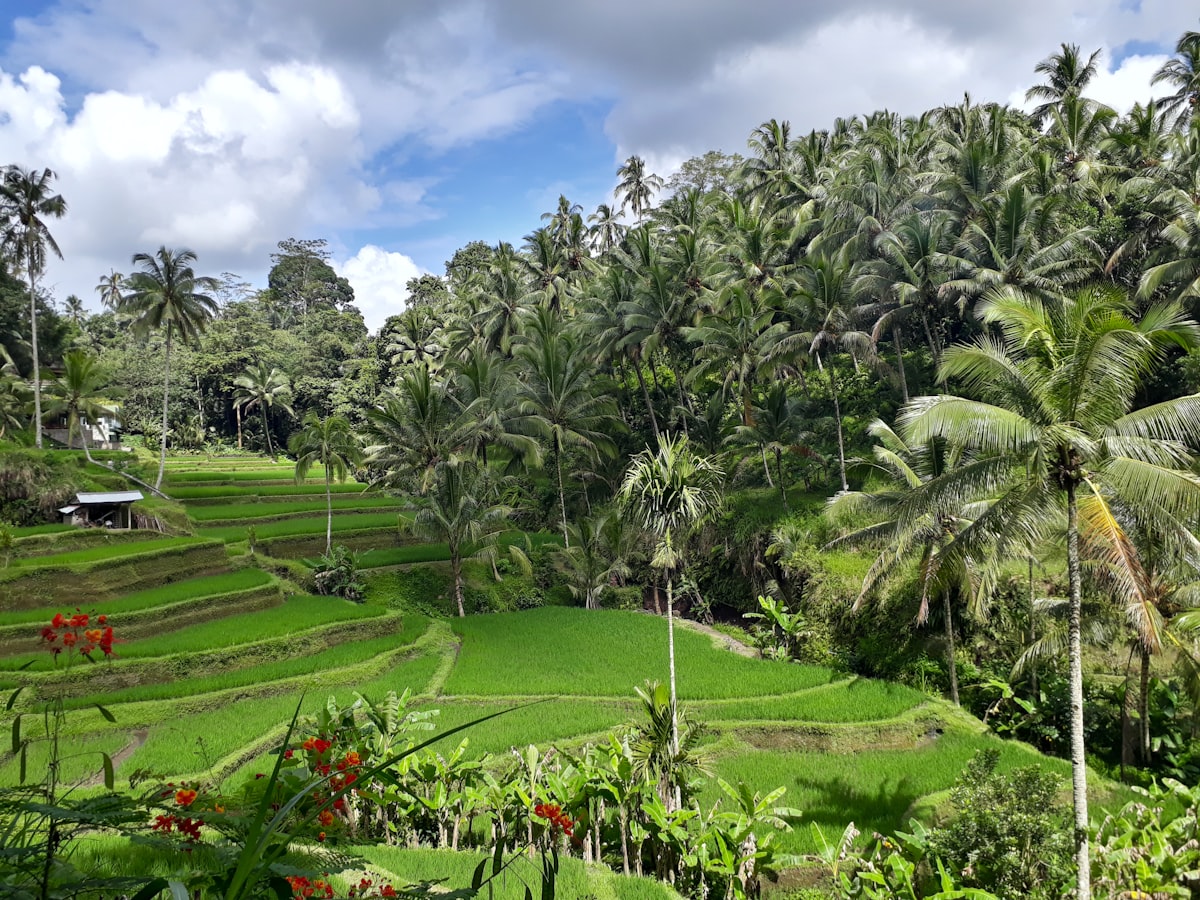
Ubud est le centre culturel — rizières, temples, galeries d'art et paysages de vallées tropicales qui définissent l'intérieur de Bali. Séjournez ici si vous vous intéressez à la culture, la nature et la tranquillité. C'est dans les terres, donc pas de plage.
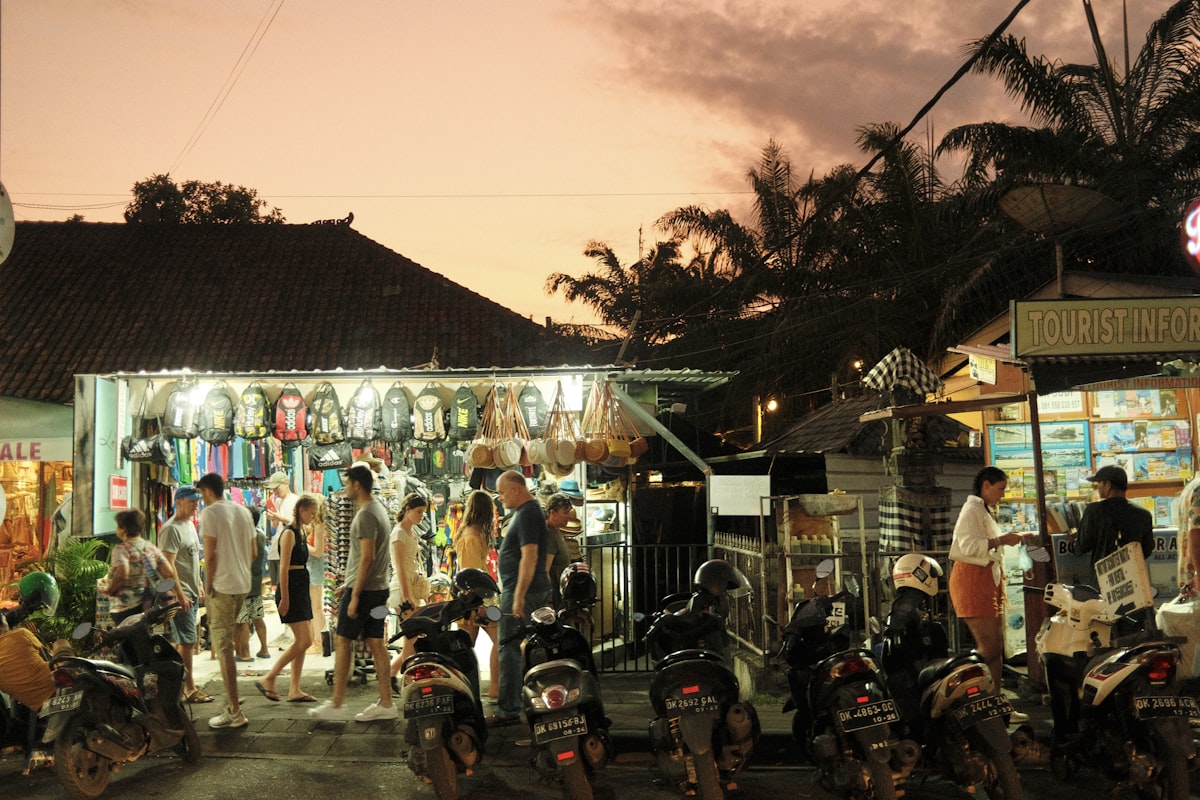
Canggu est le repaire des surfeurs et des nomades digitaux sur la côte sud-ouest. Cafés tendance, bars de plage, ambiance décontractée et excellents spots de surf. Séjournez ici si vous voulez un accès à la plage avec une énergie jeune et créative. La circulation est épouvantable aux heures de pointe.
Seminyak est la zone balnéaire haut de gamme juste au sud de Canggu. De meilleurs restaurants, du shopping de créateurs, des beach clubs au coucher du soleil. Séjournez ici si vous voulez la vie de plage avec plus de raffinement et moins d'ambiance routard.
Uluwatu est la zone spectaculaire perchée sur les falaises de la péninsule sud de Bukit. Vues imprenables sur l'océan, surf de classe mondiale et quelques-uns des meilleurs resorts de luxe de Bali. Séjournez ici si vous voulez des paysages à couper le souffle et que l'éloignement ne vous dérange pas.
Sidemen est la vallée paisible de l'est de Bali — rizières en terrasses, vue sur le mont Agung et presque aucun touriste. Séjournez ici si vous voulez vous évader complètement et vivre le Bali rural.
Amed sur la côte nord-est est le paradis de la plongée et du snorkeling. Plages de sable noir, une épave de navire japonais à quelques mètres du rivage et un rythme de vie au ralenti. Séjournez ici si l'océan est votre priorité.
Munduk dans les hautes terres du nord est fait pour les amoureux de la montagne et des lacs. Températures plus fraîches, plantations de café et de clous de girofle, cascades et lacs volcaniques jumeaux. Séjournez ici si vous voulez découvrir une facette complètement différente de Bali.
Ma recommandation pour les primo-visiteurs : Répartissez votre temps. Trois nuits à Ubud pour la culture, deux nuits dans une zone balnéaire (Canggu, Seminyak ou Uluwatu selon votre style), et si vous disposez de plus de cinq jours, une ou deux nuits dans l'est ou le nord pour changer d'ambiance. Un itinéraire sur mesure peut vous aider à structurer tout cela pour que les transitions soient fluides plutôt que précipitées.
Se déplacer sur l'île
Bali ne dispose pas de transports en commun fiables. Se déplacer implique de choisir entre plusieurs options, chacune avec de vrais compromis.
Le chauffeur privé est la meilleure option pour explorer au-delà de votre zone immédiate. Une journée complète coûte environ 30 à 45 USD et vous offre un confort porte-à-porte avec quelqu'un qui connaît les routes. Consultez notre guide complet pour engager un chauffeur privé pour les tarifs détaillés et les conseils.
La location de scooter est bon marché et populaire, mais véritablement dangereuse pour les conducteurs inexpérimentés. La circulation balinaise est chaotique, les routes sont étroites et les infrastructures médicales en dehors des zones urbaines sont limitées. Réfléchissez bien avant d'en louer un.
Les applications de VTC (Grab, Gojek) fonctionnent bien pour les trajets courts dans les zones touristiques. La couverture devient aléatoire en zone rurale, et les chauffeurs annulent souvent les courses vers les destinations éloignées.
Notre service de chauffeur privé vous met en relation avec un chauffeur vérifié qui parle votre langue et connaît l'île. C'est l'amélioration qui génère systématiquement les meilleurs retours de la part des primo-visiteurs.
Argent et coûts
La monnaie indonésienne est la Roupie (IDR). Au moment de la rédaction, 1 USD équivaut à environ 15 500 IDR. Les grands nombres demandent un temps d'adaptation — un repas dans un warung local peut coûter 45 000 IDR (environ 3 USD), tandis qu'un dîner dans un restaurant de Seminyak peut atteindre 350 000 IDR (environ 23 USD).
Les distributeurs automatiques sont largement disponibles dans les zones touristiques et distribuent des billets de 50 000 ou 100 000 IDR. Utilisez les distributeurs à l'intérieur des banques ou des centres commerciaux plutôt que les machines isolées en bord de route pour réduire les risques de piratage de carte.
Espèces ou carte : Les restaurants et hôtels de gamme moyenne et supérieure acceptent les cartes. Les warungs locaux, les marchés, les droits d'entrée aux temples, les petites boutiques et les chauffeurs ont généralement besoin d'espèces. Ayez toujours de la Roupie sur vous.
Pourboires : Non obligatoires à Bali, mais appréciés. 10 000 à 20 000 IDR pour un repas au restaurant, 50 000 à 100 000 IDR pour un chauffeur à la journée, et arrondir au-dessus pour les petits services est la norme locale.
Fourchettes de budget quotidien : Les voyageurs à petit budget dépensent entre 400 000 et 600 000 IDR par jour (25 à 40 USD), en mangeant dans les warungs, logeant en guesthouses et utilisant les VTC. Les voyageurs de gamme moyenne, entre 1 000 000 et 2 500 000 IDR par jour (65 à 160 USD), profitent d'hôtels confortables, de repas au restaurant et de journées avec chauffeur privé. Les voyageurs haut de gamme, au-delà de 4 000 000 IDR par jour (260+ USD), accèdent aux villas privées, à la gastronomie et aux expériences sur mesure.
Pour une ventilation détaillée des dépenses incluant les activités, l'hébergement et la restauration selon différents niveaux de budget, consultez notre guide des coûts de voyage à Bali.
Cartes SIM et connectivité
Rester connecté à Bali est facile et très abordable. Les deux principaux opérateurs sont Telkomsel et Indosat, tous deux proposant d'excellentes options de cartes SIM touristiques.
Les cartes SIM touristiques s'achètent à l'aéroport ou dans les supérettes (Indomaret, Alfamart) partout sur l'île. Les deux opérateurs proposent des forfaits touristiques riches en données. Un forfait touristique typique offre 20 Go de données 4G pour 150 000 à 300 000 IDR (environ 9 à 19 USD), valable 30 jours. Ces cartes sont déverrouillées et fonctionnent sur la plupart des téléphones internationaux.
Aéroport ou supérette : L'achat à l'aéroport est simple mais légèrement plus cher. Les supérettes offrent de meilleures offres si vous attendez d'être installé, mais attendez-vous à une petite barrière linguistique si votre indonésien est inexistant. L'aéroport est plus simple pour votre première transaction.
Activation : Les cartes SIM s'activent instantanément. Vous présentez votre passeport (apportez une photocopie), remplissez un formulaire d'inscription et vous êtes en ligne en quelques minutes.
Couverture WiFi : La plupart des guesthouses, hôtels et cafés des zones touristiques offrent le WiFi gratuit. La vitesse de connexion varie — suffisante pour la messagerie et les réseaux sociaux, mais pas assez fiable pour les appels vidéo ou les téléchargements professionnels. Une carte SIM data est plus fiable si vous avez besoin d'une connexion permanente.
Quoi emporter
Voyagez léger et pratique. Bali est chaud et humide toute l'année (28 à 33 degrés Celsius) avec des averses parfois intenses. Voici ce qui compte vraiment :
Vêtements : Des tissus légers et respirants. Un sarong pour les visites de temples (vous pouvez aussi en acheter un sur place pour très peu). Une veste de pluie légère ou un parapluie compact. Une tenue légèrement plus habillée si vous prévoyez des dîners chics. Un maillot de bain.
Envie qu'on organise ce voyage pour vous ?
Notre guide certifié créera un itinéraire personnalisé selon vos intérêts, votre rythme et votre style de voyage.
Obtenir votre itinéraire gratuitChaussures : Des sandales confortables ou des chaussures avec une bonne adhérence pour les marches des temples et les randonnées aux cascades. Des chaussures aquatiques si vous prévoyez de faire du snorkeling. Des tongs pour le quotidien.
Protection solaire : Une crème solaire puissante (respectueuse des récifs si vous prévoyez de nager), un chapeau et des lunettes de soleil. Le soleil équatorial est intense et les coups de soleil arrivent vite.
Santé : Emportez tous les médicaments sur ordonnance dont vous avez besoin — les pharmacies existent mais ne proposent pas forcément votre marque spécifique. Un répulsif anti-moustiques avec du DEET pour les soirées. Une trousse de premiers secours basique. Pensez aux comprimés de charbon actif pour l'adaptation digestive.
Électronique : Un adaptateur universel (Bali utilise les prises européennes à deux broches, types C et F). Un sac étanche pour les visites de cascades et les excursions en bateau.
L'étiquette culturelle qui compte vraiment
Bali est exceptionnellement accueillant envers les visiteurs, mais quelques bases culturelles témoignent de votre respect et rendent vos interactions plus chaleureuses :
Code vestimentaire dans les temples : Sarong et écharpe couvrant la taille dans chaque temple. Les épaules doivent être couvertes. La plupart des temples fournissent ou louent des sarongs à l'entrée, mais avoir le vôtre est plus pratique.
Les offrandes au sol : Les petits paniers tressés de fleurs et d'encens (canang sari) disposés sur les trottoirs, les marches et les pas de porte sont des offrandes religieuses. Enjambez-les, ne marchez pas dessus.
La main gauche : La main gauche est considérée comme impure dans la culture balinaise. Utilisez votre main droite pour donner et recevoir, en particulier l'argent et la nourriture.
Nyepi — le jour du silence : Si votre voyage coïncide avec Nyepi (généralement en mars), l'île entière se met à l'arrêt pendant 24 heures. Pas de vols, pas de voitures, pas de lumières, interdiction de sortir. Les hôtels accueillent les clients à l'intérieur, mais les rues sont totalement vides. C'est une expérience unique si vous le savez à l'avance. Vérifiez la date avant de réserver.
Photographier les cérémonies : Généralement acceptable à distance respectueuse. N'utilisez pas le flash, ne passez pas entre le prêtre et les fidèles, et demandez avant de photographier les gens directement.
Les meilleures activités pour les primo-visiteurs
Au-delà du programme classique Ubud et plage, voici les expériences qui comptent le plus pour les voyageurs qui découvrent Bali :
Excursion cascades : Bali regorge de cascades, nombre d'entre elles nichées dans des vallées de jungle accessibles après une courte randonnée. Une visite de cascade combine activité physique, immersion dans la nature et la récompense d'un bassin d'eau fraîche pour se baigner. La plupart des excursions partent du centre de Bali près d'Ubud et s'organisent idéalement le jour 3 ou 4, quand vous êtes acclimaté. Consultez notre guide des plus belles cascades de Bali pour des recommandations précises et comment éviter les foules touristiques.
Circuit des temples : Le cœur spirituel de Bali se révèle quand vous visitez des temples au-delà des attractions principales. Tirta Empul est célèbre, mais des temples moins connus comme Goa Lawah (le temple de la grotte aux chauves-souris) et Pura Penataran Sasih dévoilent d'autres facettes de l'hindouisme balinais. Notre guide des temples de Bali couvre les principaux temples, leur signification et les meilleurs moments pour les visiter sans les foules de groupes organisés.
Tour gastronomique ou exploration street food : La cuisine balinaise offre une richesse de saveurs qui ne se retrouve pas dans les restaurants destinés aux touristes. Un tour gastronomique guidé à travers les marchés d'Ubud ou une balade en autonomie dans un quartier de warungs traditionnels vous initie aux saveurs que les locaux mangent réellement. Du soto ayam (soupe de poulet au curcuma) au babi guling (cochon de lait rôti), la cuisine raconte l'histoire de l'île. Consultez notre guide de la street food à Bali pour les plats incontournables et où les trouver.
Cours de surf à Canggu : Même si vous n'avez jamais surfé, un cours de deux heures pour débutants à Canggu est accessible et mémorable. La plage est indulgente, les cours sont abordables (environ 250 000 à 350 000 IDR / 16 à 23 USD), et vous repartirez en comprenant pourquoi Canggu attire les surfeurs du monde entier. Plus de détails sur les activités à Canggu.
Excursion d'une journée à Nusa Penida : Une courte traversée en bateau depuis la côte de Seminyak vous emmène à Nusa Penida, une île plus petite aux falaises spectaculaires, plages préservées et une énergie totalement différente de Bali continental. L'excursion à la journée est faisable mais nécessite un départ matinal. Kelingking Beach et Angel's Billabong sont des spots emblématiques, mais ils sont bondés en milieu de journée. Consultez le guide complet de Nusa Penida pour le timing et la logistique.
Balade dans les rizières de Sidemen : Alors que les rizières de Tegallalang près d'Ubud sont très touristiques, une randonnée à travers les rizières et les villages ruraux de Sidemen (est de Bali) vous met en contact avec la vie agricole authentique et offre les photos de paysages que les primo-visiteurs espèrent, sans les foules d'excursions Instagram. Peu de touristes s'aventurent aussi loin à l'est, ce qui en fait un lieu idéal pour une excursion à la journée ou une nuit sur place. Consultez les activités à Sidemen pour des suggestions détaillées.
Coucher de soleil au temple d'Uluwatu : Regarder le soleil plonger dans l'océan depuis le sommet des falaises du temple d'Uluwatu est l'un des moments transcendants de Bali. Le temple lui-même est magnifique, la vue est inégalable et la lumière du soir transfigure le paysage. Associez cela à une représentation optionnelle de danse kecak qui a lieu au coucher du soleil. Détails et astuces pour éviter les groupes organisés dans activités à Uluwatu.
Les erreurs classiques des primo-visiteurs
Voici les schémas que j'observe le plus souvent chez les voyageurs qui découvrent Bali, et ils sont tous évitables :
Vouloir tout voir en une semaine. Bali récompense les voyages lents. Trois zones explorées en profondeur valent mieux que sept zones survolées. Laissez de la place à la spontanéité — certaines des meilleures expériences surviennent quand vous changez vos plans parce qu'un local vous suggère quelque chose.
Rester uniquement dans une seule zone. Canggu et Ubud sont populaires pour une bonne raison, mais Bali est bien plus vaste et varié que ses centres touristiques. Au minimum, passez un jour ou deux hors de votre zone de confort — le nord, l'est, les montagnes. L'île révèle différentes facettes d'elle-même dans différents endroits.
Ne pas budgéter pour les expériences. Un voyage à Bali fait uniquement de temples et de rizières est beau mais incomplet. Prévoyez un budget pour un cours de cuisine, une excursion snorkeling, une séance de guérison traditionnelle ou une promenade guidée dans un village artisanal. Ce sont les interactions dont vous vous souviendrez.
Se fier entièrement à Google Maps. Google Maps vous amènera au parking. Un guide ou un contact local vous conduira au bassin de cascade que personne d'autre n'a trouvé, à la cérémonie de temple qui ne figure dans aucun guide, ou au warung qui sert la même recette depuis trois générations.
Faire l'impasse sur l'assurance voyage. Les soins médicaux à Bali vont des cliniques de base aux hôpitaux internationaux de Denpasar. Un accident ou une maladie grave sans assurance peut être financièrement dévastateur. Souscrivez une assurance voyage complète avant de partir. Ce n'est pas un conseil optionnel.
Vos premiers jours — Un déroulement suggéré
Pour les primo-visiteurs, voici une introduction en douceur qui monte en puissance sans vous submerger :
Jour 1 : Arrivée, installation dans votre hébergement à Ubud, promenade sur la crête de Campuhan au coucher du soleil. Dîner tôt dans un warung local. Adaptez-vous au décalage horaire et au rythme.
Jour 2 : Matinée au temple de purification Tirta Empul, après-midi à explorer Ubud — le marché d'art, la forêt des singes ou une balade dans les rizières. Cours de cuisine en soirée si le cœur vous en dit.
Jour 3 : Journée complète avec un chauffeur privé à la découverte des hauts plateaux — rizières de Tegallalang, plantation de café et cascade. C'est généralement le jour où les primo-visiteurs réalisent à quel point un chauffeur améliore l'expérience.
Jour 4 : Déplacement vers la côte — Canggu, Seminyak ou Uluwatu selon vos préférences. Installation, promenade sur la plage, découverte d'un beach club ou d'un warung pour le dîner. Si vous avez choisi Canggu, baignade au coucher du soleil ou flânerie dans le quartier de la plage. Journée plus calme pour vous ménager.
Jour 5 : Activités balnéaires selon vos envies. Excursion snorkeling ou plongée vers les récifs à proximité. Cours de surf si vous êtes à Canggu. Visite du temple d'Uluwatu si ce n'est pas encore fait. Après-midi spa ou massage. De la flexibilité ici — laissez votre énergie et la météo guider votre choix.
À partir de là, élargissez vos horizons selon vos intérêts et les jours restants. Snorkeling à Amed. Le circuit complet des temples. Une randonnée au lever du soleil. Un tour gastronomique. L'itinéraire doit correspondre à votre énergie, pas à une liste à cocher.
Pour les primo-visiteurs disposant de 7 à 10 jours, notre itinéraire de 10 jours prolonge ce déroulement et couvre plus de terrain. Pour exactement 7 jours, l'itinéraire de 7 jours à Bali propose un parcours concentré.
Aide à la planification
Si tout cela vous semble beaucoup à organiser seul, c'est parce que c'est le cas. Bali est facile à visiter, mais difficile à bien faire sans connaissances locales. La différence entre un bon voyage et un voyage exceptionnel ne tient généralement pas aux lieux que vous visitez — c'est le timing, l'enchaînement et les connexions locales qui donnent vie à chaque endroit.
C'est exactement ce que nous faisons chez Ohana. Que vous souhaitiez un itinéraire sur mesure entièrement planifié, une visite guidée avec un guide certifié multilingue, ou simplement un chauffeur privé fiable et de bons conseils, contactez-nous et nous vous aiderons à préparer un premier voyage à Bali qui placera la barre très haut pour tous les suivants.
Related Guides
<!-- internal-link-sweep:2026-04-29 -->
Prêt à découvrir Bali ?
Parlez-nous de votre voyage de rêve et nos experts locaux créeront une expérience personnalisée rien que pour vous.
Commencer la planification